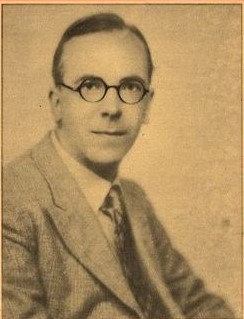
Showing posts with label Paul Manz. Show all posts

Saturday, March 11, 2023

Music for March 10, 2023 + The Third Sunday in Lent

Vocal Music

  • Like as the Hart – Herbert Howells (1892-1983)

Instrumental Music

  • Choral Dorien – Jehan Alain (1911-1940)
  • Intermezzo in A Major – Johannes Brahms (1833-1897)
  • Erhalt Un, Herr – Paul Manz (1919-2009)

Congregational Music (all hymns from The Hymnal 1982 with the exception of those marked “R” which are from Renew.)

  • Hymn 522 - Glorious things of thee are spoken (AUSTRIA)
  • Hymn 686 - Come, thou fount of every blessing (NETTLETON)
  • Hymn 143- The glory of these forty days (ERHALT UNS, HERR)
  • Hymn 679 - Surely it is God who saves me (THOMAS MERTON)
  • Hymn R9 - As the Deer pants for the water (Martin Nystrom)
  • Hymn 690 - Guide me, O thou great Jehovah (CWM RHONDDA)
  • Psalm 95 - Tone IIa

Like as a Hart

Today's anthem is based on Psalm 42, where the Psalmist asks God why his heart is so sad and why he feels so far from God. It is by Herbert Howells, an British composer who was one of a long line of 19th and 20th century English composers who wrote anthems and service music for the Church of England.

Herbert Howells
 In the opinion of many musicians today, Howells rises to the top of the whole list. His compositions have the impeccable craft of a master composer and, above all, an exceptional poetic beauty. For example, in today's anthem Howells sets the phrase “so longeth my soul after thee, O God” to a long, sustained melody that perfectly evokes an inner soul’s intense hunger and longing to reside in the beautiful presence of a loving God. Likewise, when the sopranos first sing “My tears have been my meat day and night,” we feel their sadness which obviously has been going on for quite some time. Even the simple, final three chords on the organ can conjure up a whole series of emotions to different listeners. 

Herbert Howells was born in Lydney, Gloucester and showed a keen interest in composition early in his life. At the age of eighteen, became a pupil of Herbert Brewer, Organist of Gloucester Cathedral. In 1912 he was awarded a scholarship to the Royal College of Music and studied under Charles Villiers Stanford, Walter Parratt, Charles Wood and Hubert Parry.

Choral Dorien


Jehan Alain
The opening voluntary is a quiet piece written by the French organist Jehan Alain. Alain was the son of Albert Alain, one of the most influential organ builders and designers between the two world wars, wars, as well as a composer and organist himself. He was also the brother of organist Marie-Claire Alain, and she has spoken of how he influenced her own playing. In the Twenties and Thirties he attended the Paris Conservatoire, studying composition with Paul Dukas and Jean Roger-Ducasse and organ with Marcel Dupré. He won premiers prix in harmony, fugue, and organ. His marriage in 1935, birth of his children, and military service interrupted his studies, and he quickly began to earn a living as an organist, including a stint as an organist in a synagogue. Then World War II broke out, and he join the French Army, becoming a dispatch rider in the Eighth Motorized Armor Division. On 20 June 1940, he was assigned to reconnoiter the German advance on the eastern side of Saumur, and encountered a group of German soldiers at Le Petit-Puy. Coming around a curve, and hearing the approaching tread of the Germans, he abandoned his motorcycle and engaged the enemy. After using his machine gun to shoot several infantry soldiers who had ordered him to surrender, he fell mortally wounded. He was posthumously awarded the Croix de Guerre for his bravery, and was provisionally buried at the place where he had died.

He left behind his wife, Madeleine Payan, his three children, and a body of compositions viewed by many to have been amongst the most original of the 20th century. His early compositions are mainly songs and piano works. One also finds a few chamber pieces and one orchestral scores (an orchestration of an organ work), but most writers agree that his great achievement resides in his organ music which includes such classics as his three chorales (Choral Dorien, Choral Cistercien, Choral Phrygian), Variations sur un thème de Clément Jannequin, Litanies, Monodie, and Trois danses  .

The Choral Dorien is one of Alain’s first published works, published when he was 24. It was not written in a major or minor key, but in one of the other harmonic modes used in the chants of the church. The word "choral" is the term used in French to mean " plain chant," so any French organist, accustomed as Alain was to the music of the Roman church, would understand thoroughly the "church modes." 


Friday, June 24, 2022

Music for Sunday, June 26, 2022 + The Third Sunday after Pentecost

Vocal Music

  • Ride On, King Jesus – Hall Johnson (1888-1970)
  • Calvary – Paul Rodney (d. 1910)

Instrumental Music

  • Hyfrydol – Paul Manz (1919-2009)
  • Praise to the Lord – Paul Manz

Congregational Music (all hymns from The Hymnal 1982 with the exception of those marked “R” which are from Renew.)

  • Hymn 525 - The church’s one foundation (Aurelia)
  • Hymn R 37 - Father, we love you (Glorify Your Name)
  • Hymn - I have decided to follow Jesus (Spiritual)
  • Hymn - From North and South (Lasst uns erfreuen)
  • Hymn R149 - I, the Lord of sea and sky (Here I Am, Lord)
  • Hymn 550 - Jesus calls us o'er the tumult (Galilee)
  • Psalm 77:1-2, 11-20 – Tone IIa
This Sunday we are fortunate to have my friend Edward Gibson come to sing for us at the 10:15 service. Ed is also a graduate of the Sacred Music Program at Southern Methodist University, and has served churches in Texas, most recently at Christ United Methodist in the Woodlands. He is now an elementary music specialist in Conroe ISD. He will be singing two diverse pieces for us.
Edward Gibson

Ride On, King Jesus

This great Negro Spiritual is a favorite of our congregation, especially in this arrangement by Hall Johnson (You can read about him here in a previous post on this blog.)

Calvary

This is what we call an old chestnut. Written in 1887, it was a standard for many years in Protestant churches in the English speaking world. It was written by an man named Harry W. Hopkins, who wrote under the pseudonym of Paul Rodney. Though he was a popular writer of English Ballads, not much can be found about him other than he died in 1910. The lyrics are by Henry Vaughan.
The pilgrims throng thro' the city gates
While the night is falling fast;
They go to watch on Calvary's hill
Ere the twilight hours are past;
Though dark be the way, with eyes of faith,
They gaze on His Cross above;
And, lo! from each heart, The shadows depart,
As they list to His words of love,
As they list to His words of love.

"Rest, rest to the weary, Peace, peace to the soul;
Tho' life may be dreary, Earth is not thy goal,
O lay down thy burden, O come unto Me,
I will not forsake thee, I will not forsake thee,
I will not forsake thee, Tho' all else should flee."


Far, far, away, o'er the dream of years
They hear the voice of the King
Where, O Grave, where is thy victory,
And where, O Death is thy sting?
Captive He leads them for evermore;
While weary pilgrims rejoice;
For looking on high to the Cross He bore,
The faithful shall hear His voice,
The faithful shall hear His voice.

"Rest, rest to the weary, Peace, peace to the soul;
Tho' life may be dreary, Earth is not thy goal,
O lay down thy burden, O come unto Me,
I will not forsake thee, I will not forsake thee,
I will not forsake thee, Tho' all else should flee."

Monday, March 21, 2022

Music for Sunday, March 27, 2022

Vocal Music

  • Lord, For Thy Tender Mercy’s Sake – Richard Farrant (c. 1525-1580)

Instrumental Music

  • Rhosymedre – Ralph Vaughan Williams (1872-1958)
    • My Song Is Love Unknown
  • Prelude au Kyrie – Jean Langlais (1907-1991)
  • Cwm Rhondda – Paul Manz (1919-2009)

Congregational Music (all hymns from The Hymnal 1982 with the exception of those marked “R” which are from Renew.)

  • Hymn 690 - Guide me, O thou great Jehovah (CWM RHONDDA)
  • Hymn R249 - Great is thy faithfulness (FAITHFULNESS)
  • Hymn 686 - Come, thou fount of every blessing (NETTLETON)
  • Hymn 693 - Just as I am, without one plea (WOODWORTH)
  • Hymn 411 - O bless the Lord, my soul (ST. THOMAS (WILLIAMS))
  • Psalm 32 – tone IIa
The English composer Ralph Vaughan Williams is the composer of this morning's opening voluntary. Vaughan Williams is one of the first composers who wrote in what you could call a “distinct English style”; he made a point of breaking away from the German style which had a profound influence on classical music forms like symphonies, concertos, and chamber music. His studies with Ravel likely had something to do with this. He was also interested in folk tunes of the British Isles, as evidenced by today's prelude.

"RHOSYMEDRE" is Vaughan Williams's best-loved work for organ. It is sometimes used for the Lenten hymn "My Song is Love Unknown." (Our hymnal uses the tune LOVE UNKNOWN.) Though originally written for pipe organ, it's been arranged for orchestra and almost every ensemble possible. (I've even heard it played by a saxophone quintet.) As usual, in his arrangements of British folk music, Vaughan Williams succeeds here in turning an apparently simple tune into a work of profound emotional impact. Renaissance cadences much in evidence, in this short but sweet work Vaughan Williams crafts a wistful piece of great beauty. It's one of my favorites, and one that I want played at my funeral one day.
Ralph Vaughan Williams in World War I

Vaughan Williams had a strong sense of integrity, in that he believed music should be accessible to everyone. He also believed in being of service to his fellow citizens, to the point that he signed up at age 42 when World War One broke out. He was an ambulance wagon driver and became a lieutenant in the Royal Artillery, being sent to fight in France in 1918. The constant sound of guns damaged his hearing and lead to his deafness in his old age. The war had an impact on his music, culminating in his Dona nobis pacem (“Grant us peace”) completed in 1936, at a time there must have been speculation of another war brewing.

A humble man, Ralph Vaughan Williams declined the honor of a knighthood. His ashes were interred at Westminster Abbey.

The communion voluntary is part of a larger work by French composer Jean Langlais called Hommage à Frescobaldi, written in 1952. This is the first piece in that collection, entitled, appropriately enough, "Prélude au Kyrie." It begins with a slowly-ascending melodic figure against suspended chords. When the opening material returns, halfway through, it is now accompanied by the pedal, which plays the chant theme from the Kyrie of the Mass "Cunctipotens genitor Deus."

Born in La Fontenelle, Brittany, France, a small village near by the Mont Saint-Michel, Jean Langlais became blind from the age of two. At the age of eleven, he was sent to the Paris National Institute for the Young Blind where he studied piano, violin, harmony and organ. Later, he entered the Paris National Conservatory of Music, obtaining a First Prize in 1930. 

In 1945, he became the successor to Cesar Franck and Charles Tournemire at the prestigious Sainte-Clotilde in Paris. He left that position in 1987 at the age of 80, having been organist for 42 years!

The closing voluntary is the well-known (at least among organists!) improvisation on our opening hymn this morning, CWM RHONNDA. (Guide me, O thou great Jehovah). It is by the American Lutheran composer Paul Manz. 

It's a little exuberant for the season of Lent, but today is Laetare Sunday, or the fourth Sunday in the season of Lent. Traditionally, this Sunday has been a day of celebration, within the austere period of Lent. It gets its name from the first few words of the traditional Latin Introit of the day from the Roman Catholic Mass, "Laetare Jerusalem" ("Rejoice, O Jerusalem"). Hence, I don't feel too badly that the opening of the piece sounds a lot like Handel's "Hxllelujxh" from Messiah.


Saturday, December 4, 2021

Music for December 5, 2021 + The Second Sunday of Advent

Vocal Music

  • Come, Though Long Expected Jesus – Marty Wheeler Burnett (b. 1961)

Instrumental Music

  • Benedictus – Alec Rowley (1892-1958)
  • Partita on Comfort, comfort, ye my people (PSALM 42) – Johann Pachelbel (1661–1733)
  • Prepare the Way, O Zion – Paul Manz (1919-2009)

Congregational Music (all hymns from The Hymnal 1982 with the exception of those marked “R” which are from Renew.)

  • Hymn 76 - On Jordan’s bank the Baptist’s cry (WINCHESTER NEW)
  • Hymn R-128  - Blessed be the God of Israel (FOREST GREEN)
  • Hymn 67 - Comfort, comfort, ye my people (PSALM 42)
  • Hymn R-92 - Prepare the way of the Lord (Taizé)
  • Hymn 65 - Prepare the way, O Zion (BEREDEN VAG FOR HERRAN)

Marty Wheeler Burnett
This Sunday the choir sings a new anthem by Houston native (and friend of mine), Marty Wheeler Burnett. It is a lush setting of the famous Charles Wesley text, "Come, thou long expected Jesus," with a melody more suited to the feeling of longing and hope found in Wesley's words that the plodding tune found in our hymnal.

Marty got her degrees in organ performance from Rice University in 1988, and in 2010 she received her doctoral degree, with a liturgical music focus, from Sewanee: The University of the South. In 2020 Marty joined the faculty of  Virginia Theological Seminary as the Associate Professor of Church Music and Director of Chapel Music.

Prior to her appointment at VTS, Marty led and coordinated the music ministry at Trinity Episcopal Cathedral in Omaha, Nebraska. An award-winning educator, Burnett previously served as Director of Fine Arts and Associate Professor of Music at College of Saint Mary in Omaha. She is the immediate past-president of the Association of Anglican Musicians, an organization of musicians and clergy serving the Episcopal Church.

+ + +

As you know, each Sunday we sing a Psalm that is part of the lectionary readings for the day, but this year, three of the four Sundays in Advent designate a Canticle be sung instead of a Psalm. (A Canticle is a hymn or chant, typically with a biblical text, forming a regular part of a church service. The most common Canticle is Glory to God in the highest (Gloria in excelsis), which is Canticle 6 (Rite I) or 20 (Rite II). The canticle for Advent II is Canticle 4 or 16, The Song of Zechariah (Benedictus Dominus Deus). That's why I am playing a piece called Benedictus for the opening voluntary. However, it is not based on the canticle, but on two lines from a poem by Christina Rossetti, a litany of praise entitled: "All Thy Works Praise Thee, O Lord: A Processional Of Creation".  Those two lines are
Christina Rossetti
I bring refreshment —  I bring ease and calm.
Because so much of Rossetti's poetry is Christian, one can assume that Rossetti is talking about Christ. But in this poem (very much like a canticle, actually), Rossetti has each individual piece of creation sing a three line hymn of praise, starting with seraphs, cherubs, angels, heavens, sun, moon, comets, winds, fire, heat, winter, spring, frost, night, light, thunder, clouds, until we finally get down to Medicinal Herbs, who sing:
I bring refreshment,—
                      I bring ease and calm,—
I lavish strength and healing,—
                                I am balm,—
We work His pitiful* Will and chant our psalm.
Alec Rowley was an English composer, organist, and pianist who taught composition at Trinity College in London. His name was known to many through his writing and through the many educational pieces that he wrote, staple fare for many a beginner or amateur player. His more demanding work as a composer has been unfairly neglected, save for the music he wrote for choirs and organ.

* at Rossetti's time, 'pitiful' still had the alternate meaning of 'compassionate.'


Saturday, November 27, 2021

Music for November 28, 2021 + The First Sunday of Advent

Vocal Music

  • Never Weather-beaten Sail – Thomas Campion (1567-1620)

Instrumental Music

  • Sleepers, Wake! A Voice is Crying – Johann Gottfried Walther (1684-1748)
  • Sleepers, Wake! A Voice is Crying – Johann Sebastian Bach (1685-1750)
  • Sleepers, Wake! A Voice is Crying – Paul Manz (1919-2009)

Congregational Music (all hymns from The Hymnal 1982.)

  • Hymn 73 - The King shall come when morning dawns (ST. STEPHEN)
  • Hymn 57 - Lo! He comes, with clouds descending (HELMSLEY)
  • Hymn 436 - Lift up your heads, ye mighty gates (TRURO)
  • Psalm25:1-9 – Tone VIIIa
Today marks the first Sunday of Advent, and the theme of the Day can be discovered by reading the collect for the day:
Almighty God, give us grace that we may cast away the works of darkness, and put upon us the armor of light, now in the time of this mortal life in which thy Son Jesus Christ came to visit us in great humility; that in the last day, when he shall come again in his glorious majesty to judge both the quick and the dead, we may rise to the life immortal; through him who liveth and reigneth with thee and the Holy Ghost, one God, now and for ever. Amen. (BCP p. 159)
Thomas Campion
With that in mind, I have chosen the anthem a song by the English Renaissance composer, poet, and physician Thomas Campion. While other poets and musicians talked about the union of poetry and music, only Campion produced complete songs wholly of his own composition, and only he wrote lyric poetry of enduring literary value whose very construction is deeply etched with the poet’s care for its ultimate fusion with music.

The song "Never Weather-beaten Sail," from his first Booke of Ayres, is a prayer that Jesus come and take the poet away to heaven, for no tired pilgrim nor worn out boat is as ready to leave this mortal coil as is the author. The second stanza describes the joys of heaven, the "life immortal."

    Never weather-beaten sail more willing bent to shore,
    Never tired pilgrim’s limbs affected slumber more,
    Than my wearied sprite* now longs to fly out of my troubled breast.
    O come quickly, sweetest Lord, and take my soul to rest!

    Ever blooming are the joys of heaven’s high Paradise,
    Cold age deafs not there our ears nor vapour dims our eyes:
    Glory there the sun outshines; whose beams the blessed only see.
    O come quickly, glorious Lord, and raise my sprite to Thee!
      
    *sprite = spirit

All the organ music is based on the Advent Chorale, Wachet Auf! Ruft uns die stimme! Two of the works are by J.G. Walther and J.S Bach. Not only were they almost exact cotemporaries, they were also cousins. In 1707, Walther was made organist at the Church of St. Peter and St. Paul, Weimar. Bach became the Capellemeister at the court of the Duke of Weimar. The two became friends, and on September 27, 1712 Bach stood godfather to Walther’s son. A story is told of how J.G. Walther played a trick on Bach, to cure him of boasting that there was nothing he could not read at sight. 

Thursday, October 7, 2021

Music for Sunday, October 10, 2021 + The Twentieth Sunday after Pentecost

Vocal Music

  • O For a Closer Walk with God – Charles Villiers Stanford (1852-1924)

Instrumental Music

  • Partita on “St. Anne” – Paul Manz (1919-2009)
    • I. Theme
    • II. Adagio
    • IV. Presto
    • V. Pastorale
    • VI. Fugue-Finale
Congregational Music (all hymns from The Hymnal 1982 with the exception of those marked “R” which are from Renew.)
  • Hymn 475 - God himself is with us (TYSK)
  • Hymn 615 - “Thy kingdom come!” on bended knee (ST. FLAVIAN)
  • Hymn R114 - Bless the Lord, my soul (Jacques Berthier)
  • Hymn 680 - O God, our help in ages past (ST. ANNE)
  • Psalm 90:12-17 simplified Anglican chant by Jerome Webster Meachen
The offertory anthem is a setting of a of a hymn by the poet William Cowper. From the handbook to the Psalter Hymnal we learn that he wrote this text on December 9, 1769, during the illness of his long-time friend and housekeeper, Mrs. Unwin. "In a letter written the next day Cowper voiced his anxieties about her condition and about what might happen to him if she died. Saying that he composed the text "to surrender up to the Lord" all his "dearest comforts," Cowper added,

Her illness has been a sharp trial to me. Oh, that it may have a sanctifying effect!. . . I began to compose the verses yesterday morning before daybreak, but fell asleep at the end of the first two lines; when I awoke again, the third and fourth were whispered to my heart in a way which I have often experienced.
C.V.Stanford
"Although Cowper frequently battled depression, doubt, and melancholy, this text speaks of a very intimate walk with the Lord. That walk is rooted in Scripture (st. 1), rejoices in conversion (st. 2-3), and denounces all idols that would usurp God's sovereignty (st. 4). The text concludes with a return to the prayer of the first stanza, but now that prayer is sung with increased confidence and serenity." -Psalter Hymnal Handbook
The tune, CAITHNESS, is Scottish, but the arranger, Charles Villiers Stanford, was not. Stanford was born in Ireland and received his early musical training at St. Patrick's Cathedral, Dublin. He studied composition in both England and Germany. He taught at both the Royal College of Music and Cambridge University, and among his students are such notable musicians as Samuel Coleridge-Taylor, Gustav Holst, Ralph Vaughan Williams, John Ireland, Frank Bridge, Charles Wood, and Herbert Howells. His compositions include works for organ, piano, symphony orchestra, and chamber ensembles, as well as many works for Anglican church choirs. Stanford was knighted in 1902 and his ashes are buried beside Henry Purcell in Westminster Abbey. 

The Psalm for today is the last six verses of Psalm 90. The closing hymn is a paraphrase of the first five verses of Psalm 90. Thus we get to sing almost the entire Psalm. For this reason I have chosen to play  Paul Manz's partita (or variations) on ST. ANNE, which is the tune used for the hymn. Paul Manz was a Lutheran organist, who had a particular talent of improvising organ music based on hymns. These variations were probably improvised by Manz during a recital or one of his Hymn Festivals, and later published as Partita on St. Anne.

There are six movements which may or may not correspond to the six stanzas of Watt's hymn. I am playing five of those. The first movement is very straightforward, with an underlying rhythmic motive reminiscent of J. S. Bach's organ setting of the German Choral WER NUR DEN LIEBEN (BWV 642). The second movement also harkens back to music of Bach and German baroque composers with its ornamented solo line over an imitative accompaniment. You'll still be able to hear the melody if you listed closely.

The fourth movement is much lifelier, as you can tell by its title, Presto. The accompaniment will be in both hands, featuring a spinning counter-melody against a leaping part in the other hand. These melodic fragments bounce back and forth between the two hands while the feet play the melody.

One of the loveliest movements is the Pastorale (fifth movement), which I will play during communion. Pastorales are generally in 6/8 or 9/8 metre, at a moderate tempo, and this is no exception. The accompaniment has a lyrical melody which could stand alone by itself, without the addition of the hymn-tune that comes in, played by the left hand.

I'll play the last movement as the closing voluntary, for it's drive and excitement is perfect for music that should encourage us to leave this place with joy and commitment.

Saturday, April 3, 2021

Music for Easter 2021

Vocal Music

  • Now the Green Blade RisethShirley McRae, arr. (1933-2018)
  • Christ the Lord is Risen Today John Ferguson, arr. (b. 1941)
  • I Know that My Redeemer LivethG. F. Handel (1685-1759)
    • Amy Bogan, soprano

Instrumental Music

  • Improvisation on Good Christians All, Rejoice and Sing! - Paul Manz (1919-2009)
  • Carillon de Westminster, Opus 54, No. 6 – Louis Vierne (1870-1937)
  • Rondo in G – John Bull (1562 or 1563 – 1628), arr. Richard Ellsasser (1926 - 1972)

Congregational Music (all hymns from the Hymnal 1982.)

  • Hymn 207 Jesus Christ is risen today (EASTER HYMN)
  • Hymn 178 Alleluia, alleluia! Give thanks to the risen Lord (ALLELUIA NO. 1)
  • S-128 Sanctus - William Mathias
  • S-151 fraction anthem (
  • Psalm 118 – Hal H. Hopson

The music for Easter takes on an appropriately celebratory tone with the addition of two instruments you don't usually hear together except on a Revolutionary War battlefield.

At the time I was looking for music for Easter 2021, choirs were not yet permitted in our in-person services, so I needed some special music for our four-person Schola (1) that would be appropriately festive while not being over-powering for the small group. I remembered an arrangement of an Easter carol which was accompanied by piccolo and snare drum alone. It was a perfect choice. I paired it with another Easter carol arranged for two-part choir, flute, bells and tamborine, and was all ready for Easter. Then, when we got the word that the choir could sing, we were all set!

Christ the Lord Is Risen Today is arranged by John Ferguson, for many years the Elliot and Klara Stockdal Johnson Professor of Organ and Church Music and Cantor to the Student Congregation at St. Olaf College in Northfield, Minnesota. His undergraduate work was completed at Oberlin College, his Masters degree from Kent State and the DMA diploma from The Eastman School of Music. He set the Charles Wesley Easter hymn to a Christmas Carol from 13th century France called ORIENTIS PARTIBUS. (You may remember the carol as "The Friendly Beasts.") It's a very simple setting for choir which is made more joyful by the addition of the spritely piccolo and crisp sound of the snare drum.

The other anthem is a setting of another Easter text set to another French Christmas carol. Anglican priest John MacLeod Campbell Crum wrote Now the Green Blade Riseth to be paired with the popular French carol melody NOËL NOUVELET. Michael Hawn, retired professor of church music at Perkins School of Theology at SMU, wrote this about the text:
The vivid imagery of the hymn is biblically based: John 12:23-24: "And Jesus answered them, saying, the hour is come, that the Son of man should be glorified. Verily, verily, I say unto you, except a corn of wheat fall into the ground and die, it abideth alone: but if it die, it bringeth forth much fruit." (KJV) In addition, 1 Corinthians 15:37-38 connects the image with the resurrection: "And that which sowest, thou sowest not that body that shall be, but bare grain, it may chance of wheat, or of some other grain: But God giveth it a body as it hath pleased him, and to every seed his own body." (KJV)

The connection of the Easter event - the rising of Jesus -- is unmistakable. The simple phrase "Now the green blade riseth" reminds us that Jesus is risen today just as he rose on that first Easter morning. In the third line, we find "Love" being used as a metaphor for Jesus. We are now reminded why Jesus came to the earth in the first place: "For God so loved the world…" (John 3:16). After speaking directly about Jesus' death and resurrection, Crum turns to our lifetime struggles. In the fourth stanza, Crum emphasizes that no matter what we are going through, "Jesus' touch can call us back to life again." (2)
This arrangement is by a one of my Memphis friends, Shirley W. McRae. Shirley was Professor Emerita in the Rudi E. Scheidt School of Music (University of Memphis), where she taught for 25 years and served as coordinator of music education. At the University, she taught courses in aural theory, children's choirs, hymnology, choral conducting, and music education. 

With a worldwide reputation in the specialized field of Orff Music, she was a composer, music clinician, children's choir conductor as well as the author of two textbooks, Directing the Children's Choir and Tutoring Tooters. Over her extensive career, she composed numerous choral works, both sacred and secular, for unison and mixed choirs as well as eight books of compositions and arrangements for Orff music classes. Her compositions and arrangements have been widely performed by school, university, community, and professional ensembles across the United States. Four of her compositions have been commercially recorded by groups including the Rhodes College Singers, the Denver Women's Chorus, and the Memphis Boychoir and Chamber Choir.


She has arranged this carol for choir, flute, handbells and percussion.

The opening voluntary at the 10:15 service is a toccata based on the famous bell peal, Westminster Chimes. Nearly everyone associates the Westminster chimes with the Clock Tower at the House of Parliament in London. Originally, however, they were fitted to the clock of the University Church, St Mary's the Great, in Cambridge, England. This is a fabulous organ piece, written by a great composer, Louis Vierne. He was almost completely blind after being born with cataracts, and composed in Braille or on large manuscript paper. From an early age he had a gift for music, and was able to pick out notes from a Schubert lullaby on the piano at the age of two.

The closing voluntary is the Rondo in G, attributed to John Bull but probably composed by Richard Ellsasser, an American organist active during the 1940s, 50's and 60's. Born in Cleveland, Ohio, Ellsasser was a musical prodigy who studied piano and organ, touring the eastern United States as an organist with various symphony orchestras at the age of 7. He made his New York organ debut in 1937. At the age of 19 he became the youngest person in history to have played, from memory, all 250+ organ works of J. S. Bach. At age 41, he suffered a stroke which forced him into retirement.


(1) Schola refers to a singing school especially for church choristers, and specifically: the choir or choir school of a monastery or of a cathedral. In a monastery, everyone was expected to sing the service. The Schola was a specialized group from out of the larger "choir" (Congregation) for special music.
(2) C. Michael Hawn https://www.umcdiscipleship.org/resources/history-of-hymns-now-the-green-blade-riseth

Saturday, December 5, 2020

Music for December 6, 2020 + The Second Sunday of Advent


Vocal Music

  • Prepare the Royal Highway – arr. Thomas Gieschen (1931-2006)
  • An Advent Prayer – Allen Pote (b. 1945)
    • Christine Marku, soprano

Instrumental Music

  • Partita on  "Freu dich sehr, o meine Seele” – Johann Pachelbel (1653-1706)
  • Meditation on “Winchester New" from An Advent Triptych – Charles Callahan (b. 1951)
  • Improvisation on “Bereden väg för Herran” – Paul Manz (1919-2009)
This Sunday's scripture readings includes the beautiful passage from Isaiah
Comfort, O comfort my people, says your God. Speak tenderly to Jerusalem, and cry to her that she has served her term, that her penalty is paid, that she has received from the Lord's hand double for all her sins.
A voice cries out: “In the wilderness prepare the way of the Lord, make straight in the desert a highway for our God. Every valley shall be lifted up, and every mountain and hill be made low; the uneven ground shall become level, and the rough places a plain. Then the glory of the Lord shall be revealed, and all people shall see it together, for the mouth of the Lord has spoken.” - Isaiah 40
There are two hymns which we always sing on the second Sunday of Advent. Those are hymn 67 – Comfort, comfort ye, my people, and hymn 65 – Prepare the Way, O Zion. This year, you are invited to read the words to hymn 67 while I play Johann Pachelbel's Partita on the tune, "Freu dich sehr, o meine Seele” (The Hymnal 1982 identifies it as PSALM 42, but it is the same tune.)

Christine Marku will sing a version of hymn 65 during the preparation of the communion elements using an arrangement by the Lutheran Composer Thomas E. Gieschen. A Native of Wisconsin, Gieschen was a professor of music for 40 years at Concordia University in River Forest, where he served as department chair and head of the Music Department. He earned a B.S. in Education from Concordia Teachers College, and a master's and doctorate in music from Northwestern University in Chicago.

He was also a published composer, arranger and organ recitalist, and a member of the Association of Lutheran Church Musicians and the American Guild of Organists.

Another Lutheran, Paul Manz, improvised an organ setting of the same tune, the Swedish tune Bereden väg för Herran (Make way for the Lord). It was transcribed (written out) and published, and I will be playing it for the closing voluntary.

During Communion, Christine will sing an Advent anthem by the American Composer Allen Pote.  Pote is a nationally knowns composer of sacred music as well as a clinician for festivals and workshops. Since 1975 his published choral works, which include twelve musicals for youth and children, have been widely performed by choirs the world over, including the Chorister Choir here at Good Shepherd. Born in Halstead, Kansas, Pote earned a diploma in Church Music from Texas Christian University. He studied in Brussels on a Fulbright scholarship and took advanced work at Union Theological Seminary in New York City. For a while in the 80s he was director of music at Memorial Drive Presbyterian in Houston.

Saturday, November 14, 2020

Music for November 15, 2020 + The Twenty-fourth Sunday after Pentecost

Instrumental Music

  • Partita on “St. Anne” – Paul Manz (1919-2009)
                I. Theme
                II. Adagio
                III. Canon
                IV. Presto
                V. Pastorale
                VI. Fugue-Finale
  • A Pleasant Thought – Florence B. Price (1887-1953)
  • Mit Freuden Zart – Gerald Near (b. 1942)
Paul Manz
O God, our help in ages past, by Issac Watts, is one of the best paraphrases of the first six verses of Psalm 90. Since that is the psalm for this Sunday, I decided to play Paul Manz's partita (or variations) on ST. ANNE, which is the tune used for the hymn. Paul Manz was a Lutheran organist, who had a particular talent of improvising organ music based on hymns. These variations were probably improvised by Manz during a recital or one of his Hymn Festivals, and later published as Partita on St. Anne.

There are six movements which may or may not correspond to the six stanzas of Watt's hymn. The first movement is very straightforward, with an underlying rhythmic motive reminiscent of J. S. Bach's organ setting of the German Choral WER NUR DEN LIEBEN (BWV 642). The second movement also harkens back to music of Bach and German baroque composers with its ornamented solo line over an imitative accompaniment. You'll still be able to hear the melody if you listed closely.

In the third movement, Manz leaves the familiar realm of 18th century counterpoint and becomes more impressionist in style. The melody will be found in canon, with the right hand playing the melody in an undulating style in normal quarter-note rhythms, while the left hand plays the same melody, but in HALF-NOTE rhythms, and with some harmonies that we might find disconcerting. It sounds as if the two hands are playing two different songs in two different keys!

The fourth movement is much lifelier, as you can tell by its title, Presto. The accompaniment will be in both hands, featuring a spinning counter-melody against a leaping part in the other hand. These melodic fragments bounce back and forth between the two hands while the feet play the melody.

One of the loveliest movements is the Pastorale (fifth movement). Pastorales are generally in 6/8 or 9/8 metre, at a moderate tempo, and this is no exception. The accompaniment has a lyrical melody which could stand alone by itself, without the addition of the hymn-tune that comes in, played by the left hand.

I'll play the last movement as the closing voluntary, for it's drive and excitement is perfect for music that should encourage us to leave this place with joy and commitment.

During communion I'll play a simple melody by the African American composer, Florence B. Price. I discovered her in February when I was looking for non-idiomatic music by Black composers. She has a fascinating story, and I encourage you to review what I wrote about her here. 

During the preparation of the elements I will be playing Gerald Near's setting of the hymn tune MIT FREUDEN ZART. The order of service will have the words to the hymn Lord Christ, when first thou cam'st to earth, Hymn 598 in The Hymnal 1982. It is especially appropriate to the Gospel reading this day.

Saturday, February 8, 2020

Music for February 9, 2020 + The Fifth Sunday after Lent

Vocal Music

  • Arise, My Soul, Arise – Dale Wood (1934-2003)

Instrumental Music

  • Jesus, Thy Church with Longing Eyes – Paul Manz (1919-2009)
  • Dialogue de flutes pour l’Elévation – Nicholas De Grigny (1672-1703)
  • Tuba Tune – Norman Cocker (1889–1953)

Congregational Music (all hymns from the Hymnal 1982 with the exception of those marked “R” which are from Renew.)

  • Hymn 440 - Blessed Jesus, at thy word (LIEBSTER JESU)
  • Hymn 488 - Be thou my vision (SLANE)
  • Hymn 124 - What star is this? (PUER NOBIS)
  • Hymn L221 - This little light of mine (Spiritual)
  • Hymn 325 - Let us break bread together on our knees (LET US BREAK BREAD)
  • Hymn R 306 - We are marching (SIYAHAMBA)
  • Psalm 112:1-9 – Mode Va
The offertory anthem is by the renowned composer, organist, and choral director Dale Wood, who was best known for his church music compositions.  Wood's career as a composer was launched at the age of 13 when he became the winner of a national hymn-writing competition for the American Lutheran Church. His first choral anthem was accepted for publication one year later.

Wood has served as organist and choirmaster for Lutheran and Episcopal churches in Hollywood, Riverside, and San Francisco, California. Hymns and canticles composed by Dale Wood are found in every major hymnal except ours!

Wood's musical activities have not been limited to sacred music. While still a college student, he entertained as organist at the Orpheum Theater in Los Angeles and appeared on television shows produced in Hollywood. In 1975, he was employed by the Royal Viking Line to entertain passengers on a 70-day cruise of the South Pacific and Orient.

Wood used the Finnish folk tune NYT YLÖS, SIELUNI as the basis for the anthem "Arise, My Soul, Arise," with text by Swedish writer Johan Kahl. The sturdy tune is first sung in unison before being sung in canon on the second stanza. Wood's creative compositional style is evident in the accompaniment of this verse, which at first seems unrelated to the melodic material the choir sings, but up closer examination you realize that it is actually the original tune, but in augmentation, a compositional device where a melody is presented in longer note-values than were previously used. During the third line of that stanza, the whole choir sings the tune in augmentation, without accompaniment. The third stanza returns to the original rhythm and feel with an abrupt but strong ending.

Another good Lutheran chorale, this time from Germany, is the basis for the opening voluntary. The chorale O JESU CHRISTE, WAHRES LICHT, was used by Paul Manz with the Advent text, Jesus, Thy Church with Longing Eyes, in mind, but I choose to think of the text O Christ, Our True and Only Light this morning, as we continue our themes of light during Epiphany.  I love this sprightly arrangement, with the melody played in the left hand while the right hand plays a moving eighth note counter-melody, all while the pedal plays octave leaps, driving the rhythm forward. 

Thursday, July 11, 2019

Music for July 14, 2019

Vocal Music

  • How Great Thou Art – Stuart K. Hine

Instrumental Music

  • Hyfrydol – Paul Manz (1919-2009)
  • Sonata No. 1 in F minor (Adagio) – Felix Mendelssohn (1809-1847)
  • Praise to the Lord – Paul Manz

Congregational Music (all hymns from the Hymnal 1982 with the exception of those marked “R” which are from Renew.)

  • Hymn 390 - Praise to the Lord, the Almighty (LOBE DEN HERREN)
  • Hymn 609 - Where cross the crowded ways of life (GARDINER)
  • Hymn R 266 - Give thanks with a grateful heart  (GIVE THANKS)
  • Hymn 602 - Jesu, Jesu, fill us with thy love (CHEREPONI)
  • Hymn 610 - Lord, whose love through humble service (BLAENHAFREN)
  • Psalm 25:1-9 - Tone VIIIa
This Sunday one of our choristers, Emily VanNostrand, sings a hymn that has become one of the favorite hymns of the last century, How Great Thou Art. It was voted the United Kingdom's favorite hymn by BBC's Songs of Praise and was ranked second (after "Amazing Grace") on a list of the favorite hymns of all time in a survey by Christianity Today magazine in 2001.

It is also one among challengers for least-liked hymns of many in the church. (I've discovered Amazing Grace is also a contender!) Many of those who sing this hymn throughout the world in countless translations have no idea of the duality of feeling that exists around it. Perhaps both sides would benefit from some historical perspective.
Carl Boberg

Carl Gustaf Boberg, a Swedish pastor, editor, and member of the Swedish parliament, was enjoying a nice walk when a thunderstorm suddenly appeared out of nowhere. A severe wind began to blow. After the storm was over, Mr. Boberg looked out over the clear bay. He then heard a church bell in the distance. And the words to How Great Thou Art begin to form in his heart
O Lord, my God, When I in awesome wonder, consider all the worlds Thy hands hath made
This poem, titled O Store Gud (O Great God) was published in 1891 in Witness of the Truth, the weekly newspaper that Boberg edited. The poem became matched to an old Swedish folk tune and sung in public for the first-known occasion in a church in the Swedish province of Värmland in 1888. Eight verses appeared with the music in the 1890 Sions Harpan. It was later translated in German. In 1927, it was published in a Russian version of the German text.

Stuart K. Hine, an English missionary to the Ukraine, heard the Russian version and sang it at an evangelistic meeting with his wife. He then translated the first three stanzas into English, which they sang at an evangelistic meeting in England during World War Two. He published the first three verses (in both English and Russian) in 1949 in Grace and Peace, a Russian evangelistic paper which Hine edited. He later wrote the fourth verse as a triumphant message of life eternal.

The hymn was introduced to American audiences during the Billy Graham Evangelistic Crusades in the 1950s. The version sung by George Beverly Shea in the Graham Crusades is vastly different from that heard in Sweden. The Crusade rendition featured soaring lines with fermatas on the last phrase of the refrain. The Swedish version is much more understated and sung in strict rhythm.

Recordings by numerous popular recording artists may be found on YouTube, but perhaps none are as memorable as the rendition by Elvis Presley on his farewell tour in 1977 weeks before his death. This Sunday Emily sings the version made popular by Carrie Underwood.


Friday, April 26, 2019

Music for April 28, 2019 + The Second Sunday of Easter

Vocal Music

  • Now the Green Blade Riseth – Ken Heitshusen (c. 1950)

Instrumental Music

  • For the Feast of the Resurrection of Our Lord: O angelos evoa – Gerald Near (b. 1942)
    • (The angel cried out to Lady of grace)
  • O Sons and Daughters, Let Us Sing – Denis Bédard (b. 1950)
  • Good Christians All, Rejoice and Sing – Paul Manz (1919-2009)

Congregational Music (all hymns from the Hymnal 1982 with the exception of those marked “R” which are from Renew.)

  • Hymn 494 - Crown him with many crowns (DIADEMATA)
  • Hymn 206 - O sons and daughters, let us sing (O FILII ET FILIAE)
  • Hymn 432 - O praise ye the Lord (LAUDATE DOMINUM)
  • Hymn R271 - Alleluia, alleluia! Give thanks  (ALLELUIA NO. 1)
  • Hymn R91 - Open our eyes, Lord (OPEN OUR EYES)
  • Hymn R258 - To God be the Glory (TO GOD BE THE GLORY)
  • Hymn R119 - Psalm 150: Hallelujah, praise the Lord (ORIENTIS PARTIBUS)
It's the second Sunday of Easter, traditionally called "Thomas Sunday." The day commemorates the appearance of Christ to his disciples eight days after Easter, when Thomas was present and proclaimed "My Lord and my God" upon seeing the hands and side of Christ. (Today is also called Quasimodo Sunday, having nothing to do with Hunchbacks nor Notre Dame, but coming from the Latin text of the traditional Introit for this day, which begins "Quasi modo geniti infantes..." from 1 Peter 2:2, roughly translated as "As newborn babes [desire the rational milk without guile]...". Literally, quasi modo means "as if in [this] manner".

To commemorate Thomas Sunday, we will sing the hymn O sons and daughters, let us sing, which contains the stanzas
4 When Thomas first the tidings heard
that some had seen the risen Lord,
he doubted the disciples' word.
Lord, have mercy! 
5 At night the apostles met in fear;
among them came their Master dear
and said, "My peace be with you here."
Alleluia! 
6 "My pierced side, O Thomas, see,
and look upon my hands, my feet;
not faithless but believing be."
Alleluia!  
7 No longer Thomas then denied;
he saw the feet, the hands, the side.
"You are my Lord and God!" he cried.
Alleluia! 
8 How blest are they who have not seen
and yet whose faith has constant been,
for they eternal life shall win.
Alleluia! 
Thomas Sunday is particularly important among Orthodox Christians. So the quirky thing is that today is NOT Thomas Sunday in the Orthodox Church, but, instead, is Easter Day! In observance of  that, I am playing a setting of a Paschal hymn from the Orthodox tradition, as found in the collection 
Meditations on Byzantine Hymns by Gerald Near. The melody is a chant, much like the Gregorian Chant of the Early Roman church. 

Wednesday, April 17, 2019

Music for the Triduum + April 18-20, 2019

April 18, 2019 + Maundy Thursday (7 PM)

Vocal Music

  • Ave Verum – Stephanie Martin (b. 1965)
  • Ubi Caritas – Ola Gjielo (b. 1978)

Instrumental Music

  • Récit du chant de l'hymne precedent: Pange, lingua, gloriosi  Nicolas de Grigny (1672-1703)
  • Ubi Caritas et Amor – Charles Callahan (b. 1951)

Congregational Music (all hymns from the Hymnal 1982 with the exception of those marked “R” which are from Renew.)

  • Hymn R116 - What shall I render to the Lord? (ROCKINGHAM)
  • Hymn 576 - God is Love, and where true love is (MANDATUM)
  • Hymn R148 - Brother, let me be your servant (THE SERVANT SONG)
  • Hymn R289 - Jesu, Jesu, fill us with your love (CHEREPONI)
  • Hymn R226 - Ubi caritas (Jacques Berthier)
  • Hymn 439 - What wondrous love is this (WONDROUS LOVE)
  • Hymn 171 - Go to dark Gethsemane (PETRA)
  • Hymn R170 - Stay here and keep watch with me (Jacques Berthier)
  • Psalm 116:1, 10-17 Tone IIa 

April 19, 2019 + Good Friday (NOON)

Vocal Music

  • Were You There? - Spiritual, Richard Murray, soloist

Instrumental Music

  • Ah, Holy Jesus – arr. John A. Behnke (b. 1953)
  • Come, Sweet Death – Johann Sebastian Bach (1685-1750)

Congregational Music (all hymns from the Hymnal 1982 with the exception of that marked LEVAS which is from Lift Every Voice and Sing II.)

  • Hymn 158 - Ah, holy Jesus, how hast thou offended (HERZLIEBSTER JESU)
  • Hymn 441 - In the cross of Christ I glory (RATHBUN)         
  • Hymn LEVAS - On a hill far away (OLD RUGGED CROSS)

April 20, 2019 + Easter Vigil (7 PM)

Vocal Music

  • Now the Green Blade Riseth – Ken Heitshusen (c. 1950)
  • Psalm 122: I Was Glad – Peter Hallock (1924-2014)

Instrumental Music

  • O Sons and Daughters, Let Us Sing – Denis Bédard (b. 1950)
  • Good Christians All, Rejoice and Sing – Paul Manz (1919-2009)

Congregational Music (all hymns from the Hymnal 1982 with the exception of those marked LEVAS which are from Lift Every Voice and Sing II.)

  • Hymn  - Within Our Darkest Night (Taize), 
  • Hymn LEVAS - He’s Got the Whole World In his Hands (Whole World)
  • Hymn LEVAS - Wade in the Water (Spiritual)
  • Hymn 296 - We know that Christ is raised and dies no more (ENGLEBERG)
  • Hymn 187 - Through the Red Sea brought at last (STRAF MICH NICHT)
  • Hymn 174 - At the Lamb’s high feast we sing (SALZBURG)
  • Hymn 199 - Come, ye faithful, raise the strain (ST. KEVIN)
Three holy days enfold us now
in washing feet and breaking bread,
in cross and font and life renewed:
in Christ, God’s firstborn from the dead. (1)
From early times Christians have observed the week before Easter as a time of special devotion. As an early Christian pilgrim, Egeria, recorded in the late fourth century, Jerusalem contained many sacred places that were sites for devotion and liturgy. Numerous pilgrims to the holy city followed the path of Jesus in his last days. They formed processions, worshipped where Christ suffered and died, and venerated relics. From this beginning evolved the rites we observe today on Palm Sunday, Maundy Thursday, Good Friday, and Holy Saturday. 
The three holy days, or Triduum, of Maundy Thursday, Good Friday, and Holy Saturday are at the heart of the Holy Week observance. We observe these days with three special services, which, in turn, call for seasonal music. (2)

The choir, cantors, and organist provide much of what supplements the hymns that the congregation sings. Of particular interest this year are the anthems to be sung at the Maundy Thursday service, the Handbell music at the Good Friday Service and Richard Murray's annual singing of "Were You There," and the spirituals that will accompany the readings on Saturday at the Vigil.

In mid-April, 2011, the Norwegian composer Ola Gielo spent 3 days on the Central Washington University Campus for a project in which he joined the choir in recording 3 of his compositions. Gjeilo would add an improvised accompaniment  to his a capella choral music. One particular improvisation, his setting of the Ubi Caritas text, garnered so much attention on YouTube  that he figured it would made sense to publish a score that was as close to the original performance as he could notate. We will be singing that collaboration during communion on Maundy Thursday.

(1) Three holy days enfold us now, Words by Delores Dufner, OSB (b. 1939) © 1995, Sisters of St. Benedict.
(2) from https://www.episcopalchurch.org/library/glossary/holy-week, accessed April 17, 2019


Friday, December 7, 2018

Music for December 9, 2018 + The Second Sunday of Advent

Vocal Music

  • There’s a Voice in the Wilderness  – Craig Phillips (b. 1961)

Instrumental Music

  • Benedictus – Alec Rowley (1892-1958)
  • Partita on Comfort, comfort, ye my people (PSALM 42) – Johann Pachelbel (1661–1733)
  • Prepare the Way, O Zion – Paul Manz  (1919-2009)

Congregational Music (all hymns from the Hymnal 1982 with the exception of those marked “R” which are from Renew.)

  • Hymn 76 - On Jordan’s bank the Baptist’s cry (WINCHESTER NEW)
  • Hymn R128 - Canticle 16 – The Song of Zechariah: Blessed be the God of Israel (FOREST GREEN)
  • Hymn 67 - Comfort, comfort, ye my people (PSALM 42)
  • Hymn 60, st 6 - Creator of the stars of night (CONDITOR ALME SIDERUM)
  • Hymn R152 - I want to walk as a child of the light (HOUSTON)
  • Hymn R92 - Prepare the way of the Lord (Taizé Community)
  • Hymn 65 - Prepare the way, O Zion (BEREDEN VAG FOR HERRAN)
The offertory is an anthem setting of a hymn that is in our hymnal, but has probably never been sung in our church. Here's the story behind it.

In 1925, the Congregational, Methodist, and Presbyterian churches in Canada united as the United Church of Canada. To celebration this union, the journalist and poet James Lewis Milligan wrote the hymn, There's a voice in the wilderness crying. It's a paraphrase of the passage from Isaiah 40. In 1938, the committee for the Hymnal for the Anglican Church in Canada wanted to use this text, but could not come up with a suitable tune. Hugh Bancroft, then organist and choir master at All Saints Church, Winnipeg, was hosting the group in his home, and he told about the struggle to find a fitting melody.
Each one they tried was poor indeed. I suggested that I should go down to the basement, where there was a piano, and see if I could evolve something better. I came up about a half an hour later with a rough sketch of the tune, ASCENSION.
The resulting tune was folk-like in its form and simplicity, and its union with the poem by Milligan has been so successful that it has been included in ten different hymnals, including The Hymnal 1982.
Our choir sings an arrangement of this hymn by the California composer and church musician, Craig Phillips. Phillips preserves the rustic feel of the folkish melody.

As you know, each Sunday we sing a Psalm that is part of the lectionary readings for the day, but this year, three of the four Sundays in Advent designate a Canticle be sung instead of a Psalm. (A Canticle is a hymn or chant, typically with a biblical text, forming a regular part of a church service. The most common Canticle is Glory to God in the highest (Gloria in excelsis), which is Canticle 6 (Rite I) or 20 (Rite II). The canticle for Advent II is Canticle 4 or 16, The Song of Zechariah (Benedictus Dominus Deus). That's why I am playing a piece called Benedictus for the opening voluntary. However, it is not based on the canticle, but on two lines from a poem by Christina Rossetti, a litany of praise entitled: "All Thy Works Praise Thee, O Lord: A Processional Of Creation".  Those two lines are
I bring refreshment —  I bring ease and calm.
Because so much of Rossetti's poetry is Christian, one can assume that Rossetti is talking about Christ. But in this poem (very much like a canticle, actually), Rossetti has each individual piece of creation sing a three line hymn of praise, starting with seraphs, cherubs, angels, heavens, sun, moon, comets, winds, fire, heat, winter, spring, frost, night, light, thunder, clouds, until we finally get down to Medicinal Herbs, who sing:

I bring refreshment,—
                      I bring ease and calm,—
I lavish strength and healing,—
                                I am balm,—
We work His pitiful* Will and chant our psalm.

Alec Rowley was an English composer, organist, and pianist who taught composition at Trinity College in London. His name was known to many through his writing and through the many educational pieces that he wrote, staple fare for many a beginner or amateur player. His more demanding work as a composer has been unfairly neglected, save for the music he wrote for choirs and organ.
Alec Rowley


* at Rossetti's time, 'pitiful' still had the alternate meaning of 'compassionate.'

Friday, October 12, 2018

Music for October 14, 2018

Vocal Music

  • Prayer – Mark Schweitzer (b. 1956)

Instrumental Music

  • Partita on “St. Anne” – Paul Manz (1919-2009)
    • I. Theme
    • II. Adagio
    • V. Pastorale
    • VI. Fugue-finale

Congregational Music (all hymns from the Hymnal 1982 with the exception of those marked “R” which are from Renew.)

  • Hymn 680 - O God, our help in ages past (ST. ANNE)
  • Hymn 488 - Be thou my vision (SLANE)
  • Hymn 707 - Take my life, and let it be (HOLLINGSIDE)
  • Hymn R145 Lord, I want to be a Christian (I WANT TO BE A CHRISTIAN)
  • Hymn R152 I want to walk as a child of the light (HOUSTON)
  • Hymn 408 Sing praise to God who reigns above (MIT FREUDEN ZART)
  • Psalm 90:12-17 – Tone VIIIa
North Carolina composer Mark Schweitzer has written a lovely, gentle setting of the hymn "King of Glory, King of Peace" which is deceptively simple sounding. It's easy to listen to because of the lyrical melody which beautifully aligns with the lyrics, as well as the luscious harmonies that support the melody, but it is much harder to sing than it would appear because of those harmonies. You have different parts singing suspensions, appoggiaturas, and other challenging harmonic devices. You have an accompaniment that, which supporting the singers, is still very independent.

George Herbert
The hymn King of glory, King of peace is by the British poet and priest George Herbert. Born to a wealthy Welsh family in 1593, he attended Trinity College, Cambridge in and graduated with a Bachelor's and a master's degree in 1616 at the age of 23. It looked like he was headed to a career in public service with his appointment to Parliament in 1624, but God had other plans, and he entered the priesthood in 1629. He was appointed as rector of the small rural parish of St. Andrew's in  Bemerton,  Wiltshire, near Salisbury. Here he preached and wrote poetry in Latin, Greek, and English.

His time at Bemerton was short-lived, however.  Having suffered for most of his life from poor health, in 1633 Herbert died of consumption only three years after taking holy orders. Shortly before his death, he sent a collection of his English poems, called The Temple to a friend, reportedly telling him to publish the poems if he thought they might "turn to the advantage of any dejected poor soul", otherwise to burn them. Thankfully, they were published not long after his death.

King of Glory, King of Peace can be found as a hymn in our hymnal, at no. 382, sung to another tune. In fact, we have two other settings of this text in our choir library, composed by Harold Friedell and Gerald Near.

The opening hymn for Sunday is the grand old hymn, O God, our help in ages past, by Issac Watts. Since the Psalm for this Sunday is the last half of Psalm 90, I decided to sing this hymn, which is considered to be one of the best paraphrases of the first six verses of Psalm 90 by Watts.  All of the organ music will be from Paul Manz's set of variations on the hymn tune forever associated with that text, St. Anne. These variations were probably improvised by Manz during a recital or one of his Hymn Festivals, and later published as Partita on St. Anne.

Friday, August 3, 2018

Music for August 5, 2018

Instrumental Music

  • Prelude on “Bryn Calfaria” – William Haller (b. 1940)
  • Intermezzo in A, Op. 118, No.2 – Johannes Brahms (1833-1897)
  • Improvisation on “Cwm Rhondda” – Paul Manz (1919-2009)

Congregational Music (all hymns from the Hymnal 1982 with the exception of “Taste and See,” which is from Wonder, Love, and Praise.)

  • Hymn 522 - Glorious things of thee are spoken (AUSTRIA)
  • Hymn 307 - Lord, enthroned in heavenly splendor (BRYN CALFARIA)
  • Hymn 302 - Father, we thank thee who hast planted (RENDEZ À DIEU)
  • Hymn - Taste and See (James E. Moore, Jr.)
  • Hymn 690 - Guide me, O thou great Jehovah (CWM RHONDDA)
  • Psalm 78:23-29 - Tone VIII
Image result for walesThe Land of Song - that is how Wales has traditionally been referred to since the 18th century, though the tradition of singing in parts has been around since the 12th century, when medieval chronicler Geraldus Cambrensis stated that the Welsh sang in as many parts as there were people, and even that quite small children could harmonize.[1]

The 18th century saw the rise of Methodism, and hymn singing was an important part of the movement. Congregational singing gained momentum in the early part of the 19th century, and annual festivals for singing were established.

Although there has been a decline in the number of people attending church, hymn singing remains popular in Wales, especially at rugby matches! Guide me, O thou great Jehovah is known as the Welsh National hymn, sung at many Welsh sporting occasions. Watch this clip here: and see Tom Jones, Max Boyce, and thousands ( I mean thousands) of happy Welshmen (read: drunk Welshmen) sing "Bread of Heaven."

Many Welsh hymn-tunes are favorites of American congregations, and that is true here at Good Shepherd. Here is a list of hymn-tunes from Wales that are in our hymnal, with many of them(+) sung here at Good Shepherd.

ABERYSTWYTH (349, 640, 699)
+BLAENHAFREN (610)
BRYN CALFARIA (307)
+CWM RHONDDA (594, 690)
+HYFRYDOL (460, 657)
+LLANFAIR (214)
LLANGLOFFAN (68, 607)
+ST. DENIO (423)
RHOSYMEDRE (587)
RHUDDLAN (621)
+TON-Y-BOTEL (381, 527)


Since hymn no. 307, Lord, enthroned in heavenly splendor, goes so well with the readings for the next four weeks, and our congregation, like so many, takes so well to the strong, vigorous tunes of Wales, I decided to focus on that hymn for the next four weeks. This Sunday, in addition to singing the hymn, I will play an opening voluntary composed by William Haller, the Professor of Organ and Organ Literature at West Virginia University in Morgantown, WV. He received his DMA from North Texas State University and both his Master’s and Bachelor’s degrees from the Eastman School of Music. He is currently serving as Director of Music Ministry at Edgwood Evangelical Lutheran Church in Wheeling, WV.


For communion, I will play Johannes Brahms' beautiful  Intermezzo in A Major, Op. 118, No. 2. Written in 1893 during Brahms' late period, this piece pulls us into a world of dreamy nostalgia, quiet longing, and majestic, serene beauty.

Blogger Timothy Judd describes it this way:
Listen to the way those unlikely first three notes set the entire piece in motion. As it unfolds and develops, you may sense that the music is “searching” for a way forward, attempting to find just the “right” note. Around the 1:06 mark, you’ll hear the opening motive return in the bass. The expansive middle section offers new adventures. As this section fades away, listen to the magical way we find our way back home to the original music. [2]
[1]  Aubrey, Graham (2011). The Ingenious Cornish – Inventions, Enterprises and Exploits: The Ethnicity Factor in Cornish Music Both at Home and Abroad. Wallaroo Town Hall during Kernewek Lowender 2011 Biennial Seminar: Cornish Association of South Australia Est. 1890. p. 18.
[2] Judd, Timothy (2018, June 1) Brahms Intermezzo in a major Op.118 No. 2,(http://thelistenersclub.com)

Thursday, November 30, 2017

Music for December 3, 2017 + The First Sunday of Advent

Vocal Music

  • O Thou the Central Orb – Charles Wood (1866-1926)

Instrumental Music

  • Sleepers, Wake! A Voice Astounds Us – Johann Gottfried Walther (1684-1748)
  • Sleepers, Wake! A Voice Astounds Us – Johan Sebastian Bach (1685-1750)
  • Sleepers, Wake! A Voice Astounds Us – Paul Manz (1919-2009)

Congregational Music (all hymns from the Hymnal 1982 with the exception of those marked “R” which are from Renew.)

  • Hymn 616 - Hail to the Lord’s Anointed (ES FLOG EIN KLEINS WALDVÖGELEIN)
  • Trisagion S-102 – setting by Alexander Archangelsky
  • Hymn 57 - Lo! he comes, with clouds descending (HELMSLEY)
  • Hymn 68 - Rejoice! Rejoice, believers (LLANGLOFFAN)
  • Hymn R278 - Wait for the Lord (Taizé)
  • Hymn 73 - The King shall come when morning dawns (ST. STEPHEN)
  • Psalm 80:1-7, 16-18 - Tone VIIIa
As we enter the new Church Year with the season of Advent, we find two themes in Sunday's service:  In the opening collect, Psalm, and the Gospel we see the juxtaposition of darkness and light. We also hear the warning, "Stay Awake! Be ready, for you don't know when the Bridegroom comes."

At Children's choir this past Wednesday, as we began our study of Advent, we read the opening verses from Psalm 80:   
1 Hear, O Shepherd of Israel, leading Joseph like a flock; *
    shine forth, you that are enthroned upon the cherubim.
2 In the presence of Ephraim, Benjamin, and Manasseh, *
    stir up your strength and come to help us.
3 Restore us, O God of hosts; *
    show the light of your countenance, and we shall be saved.
I asked them if they could remember the last time it really rained. Often times children struggle to answer such broad questions such as this, but not this time. "Harvey!" was the immediate answer. "Well, do you remember the first time you saw the sun after that rain?" I asked them. Indeed they did, and recalled what joy they felt at seeing those beams of light.

Well, that is the same kind of joy we can feel if we look for the beams of light this Advent season. It's the kind of light we hear of in the anthem today:
O Thou the central orb of righteous love,
Pure beam of the most high,
Eternal light of this our wintry world,Thy radiance bright awakes new joy in faith,
Hope soars above, above.
Come, quickly come, and let thy glory shine,
Gilding our darksome heaven with rays divine.
Thy saints with holy lustre round Thee move,
As stars about thy throne, set in the height
of God’s ordaining counsel, as Thy sight
gives measur’d grace to each,
Thy power to prove.
Let Thy bright beams disperse the gloom of sin,
Our nature all shall feel eternal day,
In fellowship with Thee,
Transforming clay to souls while ere unclean,
now pure within. Amen.
The words are by H.R. Bramley, and in researching on the web, I found this well written meditation on the text by the Revd Canon John Seymour of Leicester Cathedral. I hope you take a moment to read it.

Charles Wood, contemplating
the answer to 8 across in the Times
Crossword Puzzle.
The composer of the anthem, Charles Wood, wrote a considerable amount of church music and most of it is still in use today simply because it is well written and enjoyable to sing. Much of it is skilfully crafted, and this is amply demonstrated in today's anthem where the organ part which accompanies the melody sung by the basses ("Come, quickly come") shows careful handling of the chromatic counter-melody.

Wood spent much of his life in Cambridge at the University and wrote the chimes for the Gonville and Caius College clock. Like his counterpart C. V. Stanford, Wood collected and published Irish folksong (both were Irish), and he succeeded Stanford to the post of Professor of Music at the University of Cambridge in 1924. Wood only began church music towards the end of his life and much of it was published posthumously. In his earlier years he composed much larger works for stage, oratorios, and three string quartets.

The organ voluntaries are all based on the quintessential Advent hymn, "Sleepers, Wake!"  I am playing the best known setting of this by J. S. Bach for the communion voluntary. Bach himself arranged this for organ from his Cantata No. 140, where it was originally sung by the tenors alone. The accompaniment itself is one of the most beautiful melodies ever written, and when Bach brings the stark, straight-forward chorale melody in (played on the trumpet stop), it acts as a clarion call to "wake up!"

The opening Voluntary is another setting of the same hymn by Bach's cousin, Johann Gottfried Walther, whose life was almost exactly contemporaneous to that of J.S. Bach.   In 1702, at the age of eighteen, he was made organist of the Thomaskiche in Erfurt. At twenty-three he was appointed Weimar town organist and music master to the ducal children. In 1721 he became a court musician.

Walther wrote sacred vocal works and numerous organ pieces, consisting mostly of chorale preludes.

Friday, November 17, 2017

Music for November 19, 2017 + The Twenty-fourth Sunday after Pentecost

Vocal Music

  • Draw Us In the Spirit’s Tether – Harold Friedell (1905-1958)

Instrumental Music

  • Pastorale on St. Anne  (Partita on St. Anne, Op. 6) – Paul Manz (1919-2009)
  • Devotion – Jim Brickman (b. 1961)
  • O God, Our Help in Ages Past – Charles Callahan (b. 1951)

Congregational Music (all hymns from the Hymnal 1982 with the exception of those marked “R” which are from Renew.)

  • Hymn 680 - O God, our help in ages past (ST. ANNE)
  • Hymn 9 - Not here for high and holy things (MORNING SONG)
  • Hymn 551 - Rise up, ye saints of God (FESTAL SONG)
  • Hymn R201 - Be still, for the spirit of the Lord (BE STILL)
  • Hymn R172 - In our lives, Lord, be glorified (LORD, BE GLORIFIED)
  • Hymn 423 - Immortal, invisible, God only wise (ST. DENIO)
  • Psalm 90:1-8, 12 - Tone VIIIa
Today's anthem was chosen not for its appropriateness to today's scriptures (that would be the hymns and the organ voluntaries), but for the fact that it has been in our folders since Hurricane Harvey and we just really needed to get it sung before the new (liturgical) year.  So it's now or never.

Not that I mind. It's long been one of the favorite anthems of mine and every choir with which I have worked. The melody is beautiful and the harmonies pleasing to sing, with just enough challenge and movement to make it interesting. The text is by Percy Dearmer, one of the most influential leaders in twentieth-century English hymnody who was a professor of ecclesiastical art at King’s College, London, and later served as canon of Westminster Abbey.
Percy Dearmer, c. 1890. Photograph by Frederick Hollyer
(From the collection of the Victoria and Albert Museum, London)

He distinguished himself in the field of hymnology as the editor, with composer Ralph Vaughan Williams, of The English Hymnal (1906). He also co-edited Songs of Praise (1925), The Oxford Book of Carols (1928) and Songs of Praise Enlarged (1931). Editions of each of these works can still be found today in English churches.

This text of this anthem is full of imagery which captures the interest of the singer and links the singer with the disciples who gathered with Christ at the table (Matthew 18:20). We are joined by a “tether”—an archaic word but an appropriate image of the work of the Holy Spirit that links Christians of every time and place at the table.

In the final stanza, Dearmer makes a beautiful and powerful statement that “All our meals and all our living make as sacraments of thee.” Through “caring, helping, giving, we may true disciples be.”

Thus, the hymn begins in the upper room with the disciples and comes full circle as we join them around the table and are nourished to serve others in the world. Beautiful thoughts as many of us gather with our families around the Thanksgiving board.

This music was written 60 years ago by Harold Friedell, organist at St. Bartholomew's Episcopal Church, and a professor at the School of Sacred Music, Union Theological Seminary, New York City.

The opening and closing voluntaries are based on the tune ST. ANNE which also serves as our processional hymn. The Psalm appointed for today is Psalm 90, and this is a splendid paraphrase of that Psalm by Isaac Watts, written around 1714 and first published the text in his Psalms of David (1719). "O God, Our Help in Ages Past" expresses a strong note of assurance, promise, and hope in the LORD as recorded in the first part of Psalm 90, even though the entire psalm has a recurring theme of lament.

Though no firm documentation exists, ST. ANNE was probably composed by William Croft, possibly when he was organist from 1700-1711 at St. Anne's Church in Soho, London, England. (According to tradition, St. Anne was the mother of the Virgin Mary.) The tune was first published in 1708 as a setting for Psalm 42. It was not until 1861 that ST. ANNE became a setting for "O God, Our Help in Ages Past" in Hymns Ancient and Modern, and the two have been inseparable ever since.