Showing posts with label Craig Philips. Show all posts

Friday, December 7, 2018

Music for December 9, 2018 + The Second Sunday of Advent

Vocal Music

  • There’s a Voice in the Wilderness  – Craig Phillips (b. 1961)

Instrumental Music

  • Benedictus – Alec Rowley (1892-1958)
  • Partita on Comfort, comfort, ye my people (PSALM 42) – Johann Pachelbel (1661–1733)
  • Prepare the Way, O Zion – Paul Manz  (1919-2009)

Congregational Music (all hymns from the Hymnal 1982 with the exception of those marked “R” which are from Renew.)

  • Hymn 76 - On Jordan’s bank the Baptist’s cry (WINCHESTER NEW)
  • Hymn R128 - Canticle 16 – The Song of Zechariah: Blessed be the God of Israel (FOREST GREEN)
  • Hymn 67 - Comfort, comfort, ye my people (PSALM 42)
  • Hymn 60, st 6 - Creator of the stars of night (CONDITOR ALME SIDERUM)
  • Hymn R152 - I want to walk as a child of the light (HOUSTON)
  • Hymn R92 - Prepare the way of the Lord (Taizé Community)
  • Hymn 65 - Prepare the way, O Zion (BEREDEN VAG FOR HERRAN)
The offertory is an anthem setting of a hymn that is in our hymnal, but has probably never been sung in our church. Here's the story behind it.

In 1925, the Congregational, Methodist, and Presbyterian churches in Canada united as the United Church of Canada. To celebration this union, the journalist and poet James Lewis Milligan wrote the hymn, There's a voice in the wilderness crying. It's a paraphrase of the passage from Isaiah 40. In 1938, the committee for the Hymnal for the Anglican Church in Canada wanted to use this text, but could not come up with a suitable tune. Hugh Bancroft, then organist and choir master at All Saints Church, Winnipeg, was hosting the group in his home, and he told about the struggle to find a fitting melody.
Each one they tried was poor indeed. I suggested that I should go down to the basement, where there was a piano, and see if I could evolve something better. I came up about a half an hour later with a rough sketch of the tune, ASCENSION.
The resulting tune was folk-like in its form and simplicity, and its union with the poem by Milligan has been so successful that it has been included in ten different hymnals, including The Hymnal 1982.
Our choir sings an arrangement of this hymn by the California composer and church musician, Craig Phillips. Phillips preserves the rustic feel of the folkish melody.

As you know, each Sunday we sing a Psalm that is part of the lectionary readings for the day, but this year, three of the four Sundays in Advent designate a Canticle be sung instead of a Psalm. (A Canticle is a hymn or chant, typically with a biblical text, forming a regular part of a church service. The most common Canticle is Glory to God in the highest (Gloria in excelsis), which is Canticle 6 (Rite I) or 20 (Rite II). The canticle for Advent II is Canticle 4 or 16, The Song of Zechariah (Benedictus Dominus Deus). That's why I am playing a piece called Benedictus for the opening voluntary. However, it is not based on the canticle, but on two lines from a poem by Christina Rossetti, a litany of praise entitled: "All Thy Works Praise Thee, O Lord: A Processional Of Creation".  Those two lines are
I bring refreshment —  I bring ease and calm.
Because so much of Rossetti's poetry is Christian, one can assume that Rossetti is talking about Christ. But in this poem (very much like a canticle, actually), Rossetti has each individual piece of creation sing a three line hymn of praise, starting with seraphs, cherubs, angels, heavens, sun, moon, comets, winds, fire, heat, winter, spring, frost, night, light, thunder, clouds, until we finally get down to Medicinal Herbs, who sing:

I bring refreshment,—
                      I bring ease and calm,—
I lavish strength and healing,—
                                I am balm,—
We work His pitiful* Will and chant our psalm.

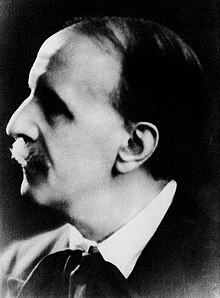
Alec Rowley was an English composer, organist, and pianist who taught composition at Trinity College in London. His name was known to many through his writing and through the many educational pieces that he wrote, staple fare for many a beginner or amateur player. His more demanding work as a composer has been unfairly neglected, save for the music he wrote for choirs and organ.
Alec Rowley


* at Rossetti's time, 'pitiful' still had the alternate meaning of 'compassionate.'

Friday, September 21, 2018

Music for September 23, 2018

Vocal Music
  • Cantique de Jean Racine – Gabriel Fauré (1845-1924)
Instrumental Music
  • Praise to the Lord, the Almighty – Johann Gottfried Walther (1684-1748)
  • Preamble – Louis Vierne (1870-1937)
  • Prelude on “Engleberg” – Craig Phillips (b. 1961)
Congregational Music (all hymns from the Hymnal 1982 with the exception of those marked “R” which are from Renew.)
  • Hymn 390 - Praise to the Lord, the Almighty (LOBE DEN HERREN)
  • Hymn R148 - Brother. Let me be your servant (SERVANT SONG)
  • Hymn 301 - Bread of the world, in mercy broken (RENDEZ A DIEU)
  • Hymn 660 - O Master, let me walk with thee (MARYTON)
  • Hymn 711 - Seek ye first the kingdom of God (SEEK YE FIRST)
  • Hymn 477 - All praise to thee, for thou, O King divine (ENGLEBERG)
  • Psalm 54 – Tone VIIIa
"How do you choose the music you use for worship at Good Shepherd?" asked one person at Daughters of the King that night I talked to them about Growing Old Gracefully. (Note to self: stick with what you know.)

I always start with the congregational music, choosing hymns, psalms, and spiritual songs that support and magnify the scripture readings for the day.  Everything else comes from those choices.

Often I can find an organ or piano piece based on a hymn-tune that we are singing that Sunday. Such is the case this week, as I have two works based on the opening and closing hymns.

The opening voluntary is a chorale-prelude based on the German chorale LOBE DEN HERREN (Praise to the Lord.) It is by the  German organist and composer Johann Gottfried Walther. A cousin of Johann Sebastian Bach, his life paralled that of his now-famed relative not only in the years spanned but also in their profession. (For a time they both lived in Weimar, Bach as court musician, and Walther as organist at the Weimar Stadtkirche. Walther remained at that post until his death.)

In the prelude this Sunday you will hear the melody played in the pedal on a trumpet stop. This setting is what is called a "gapped" chorale setting - a movement in which the chorale melody is heard phrase by phrase against a continuously moving texture in counterpoint to it.

Likewise, the closing voluntary is based on the closing hymn. ENGELBERG was composed in 1904 by the British composer Charles Villiers Stanford for the hymn "For All the Saints." It was fashionable in the earlier 20th century until it was eclipsed by the immensely popular SINE NOMINE, which Ralph Vaughan Williams composed for the same hymn in 1906.
Craig Phillips
It regained its prominence when it was paired with the  hymn "When in Our Music God Is Glorified" in 1972. Other texts that have been paired with this tune are "We Know that Christ Is Raised" and today's hymn, "All Praise to Thee, for Thou, O King Divine."

The organ piece by Craig Phillips, Prelude on "Engleberg," is more "Prelude" than "Engleberg." It starts with an opening fanfare before going into an original melody on the solo trumpet. It is a noble, heroic melody with a fanfare-like rhythm that goes on for three pages of music before we finally hear the familiar hymn-tune, played through, just once, with each phrase interrupted with a pedal solo reminiscent of the heroic melody from the first section. The piece ends with a recapitulation of the opening "A" section.

Louis Vierne
The other organ piece is the first piece from 24 Pièces en style libre op. 31, by the famed French organist Louis Vierne. Blind since birth, it is said that, at two years old, he heard his first piano. A pianist played a Schubert lullaby for him, and when he finished young Louis promptly began to pick out the notes of the lullaby on the piano. He attended the Paris Conservatoire and then became assistant to the organist Charles-Marie Widor at the church of Saint-Sulpice in Paris in 1892. He subsequently became principal organist at the cathedral of Notre-Dame de Paris, a post he held from 1900 until his death in 1937. He died at the organ of Notre-Dame at the end of his 1750th recital.

I've chosen it to compliment the other French piece today, the Cantiqe de Jean Racine by Gabriel Faure. We sang this piece a year ago, so go here to read about it.

Friday, September 23, 2016

Music for September 25 + Pentecost XIX and St. Michael and All Angels

10:15 Eucharist

Vocal Music
  • Fight the Good Fight – John Gardner (1917-2011)
Instrumental Music
  • Voluntary in D – John Stanley (1712-1786)
  • Symphonie No. 4: III. Andante cantabile - Charles-Marie Widor (1844-1937)
  • Trumpet Voluntary in D – John Stanley
Congregational Music (all hymns from the Hymnal 1982.)
  • Hymn 429 - I’ll praise my Maker while I’ve breath (Old 113th)
  • Hymn 561 - Stand up, stand up for Jesus (Morning Light)
  • Hymn 705 - As those of old their first fruits brought (Forest Green)
  • Hymn 605 - What does the Lord require (Sharpthorne)
  • Hymn 370 - God is love, let heaven adore him (Abbott’s Leigh)
  • Psalm 146:2-9 - Lauda, anima mea (simplified Anglican Chant by Jerome Meachem)

St. Michael and All Angels

Choral Eucharist at 5 PM

Vocal Music
  • Locus Iste – Anton Bruckner (1824-1896)
  • Hide Me Under the Shadow of thy Wings – John Ebenezer West (1863-1929)
Instrumental Music
  • Archangel Suite – Craig Phillips (b. 1961)
  1. Michael – “…there was war in heaven. Michael and his angels fought against the dragon.” – Rev. 12:7
  2. Gabriel – Messenger of God – messenger of the Annunciation
  3. Raphael – It is God who heals – Archangel of healing
  4. Uriel – God is my light – Archangel of Light
Congregational Music (all hymns from the Hymnal 1982 with the exception of those marked “R” which are from Renew.)
  • Hymn 282 - Christ, the fair glory of the holy angels (CAELITES PLAUDANT)
  • Hymn R75 - Praise the Lord, let heavens adore hymn (Austrian Hymn)
  • Hymn R114 - Psalm 103: Bless the Lord (Taizé)
  • Hymn 618 - Ye watchers and ye holy ones (Lasst uns erfreuen)
  • Hymn 625 - Ye holy angels bright (Darwall’s 148th)
This is a full Sunday for the Good Shepherd Choir, as we sing at the morning service at 10:15 as well as the Service dedicating the new Acolytes at 5 PM. Here are some thoughts about the music for both services.

John Gardner in rehearsal
I chose the anthem Fight the Good Fight to echo the themes of the Epistle reading for the day. ("Fight the good fight of the faith; take hold of the eternal life, to which you were called and for which you made the good confession in the presence of many witnesses. - 1st Timothy 6:12) That's also why we are singing that good old hymn, Stand Up, Stand Up for Jesus.

The anthem was composed by John Gardner, an English organist and composer who once tried to teach Paul McCartney the rudiments of music! He was decidedly of the "old" school - much more romantic and traditional than other up and coming composers on the European continent after World War II. This anthem comes from a set of Five Hymns in Popular Style composed in 1966

At the Evening Service the choir sings the beautiful unaccompanied motet by the Austrian composer Anton Bruckner, Locus Iste. The text, which is sung in Latin, translates to
This place was made by God,
a priceless sacrament;
it is without reproach. . 
I have chosen it because (A.) I like it. (B.) The choir likes it, and (C.) It reminds me of what Jacob said after he woke from his dream of angels climbing a ladder to heaven. ("“Surely the Lord is in this place...This is none other than the house of God, and this is the gate of heaven.” - Genesis 28:16-17)

Bruckner was a composer of a number of highly original and monumental symphonies. He was also an organist and teacher who composed much sacred and secular choral music. He was a devout Catholic, but he was not without his quirks. Read the article that I have linked to above. (But not during the sermon. DEFINITELY not in church.)

I'm excited to be playing a (relatively) new work at the evening service specifically for St. Michael and All Angels. It is a suite written in 2011 by Craig Phillips, Archangel Suite is a collection of four movements which explore the contrasting characters of the four traditional archangels.

Craig Phillips
I'm using the first movement, "Michael" as the opening voluntary; It is martial trumpet-tune which portrays St. Michael, the chief angelic adversary of Satan. The second and third movement will come during communion. "Gabriel" is a quietly but steadily flowing 9/8 movement with a lyric melody in the pedals, sounding above a flowing accompaniment in the manuals; "Raphael" is a shimmering meditation for celestes and solo stops, depicting the archangel of healing. I will play the finale, dedicated to Uriel,the archangel of light, as a closing voluntary. "Uriel" is a dramatic and vivid toccata in the French style.

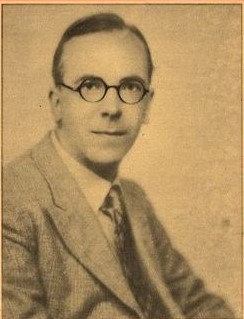
Craig Phillips has served as Director of Music at All Saints’ Church, Beverly Hills since 2009. He previously served for 20 years as the churches’ Associate Director of Music and Composer-in-Residence. His choral and organ music is heard Sunday by Sunday in churches and cathedrals across the United States, and many of his works have been performed in concert throughout North America, Europe and Asia. He was named the American Guild of Organists Distinguished Composer for 2012 — the seventeenth recipient of this special award.

Thursday, November 5, 2015

Music for November 8, 2015 + The Twenty-fourth Sunday after Pentecost


Vocal Music
  • Lord, Make Us Servants (hymn 593)– Lee Hastings Bristol (1923-1979)
Instrumental Music
  • Processional Celebration – Anna Laura Page (b. 1943)
  • What a Friend We Have in Jesus – Linda R. Lamb (b. 1947?)
  • Festival Piece – Craig Phillips (b. 1961)
Congregational Music (all hymns from the Hymnal 1982 with the exception of those marked “R” which are from Renew.)
  • Hymn 686 - Come, thou fount of every blessing (Nettleton)
  • Hymn 429 - I’ll praise my maker while I’ve breath (Old 113th)
  • Hymn 707 - Take my life, and let it be (Hollingside)
  • Hymn R172 - In my life, Lord, be glorified (Lord, be glorified)
  • Hymn 705 - As those of old their first fruits brought (Forest Green)
This Sunday we feature our Good Shepherd Handbell Choir in two works. The opening voluntary is an original composition by Anna Laura Page. Active as a composer, clinician and organist, she served on the Music Committee of the Southern Baptist 1991 Hymnal Committee and has received the ASCAP Standards Award for the past several years. She has taught organ as an adjunct faculty member at Mercer University in Macon, Georgia, and theory/organ as an adjunct faculty member at Lander University in Greenwood, South Carolina. She served as director of the Austin Peay Community Children's Chorus in Clarksville, Tennessee for three years. She is married to Dr. Oscar C. Page, President of Austin College in Sherman, Texas.

Processional Celebration was written in two parts - the first section is written with 4 lines of music. Each one enters after the preceding line is played once. It was designed to be played in procession from memory - which is why we are playing it

The communion voluntary is a setting of the old hymn "What a Friend We Have in Jesus" by Linda R. Lamb. Lamb has been involved with handbells since 1992, as director, composer, and sometime ringer. She is the handbell director at Lexington Park Baptist Church, Lexington Park, Maryland, where she directs one adult choir and one youth quartet. She graduated from Carson-Newman College in Jefferson City, Tennessee, with a B. A. in sociology, and from Concordia University in Wisconsin with a Master of Church Music (emphasis in handbells).

This arrangement makes use of both our set of English Handbells and our smaller set of choir chimes, which Lamb uses on the second verse to highlight the melody.

The offertory anthem is a hymn setting of a poetic rendering of the famous Prayer of St. Francis by Lee Hasting Bristol. Though Bristol was studied music at Ham­il­ton Col­lege, Clin­ton, New York (BA); Trin­i­ty Col­lege of Mu­sic, Lon­don (or­gan stu­dies); and the In­sti­tute for In­ter­na­tion­al Stu­dies, Ge­ne­va, Switz­er­land (grad­u­ate stu­dies), he worked in New York for the Bris­tol-Me­yers Com­pa­ny (the fam­i­ly bus­i­ness) in ad­ver­tis­ing and pub­lic re­la­tions from 1948-62. From 1962-69, however, he served as pre­si­dent of West­min­ster Choir Col­lege, Prince­ton, New Jer­sey. In 1972, the Hymn So­ci­e­ty in the Unit­ed States and Ca­na­da made him a fel­low of the so­ci­e­ty.

Friday, July 17, 2015

Music for July 19, 2015 + The Eighth Sunday after Pentecost

Instrumental Music

  • Tribute (Lullaby) – Craig Phillips (b. 1961)
  • A Tune for the Tuba – Eric Thiman (1900-1975)
  • Meditation on “Repton” -  Robert A. Hobby (b. 1962)
  • O Perfect Love - Gordon Young (1919-1998)

Congregational Music (all hymns from the Hymnal 1982.)

  • Hymn 525 - The Church’s one foundation (AURELIA)
  • Hymn 653 - Dear Lord and Father of mankind (REPTON)
  • Hymn 343 - Shepherd of souls, refresh and bless (ST. AGNES)
  • Hymn 708 - Savior, Like a shepherd lead us (SICILIAN MARINERS)

Lots of organ music this week, and all of it, I think, is immediately accessible even to those not particularly fond of the organ. Two of the pieces are original works with no reference to a hymn tune. 

The communion piece, Tribute, was written by Craig Philips, the organist and director of music at All Saints (Episcopal) Church in Beverly Hills. He wrote this at the request of concert organist David Craighead in honor of David's concert manager, Karen McFarlane. It is a gentle piece with the opening melody played on the krummhorn, one of the oldest organ sounds that in its most familiar form has a tone resembling that of the clarinet. It's written in 3/4 time, so it lends itself to the feel of a lullaby (which is probably why Philips sub-titled it thus so.)

The closing voluntary features another distinctive organ sound, the tuba. Much like the trumpet, it is a reed-stop with a brassy sound, but at 16' pitch, meaning it sounds an octave lower. This is a work written by the organist and composer Eric Thiman, who was active in England in the middle of the 20th century. Largely self-taught, he was Professor of Harmony at the Royal Academy of Music, and from 1956 to 1962, Dean of the Faculty of Music at London University. He was also organist and choirmaster at the City Temple in London, a Congregational Church where he achieved renown as an improviser of great skill. This Tuba Tune is in a form often used for trumpet tunes on the organ, with the solo featured on the opening theme, followed by the exact same theme with the full organ. The most famous example of that is the Trumpet Voluntary (Prince of Denmark's March) used so often at weddings.

The two other organ works are based on hymn tunes. 

Robert A. Hobby
C.H.H.Parry
We start of with Robert Hobby's straightforward setting of the tune Repton, used for the hymn Dear Lord and Father of Mankind. The tune first appeared in Charles H. H. Parry's oratorio Judith with the text, "Long since in Egypt's plenteous land, Our fathers were oppressed." Some time later this chorus was published separately as an anthem with the words which we will sing today as a hymn later in the service. It's a glorious melody, with a second half of the hymn tune that gradually builds toward a high note with such sweeping grandeur that one cannot fail to feel the passion of the music. 

At the last minute I had to substitute an organ voluntary for the vocal selection originally scheduled for today. Since I knew Father Bill was going to preach on recent events concerning marriage, I thought I would play Gordon Young's setting of the little-used wedding hymn, O Perfect Love. Regardless of your thoughts about marriage equality, you have to admit the text of the hymn, written in 1848 by Dorothy Francis Blomfield for her sister's wedding, is appropriate for any couple pledging their love for each other. It is a prayer that the marriage will be blessed with love, faith, endurance, and other qualities that lead to a strong relationship. The fourth stanza is a doxology addressed to the members of the Trinity.
O perfect Love, all human thought transcending,
lowly we kneel in prayer before thy throne,
that theirs may be the love which knows no ending,
whom thou in sacred vow dost join in one.  
O perfect Life, be thou their full assurance
of tender charity and steadfast faith,
of patient hope and quiet, brave endurance,
with childlike trust that fears no pain or death. 
Grant them the joy which brightens earthly sorrow;
grant them the peace which calms all earthly strife;
grant them the vision of the glorious morrow
that will reveal eternal love and life