Showing posts with label Louis Vierne. Show all posts

Thursday, August 12, 2021

Music for August 15, 2021 + Rally Day

Vocal Music

  • For the Beauty of the Earth – David Ashley White (b. 1944)

Instrumental Music

  • Galliard on Gather Us In – James Biery (b. 1956)
  • I Have Decided to Follow Jesus Arr. David Gale (21st c.)
  • Carillon de LongpontLouis Vierne (1870 - 1937)

Congregational Music (all numbered hymns are from the Hymnal 1982 with the exception of those marked “R” which are from Renew. Everything else is from other sources)

  • Hymn  Jesus in the morning (African-American Spiritual)
  • Hymn R37  Father, we love you (GLORIFY YOUR NAME)
  • Hymn Let  There Be Peace on Earth (WORLD PEACE)
  • Hymn 711  Seek Ye first the kingdom of God (SEEK YE FIRST)
  • Hymn R147  Here I am, Lord (HERE AM I LORD)
The choir returns to our services after a brief summer break, singing a simple setting of a familiar hymn hymn with new music by Houston composer David Ashley White. David is Professor of Composition and the C. W. Moores, Jr. Endowed Professor of Music in the Moores School of Music, University of Houston, and Composer-in-Residence at Palmer Memorial Episcopal Church. He served as Director of the Moores School from 1999-2014.

He wrote this charming setting of For the Beauty of the Earth for his parent's 50th wedding anniversary. It includes a flute solo and handbells.
A galliard was a popular dance from the Renaissance period. It was an athletic dance, characterised by leaps, jumps, hops and other similar figures. Similarly, the music was just as athletic, providing an exuberant tune for dancing. The term is borrowed from the Anglo-French word gaillard, which means "vigorous, lively."

You can hear the lively vigor in today's opening voluntary, an arrangement of the contemporary hymn, Gather Us In, by Marty Haugen (b.1950) It is found in the Renew Hymnal at no. 14. Its energetic text is personified by a rolicking romp for organ and trumpet. Here are the words; they are perfect for Rally Day:
1. Here in this place new light is streaming,
Now is the darkness vanished away,
See in this space our fears and our dreamings,
Brought here to you in the light of this day.
Gather us in' the lost and forsaken,
Gather us in' the blind and the lame;
Call to us now, and we shall awaken,
We shall arise at the sound of our name.

2. We are the young' our lives are a myst'ry,
We are the old' who yearn for your face,
We have been sung throughout all of hist'ry,
Called to be light to the whole human race.
Gather us in' the rich and the haughty,
Gather us in' the proud and the strong;
Give us a heart so meek and so lowly,
Give us the courage to enter the song.

3. Here we will take the wine and the water,
Here we will take the bread of new birth,
Here you shall call your sons and your daughters,
Call us anew to be salt for the earth.
Give us to drink the wine of compassion,
Give us to eat the bread that is you;
Nourish us well, and teach us to fashion
Lives that are holy and hearts that are true.

4. Not in the dark of buildings confining,
Not in some heaven, light years away, 
But here in this place the new light is shining,
Now is the Kingdom, now is the day.
Gather us in and hold us for ever,
Gather us in and make us your own;
Gather us in' all peoples together,
Fire of love in our flesh and our bone.
Text: Marty Haugen, © 1982, GIA Publications, Inc.

For communion, I am playing a piano setting of the Indian folk tune, I have decided to follow Jesus. It is arranged by David Gale, a composer, arranger, pianist and choir director from Tucson, Arizona. His education includes a bachelor's and master's degrees from Texas Tech University, and a doctorate in music composition from Northwestern University. Retired from 26 years at Flowing Wells Junior High School, Dr. Gale is currently in his 24th year as music director for First Christian Church in Tucson, where he focuses on creating music for the church service including piano arrangements and choir pieces.

The closing voluntary is a carillon by Louis Vierne. At the beginning of the 20th century, Vierne was the organist of Notre Dame of Paris.  A great friend of the Montesquiou family, he was regularly invited to the Château in Longpont in the month of August.  The 15th August was an especially important religious festival.  There was a grand procession through the village, and through the grounds of the Château.  Louis Vierne naturally contributed to the festivities.  A harmonium (reed organ) was fixed to a cart pulled by two donkeys; safely installed on this mobile stage, he accompanied the singing, and added brilliant improvisations.

On hearing the church bells on the 15th August 1913, Louis Vierne was inspired to write the Carillon de Longpont.  It was later dedicated to his brother René Vierne, killed on the 29th May 1918, not far from Longpont. The pedal part is a repeated ostinato of eighth notes under big, crashing chords on the manuals.


Friday, April 23, 2021

Music for April 25, 2021 + The Fourth Sunday of Easter

Good Shepherd Sunday

Vocal Music

  • Savior, Like a Shepherd Lead Us – William Bradley Roberts (b. 1947)

Instrumental Music

  • He Leadeth Me/Savior, Like a Shepherd Lead Us – arr. Phillip Keveren (b. 1961)
  • My Shepherd Will Supply My Need – arr. Brian Henkelmann (b. 1956)
  • Communion – Louis Vierne (1870-1937)
  • Tuba Tune – C. S. Lang (1891-1971)

Congregational Music (all hymns from the Hymnal 1982 with the exception of those marked “*” which are from Wonder, Love, and Praise.)

  • Canticle*- Christ our Passover (Pascha nostrum) (SINE NOMINE)
  • Hymn 208 - Alleluia! The Strife is O’er (VICTORY)
  • Hymn 304 - I come with joy to meet my Lord (LAND OF REST)
  • Psalm 23 - simplified Anglican chant by Jerome W. Meachen
The fourth Sunday of Easter is also called Good Shepherd Sunday, for the Psalm is always Psalm 23, and the Gospel reading references sheep. Many churches named after saints will often claim that saint's day as their "patronal" festival, so it is fitting that the Episcopal Church of the Good Shepherd in Kingwood should look to this day as our own feast day.

Jackson Hearn and Grace Tice
(looking for all the world like a prom picture)
With that in mind, we celebrate with music appropriate to the day. Not only does this Sunday mark the official return of the choir, but also brings a guest musician, the oboist (and my dear friend) Grace Tice. Grace is a free-lance musician in the Houston area, with degrees from North Texas State University (now the University of North Texas) and Rice. She has performed with the Houston Ballet Orchestra as well as several regional orchestras. She is a favorite of church musicians in Houston, because not only is she extremely musical but also because she lives up to her name, Grace.

Grace will be heard on the choir's anthem, a setting of the text "Savior, Like a Shepherd Lead Us" which first appeared in Hymns for the Young, 1840, which was edited by Dorothy Ann Thrupp. Although no author's name appears with the text, it is thought that Thrupp wrote it, since she often published hymns anonymously, under the pseudonym "Iota," or simply using her initials. 

The text is coupled with a new tune written by William Bradley Roberts, the Professor Emeritus of Church Music at Virginia Theological Seminary, Alexandria. Previously he was a parish musician, serving at St. John’s, Lafayette Square, Washington, D.C., and at churches in Tucson, Newport Beach, Louisville, and Houston, where he was a student at Houston Baptist University.

In addition to playing with the choir on their anthem, Grace and I will play arrangements of some "Shepherd Hymns" for oboe and piano. We will start with a "mash-up" of two American hymn-tunes associated with the texts He Leadeth Me and Savior, Like a Shepherd Lead Us. If you came to the Episcopal church out of any other Protestant tradition, you will likely recognize these two tunes.

He Leadeth Me is a hymn paraphrase of Psalm 23, written in the late 1800s by Baptist minister Joseph Gilmore. With its tune by William Bradbury, it has appeared in well over 1150 hymnals - with 50 of those being published since 1979. It is not in The Hymnal 1982.

The other tune in this "mash-up" (I still can't use that term without thinking of the TV series GLEE which introduced it to me.) is the  tune used in most hymnals for Savior, like a Shepherd lead us. This tune is named BRADBURY, after its composer, William Bradbury (the same William Bradbury who wrote He Leadeth Me.) This tune is pair with this text in at least 254 modern hymnals, while the tune in our hymnal, SICILIAN MARINERS, is paired only three times.

This arrangement of these two hymns is the work of Phillip Keveren, a multi-talented keyboard artist and composer living in Brentwood (Nashville), Tennessee. He composes in a variety of genres, and is widely acclaimed for his piano publications. Mr. Keveren is a prolific arranger, orchestrator and producer. His work is featured in numerous instrumental recordings, church choral, educational piano and Christian artist releases. His arrangements and compositions appear on recent projects by Sandi Patty, Travis Cottrell, Sara Groves and Ronan Tynan. Keveren holds a Bachelor of Music in Composition from California State University, Northridge, and a Master of Music in Composition from the University of Southern California.

The other piece in the opening voluntary is a oboe and piano setting of the Southern hymn, My Shepherd Will Supply My Need. It is arranged by Brian Henkelmann, a pianist, organist, composer and educator currently living in Jonesboro, Arkansas, where he is organist at the First United Methodist Church and on the faculty of Arkansas State University. Henkelmann holds a bachelor of arts in music from Moravian College, a master of arts in theological studies from Moravian Theological Seminary, and a master of church music from Concordia University Chicago. 

Saturday, April 3, 2021

Music for Easter 2021

Vocal Music

  • Now the Green Blade RisethShirley McRae, arr. (1933-2018)
  • Christ the Lord is Risen Today John Ferguson, arr. (b. 1941)
  • I Know that My Redeemer LivethG. F. Handel (1685-1759)
    • Amy Bogan, soprano

Instrumental Music

  • Improvisation on Good Christians All, Rejoice and Sing! - Paul Manz (1919-2009)
  • Carillon de Westminster, Opus 54, No. 6 – Louis Vierne (1870-1937)
  • Rondo in G – John Bull (1562 or 1563 – 1628), arr. Richard Ellsasser (1926 - 1972)

Congregational Music (all hymns from the Hymnal 1982.)

  • Hymn 207 Jesus Christ is risen today (EASTER HYMN)
  • Hymn 178 Alleluia, alleluia! Give thanks to the risen Lord (ALLELUIA NO. 1)
  • S-128 Sanctus - William Mathias
  • S-151 fraction anthem (
  • Psalm 118 – Hal H. Hopson

The music for Easter takes on an appropriately celebratory tone with the addition of two instruments you don't usually hear together except on a Revolutionary War battlefield.

At the time I was looking for music for Easter 2021, choirs were not yet permitted in our in-person services, so I needed some special music for our four-person Schola (1) that would be appropriately festive while not being over-powering for the small group. I remembered an arrangement of an Easter carol which was accompanied by piccolo and snare drum alone. It was a perfect choice. I paired it with another Easter carol arranged for two-part choir, flute, bells and tamborine, and was all ready for Easter. Then, when we got the word that the choir could sing, we were all set!

Christ the Lord Is Risen Today is arranged by John Ferguson, for many years the Elliot and Klara Stockdal Johnson Professor of Organ and Church Music and Cantor to the Student Congregation at St. Olaf College in Northfield, Minnesota. His undergraduate work was completed at Oberlin College, his Masters degree from Kent State and the DMA diploma from The Eastman School of Music. He set the Charles Wesley Easter hymn to a Christmas Carol from 13th century France called ORIENTIS PARTIBUS. (You may remember the carol as "The Friendly Beasts.") It's a very simple setting for choir which is made more joyful by the addition of the spritely piccolo and crisp sound of the snare drum.

The other anthem is a setting of another Easter text set to another French Christmas carol. Anglican priest John MacLeod Campbell Crum wrote Now the Green Blade Riseth to be paired with the popular French carol melody NOËL NOUVELET. Michael Hawn, retired professor of church music at Perkins School of Theology at SMU, wrote this about the text:
The vivid imagery of the hymn is biblically based: John 12:23-24: "And Jesus answered them, saying, the hour is come, that the Son of man should be glorified. Verily, verily, I say unto you, except a corn of wheat fall into the ground and die, it abideth alone: but if it die, it bringeth forth much fruit." (KJV) In addition, 1 Corinthians 15:37-38 connects the image with the resurrection: "And that which sowest, thou sowest not that body that shall be, but bare grain, it may chance of wheat, or of some other grain: But God giveth it a body as it hath pleased him, and to every seed his own body." (KJV)

The connection of the Easter event - the rising of Jesus -- is unmistakable. The simple phrase "Now the green blade riseth" reminds us that Jesus is risen today just as he rose on that first Easter morning. In the third line, we find "Love" being used as a metaphor for Jesus. We are now reminded why Jesus came to the earth in the first place: "For God so loved the world…" (John 3:16). After speaking directly about Jesus' death and resurrection, Crum turns to our lifetime struggles. In the fourth stanza, Crum emphasizes that no matter what we are going through, "Jesus' touch can call us back to life again." (2)
This arrangement is by a one of my Memphis friends, Shirley W. McRae. Shirley was Professor Emerita in the Rudi E. Scheidt School of Music (University of Memphis), where she taught for 25 years and served as coordinator of music education. At the University, she taught courses in aural theory, children's choirs, hymnology, choral conducting, and music education. 

With a worldwide reputation in the specialized field of Orff Music, she was a composer, music clinician, children's choir conductor as well as the author of two textbooks, Directing the Children's Choir and Tutoring Tooters. Over her extensive career, she composed numerous choral works, both sacred and secular, for unison and mixed choirs as well as eight books of compositions and arrangements for Orff music classes. Her compositions and arrangements have been widely performed by school, university, community, and professional ensembles across the United States. Four of her compositions have been commercially recorded by groups including the Rhodes College Singers, the Denver Women's Chorus, and the Memphis Boychoir and Chamber Choir.


She has arranged this carol for choir, flute, handbells and percussion.

The opening voluntary at the 10:15 service is a toccata based on the famous bell peal, Westminster Chimes. Nearly everyone associates the Westminster chimes with the Clock Tower at the House of Parliament in London. Originally, however, they were fitted to the clock of the University Church, St Mary's the Great, in Cambridge, England. This is a fabulous organ piece, written by a great composer, Louis Vierne. He was almost completely blind after being born with cataracts, and composed in Braille or on large manuscript paper. From an early age he had a gift for music, and was able to pick out notes from a Schubert lullaby on the piano at the age of two.

The closing voluntary is the Rondo in G, attributed to John Bull but probably composed by Richard Ellsasser, an American organist active during the 1940s, 50's and 60's. Born in Cleveland, Ohio, Ellsasser was a musical prodigy who studied piano and organ, touring the eastern United States as an organist with various symphony orchestras at the age of 7. He made his New York organ debut in 1937. At the age of 19 he became the youngest person in history to have played, from memory, all 250+ organ works of J. S. Bach. At age 41, he suffered a stroke which forced him into retirement.


(1) Schola refers to a singing school especially for church choristers, and specifically: the choir or choir school of a monastery or of a cathedral. In a monastery, everyone was expected to sing the service. The Schola was a specialized group from out of the larger "choir" (Congregation) for special music.
(2) C. Michael Hawn https://www.umcdiscipleship.org/resources/history-of-hymns-now-the-green-blade-riseth

Thursday, September 5, 2019

Music for September 8, 2019

Vocal Music
  • Teach Me, O Lord – Thomas Attwood (1765-1838)
Instrumental Music
  • Prélude, Opus 15, no. 5 – Louis Vierne (1870-1937)
  • From God Shall Naught Divide Me, BuxWV 220 – Dietrich Buxtehude (1637-1707)
  • Tuba Tune in D Major, Op. 15 – C. S. Lang (1891-1971)
Congregational Music (all hymns from the Hymnal 1982 with the exception of those marked “R” which are from Renew.)
  • Hymn 400 - All creatures of our God and king (LAAST UNS ERFREUEN)
  • Hymn 675 - Take up your cross, the Savior said (BOURBON)
  • Hymn 635 - If thou but suffer God to guide thee (WER NUR DEN LIEBEN GOTT)
  • Hymn - I have decided to follow Jesus (ISSAM)
  • Hymn R 206 - Holy, holy (HOLY HOLY)
  • Hymn 423 - Immortal, invisible (ST. DENIO)
  • Psalm 1 – Tone VIb
Thomas Attwood (unknown painter)
Two weeks ago the Good Shepherd Choir sang an anthem by Mozart, and the week before we featured music by Mendelssohn. Today we sing an anthem by an English composer who bridged the two, Thomas Attwood. Attwood was organist at St. Paul's Cathedral in London from 1796 until his death. He began his musical career as a chorister in the Chapel Royal. The Prince of Wales, later George IV, sent him to Italy to study music when Attwood was 18, and then on to Vienna, where he became a student and friend to Mozart. Mozart told a friend, "I have the sincerest affection for Attwood, and i feel much pleasure in telling you that he has imbibed more of my style than any other scholar I have ever had." (1) Today's anthem, Teach Me, O Lord, dates from 1797, and exhibits much of Mozart's style. It has many of the same melodic and harmonic characteristics of Ave Verum, Mozart's miniature masterpiece.

Later in his life, Attwood became a close friend to the young composer Mendelssohn. During Mendelssohn's first trip to London, he suffered a knee injury in an accident, and spent the latter part of his recuperation in Attwood's home at Beulah Hill in Norwood. Following a second stay at  Norwood in 1832, Mendelssohn dedicated his Three Preludes and Fugues for the Organ (Op. 37) to Attwood.

(1) Wienand, Elwyn A. and Young, Robert H., The Anthem in England and America, The Free Press, 1970, p. 248 

Tuesday, June 25, 2019

Music for June 23, 2019 + Pentecost 2

Vocal Music

  • Let the Bright Seraphim – George Frederick Handel (1685-1759), Jade Panares, soprano

Instrumental Music

  • Choral – Louis Vierne (1870-1937)
  • Ayre – George Frederick Handel 
  • Postlude – Louis Vierne 

Congregational Music (all hymns from the Hymnal 1982 with the exception of those marked “R” which are from Renew.)

  • Hymn 388 O worship the King, all glorious above! (HANOVER)
  • Hymn 529 In Christ there is no East or West (MCKEE)
  • Hymn 679 Surely it is God who saves me (THOMAS MERTON)
  • Hymn R9 As the deer pants for the water (Martin Nystrom)
  • Hymn R218 One bread, one body, (ONE BREAD, ONE BODY,)
  • Hymn 411 O bless the Lord, my soul (ST. THOMAS (WILLIAMS))
  • Psalm 42 -  Tone VIIIa


Friday, September 21, 2018

Music for September 23, 2018

Vocal Music
  • Cantique de Jean Racine – Gabriel Fauré (1845-1924)
Instrumental Music
  • Praise to the Lord, the Almighty – Johann Gottfried Walther (1684-1748)
  • Preamble – Louis Vierne (1870-1937)
  • Prelude on “Engleberg” – Craig Phillips (b. 1961)
Congregational Music (all hymns from the Hymnal 1982 with the exception of those marked “R” which are from Renew.)
  • Hymn 390 - Praise to the Lord, the Almighty (LOBE DEN HERREN)
  • Hymn R148 - Brother. Let me be your servant (SERVANT SONG)
  • Hymn 301 - Bread of the world, in mercy broken (RENDEZ A DIEU)
  • Hymn 660 - O Master, let me walk with thee (MARYTON)
  • Hymn 711 - Seek ye first the kingdom of God (SEEK YE FIRST)
  • Hymn 477 - All praise to thee, for thou, O King divine (ENGLEBERG)
  • Psalm 54 – Tone VIIIa
"How do you choose the music you use for worship at Good Shepherd?" asked one person at Daughters of the King that night I talked to them about Growing Old Gracefully. (Note to self: stick with what you know.)

I always start with the congregational music, choosing hymns, psalms, and spiritual songs that support and magnify the scripture readings for the day.  Everything else comes from those choices.

Often I can find an organ or piano piece based on a hymn-tune that we are singing that Sunday. Such is the case this week, as I have two works based on the opening and closing hymns.

The opening voluntary is a chorale-prelude based on the German chorale LOBE DEN HERREN (Praise to the Lord.) It is by the  German organist and composer Johann Gottfried Walther. A cousin of Johann Sebastian Bach, his life paralled that of his now-famed relative not only in the years spanned but also in their profession. (For a time they both lived in Weimar, Bach as court musician, and Walther as organist at the Weimar Stadtkirche. Walther remained at that post until his death.)

In the prelude this Sunday you will hear the melody played in the pedal on a trumpet stop. This setting is what is called a "gapped" chorale setting - a movement in which the chorale melody is heard phrase by phrase against a continuously moving texture in counterpoint to it.

Likewise, the closing voluntary is based on the closing hymn. ENGELBERG was composed in 1904 by the British composer Charles Villiers Stanford for the hymn "For All the Saints." It was fashionable in the earlier 20th century until it was eclipsed by the immensely popular SINE NOMINE, which Ralph Vaughan Williams composed for the same hymn in 1906.
Craig Phillips
It regained its prominence when it was paired with the  hymn "When in Our Music God Is Glorified" in 1972. Other texts that have been paired with this tune are "We Know that Christ Is Raised" and today's hymn, "All Praise to Thee, for Thou, O King Divine."

The organ piece by Craig Phillips, Prelude on "Engleberg," is more "Prelude" than "Engleberg." It starts with an opening fanfare before going into an original melody on the solo trumpet. It is a noble, heroic melody with a fanfare-like rhythm that goes on for three pages of music before we finally hear the familiar hymn-tune, played through, just once, with each phrase interrupted with a pedal solo reminiscent of the heroic melody from the first section. The piece ends with a recapitulation of the opening "A" section.

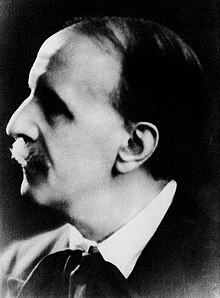
Louis Vierne
The other organ piece is the first piece from 24 Pièces en style libre op. 31, by the famed French organist Louis Vierne. Blind since birth, it is said that, at two years old, he heard his first piano. A pianist played a Schubert lullaby for him, and when he finished young Louis promptly began to pick out the notes of the lullaby on the piano. He attended the Paris Conservatoire and then became assistant to the organist Charles-Marie Widor at the church of Saint-Sulpice in Paris in 1892. He subsequently became principal organist at the cathedral of Notre-Dame de Paris, a post he held from 1900 until his death in 1937. He died at the organ of Notre-Dame at the end of his 1750th recital.

I've chosen it to compliment the other French piece today, the Cantiqe de Jean Racine by Gabriel Faure. We sang this piece a year ago, so go here to read about it.

Thursday, August 17, 2017

Music for August 20, 2017 + The Eleventh Sunday after Pentecost

Vocal Music

  • This Is My Father’s World – arr. Richard Walters (21st C.)
    • Jade Panares, soprano

Instrumental Music

  • Berceuse – Louis Vierne (1870-1937)
  • From God shall nought divide me  - Von Gott will ich nicht lassen,  BWV 658 – J. S. Bach (1685-1750)
  • Carillon de Longpont – Louis Vierne

Congregational Music (all hymns from the Hymnal 1982 with the exception of those marked “R” which are from Renew.)

  • Hymn 380 - From all that dwell below the skies (OLD 100TH)
  • Hymn 470 - There’s a wideness in God’s mercy (BEECHER)
  • Hymn 533 - How wondrous and great thy works (LYONS)
  • Hymn R249 - Great is thy Faithfulness (FAITHFULNESS)
  • Hymn R173 - O Lord, hear my prayer (Taizé)
  • Hymn 371 - Thou, whose almighty word (MOSCOW)
  • Psalm 67 - Tone VIIIa
Last weekend at the Old Fashioned Hymn Sing, one of the requests was the hymn "This Is My Father's World," sung to the tune TERRA BEATA that is used in most hymnals. (For some reason the editors of The Hymnal 1982 chose a new tune which only appears in one other hymnal, making it fairly unattractive to ecumenical singing.) TERRA BEATA was originally a traditional English folk tune, a variant of which, entitled RUSPER, appeared in The English Hymnal in 1906.  In 1915, Franklin L. Sheppard arranged the tune for Maltbie D. Babcock's poem and published it in the Presbyterian church school hymnal Alleluia, edited by Sheppard (Babcock and Sheppard were friends). Since that time the text and tune has been published in 89 hymnals (except ours.)

Jade Panares, our soprano section leader, will be singing a setting of this hymn this weekend. Jade will be beginning her third year at the University of Houston, majoring in voice. In this arrangement, the simple melody has been left pretty much intact, with a lilting, syncopated piano accompaniment that the arranger describes as 'light rock.' (VERY light, in my opinion.) We chose to sing this hymn this week in light of the events of the past week here in the States. We refer to the last stanza (which also is NOT in The Hymnal 1982.)
This is my Father's world:
O let me ne'er forget
That though the wrong seems oft so strong,
God is the Ruler yet.
This is my Father's world:
Why should my heart be sad?
The Lord is King: let the heavens ring!
God reigns; let earth be glad! 
The opening and closing voluntaries are from a collection of organ music 24 Pièces en style libre, Opus 31, Volume II, by Louis Vierne. The opening voluntary is No 19, Berceuse. A berceuse is a lullaby or cradle song.  It's dedicated to "à ma fille Colette" (to my daughter, Colette). But when it was published, Vierne had divorced from his wife who had quickly, while still married, fallen in love with Charles Mutin.. After seeing this dedication, Vierne's former wife wrote him: "A ta fille ? Elle n'est même pas de toi !" (to your daughter? But it's not YOUR daughter!"). How cruel, but still more cruel when one reads the dedication of  Vierne's 2nd symphony "A mon ami Charles Mutin" (To my friend Charles Mutin), written just after the Viernes were first married!

The closing voluntary is No 21, Carillon. It is based on the carillon of the Chapel of the Castle of Longpont, in Northern France.  Vierne was the organist at Notre-Dame in Paris, and good friends with the Montesquiou family, who would often invite him to spend August at the Castle. On August 15, 1913, he first heard the four bell chime (not really a carillon) play the now-famous air, and he was inspired to write this piece. Later he published it, dedicating it to the memory of his brother, René, who had been killed on May 29, 1918, by Austrian shrapnel, on the Plateau Branscourt (Marne), not far from Longpont.

It opens with full organ, the Carillon theme entering in an energetic ostinato in the pedals, above which powerful, detached chords appear. In the middle the volume drops and the carillon theme continues on the manuals. Striking features are the modulations, the highly effective staccato articulations, and the dynamic effects created by the swell box. A gradual crescendo leads into the reprise of the opening, ending with a coda.

The Communion voluntary is Von Gott will ich nicht lassen, a chorale prelude from the Great Eighteen Choräle Preludes, which J. S. Bach published in the last 10 years of his life, using earlier works composed in Weimar, where he was court organist. The works form an encyclopedic collection of large-scale chorale preludes, in a variety of styles harking back to the previous century, that Bach gradually perfected during his career. 

No. 7, From God shall nought divide me, is an example of the cantus firmus chorale: The melody of the chorale is sounded in long notes throughout the piece, in the pedal in this case. The ornate three-part keyboard accompaniment is derived from the opening notes of the hymn and a separate "joy motif" that permeates the piece, exquisitely "winding above and around [the chorale melody] like a luxurious garland of amaranth." [1]  Only four lines of the melody are heard in the pedal, the chorale prelude closing with a seemingly timeless bell-like coda over a pedal point, perhaps illustrating the final lines of the hymn, "after death we will be buried deep in the earth; when we have slept, we will be awoken by God." It is also interesting to note that in this "bell" coda, the note C sharp is heard 7 times consecutively, within a fourth voice, outside of the three accompaniment voices. This would seem to be indicative of the German funeral bell.

[1] Stinson, Russell (2001), J.S. Bach's Great Eighteen Organ Chorales, Oxford University Press, ISBN 0-19-516556-X, p. 85

Friday, April 14, 2017

Music for April 16, 2017 + Easter

Vocal Music


  • Tell the News! – David Ashley White (b. 1944)
  • Magdalen, Cease from Sobs and Sighs – Peter Hurford (b. 1930)
  • Hallelujah (Messiah) – G. F. Handel (1685-1759)

Instrumental Music


  • Carillon de Westminster - Louis Vierne (1870-1937)
  • Final (Symphony No. 1 in D minor, Op. 14) – Louis Vierne

Congregational Music (all hymns from the Hymnal 1982 with the exception of those marked “R” which are from Renew.)


  • Hymn 179 - “Welcome, happy morning!” (FORTUNATUS)
  • Hymn 207 - Jesus Christ is risen today (EASTER HYMN)
  • Hymn 174 - At the Lamb’s high feast we sing (SALZBURG)
  • Hymn - Sing with all the saints in glory (HYMN TO JOY)
  • Hymn R199 - This is the feast of victory (FESTIVAL CANTICLE)
  • Hymn R237 - Jesus, stand among us (WEM IN LEIDENSTAGEN)
  • Hymn R202 - Sing alleluia to the Lord (SING ALLELUIA)
  • Hymn 182 - Christ is alive! Let Christians sing (TRURO)
  • Psalm 118:1-2, 14-24 Confitemini Domino - setting by Thom Pavlechko

David Ashley White
The offertory anthem is a new addition to the library of the Good Shepherd Choir. It was written by David Ashley White, a seventh-generation Texan who is on the faculty of the Moores School of Music at the University of Houston and is Composer-in-Residence at Houston’s Palmer Memorial Episcopal Church. He wrote this anthem for the Mississippi Conference of Church Music and Liturgy, which I attend every year and where I first heard it. I was immediately drawn to its melody, a rugged tune full of life and celebration which sounds as if it were written during the time of the Revolutionary War. Combined with the sparkling organ accompaniment, it will work well as the 'big' anthem at our Easter eucharist.

Peter Hurford
The communion anthem is also new to our library, but is well known among church musicians. It is the arrangement of an Easter carol by the British organist Peter Hurford. Trained in both music and law, Hurford has enjoyed an enviable reputation for both his organ playing and his musical scholarship. He received an appointment as music master at St. Albans Abbey in 1958 where he began to attract the attention of other English organists unsatisfied with the traditional and often heavy-handed Baroque style customarily heard in English churches.  After two decades at St. Albans, Hurford resigned in 1978 to devote his time to solo performances. By that time, his recordings had made his name a familiar one even to those who had not heard him in live performance. He suffered a minor stroke in 1997, but recovered enough to resume his performing career seven months later. In early 2008, he was diagnosed with advanced Alzheimer's Disease, and formally retired from concertizing in 2009.

When it comes to showy organ music, nothing, nobody, can beat the French. One of the greatest organists of the first half of the 20th century was Louis Vierne, who was organist at Notre Dame in Paris. He wrote music for orchestra, choir, voice and piano, but it is his organ music that he is most remembered for today. He wrote 6 organ symphonies, four suites, two organ masses and numerous other pieces for the instrument.
From the third suite of Vierne’s four-suite set 24 pieces de fantaisie we find Vierne's most famous work, The Carillon de Westminster. The ubiquitous clock-tune of Westminster Abbey, heard every hour on-the-hour in cities and towns all over the planet, is here gradually transformed into a magnificent, transcendent celebration of time and eternity itself. It gradually builds in intensity toward its awesome and heaven-storming climax. Though not explicitly "Easter" in title, its celebratory feel is perfect for this day.

Vierne's first symphony, Symphony No. 1 for organ in D minor, Op. 14, was premiered in 1899. It had six movements but it is the last movement, or Final,which I am playing for the closing voluntary today. From the first note to the last, it is non-stop with the melody in the pedals and rapid accompaniment in the manual keyboards. This movement is loud, starting with full organ and getting even louder!

Were his music not dramatic enough, it's only topped by his death - dying at the console during a performance. (You can read about it here). That's the way to go!