Showing posts with label Alec Rowley. Show all posts

Saturday, December 4, 2021

Music for December 5, 2021 + The Second Sunday of Advent

Vocal Music

  • Come, Though Long Expected Jesus – Marty Wheeler Burnett (b. 1961)

Instrumental Music

  • Benedictus – Alec Rowley (1892-1958)
  • Partita on Comfort, comfort, ye my people (PSALM 42) – Johann Pachelbel (1661–1733)
  • Prepare the Way, O Zion – Paul Manz (1919-2009)

Congregational Music (all hymns from The Hymnal 1982 with the exception of those marked “R” which are from Renew.)

  • Hymn 76 - On Jordan’s bank the Baptist’s cry (WINCHESTER NEW)
  • Hymn R-128  - Blessed be the God of Israel (FOREST GREEN)
  • Hymn 67 - Comfort, comfort, ye my people (PSALM 42)
  • Hymn R-92 - Prepare the way of the Lord (Taizé)
  • Hymn 65 - Prepare the way, O Zion (BEREDEN VAG FOR HERRAN)

Marty Wheeler Burnett
This Sunday the choir sings a new anthem by Houston native (and friend of mine), Marty Wheeler Burnett. It is a lush setting of the famous Charles Wesley text, "Come, thou long expected Jesus," with a melody more suited to the feeling of longing and hope found in Wesley's words that the plodding tune found in our hymnal.

Marty got her degrees in organ performance from Rice University in 1988, and in 2010 she received her doctoral degree, with a liturgical music focus, from Sewanee: The University of the South. In 2020 Marty joined the faculty of  Virginia Theological Seminary as the Associate Professor of Church Music and Director of Chapel Music.

Prior to her appointment at VTS, Marty led and coordinated the music ministry at Trinity Episcopal Cathedral in Omaha, Nebraska. An award-winning educator, Burnett previously served as Director of Fine Arts and Associate Professor of Music at College of Saint Mary in Omaha. She is the immediate past-president of the Association of Anglican Musicians, an organization of musicians and clergy serving the Episcopal Church.

+ + +

As you know, each Sunday we sing a Psalm that is part of the lectionary readings for the day, but this year, three of the four Sundays in Advent designate a Canticle be sung instead of a Psalm. (A Canticle is a hymn or chant, typically with a biblical text, forming a regular part of a church service. The most common Canticle is Glory to God in the highest (Gloria in excelsis), which is Canticle 6 (Rite I) or 20 (Rite II). The canticle for Advent II is Canticle 4 or 16, The Song of Zechariah (Benedictus Dominus Deus). That's why I am playing a piece called Benedictus for the opening voluntary. However, it is not based on the canticle, but on two lines from a poem by Christina Rossetti, a litany of praise entitled: "All Thy Works Praise Thee, O Lord: A Processional Of Creation".  Those two lines are
Christina Rossetti
I bring refreshment —  I bring ease and calm.
Because so much of Rossetti's poetry is Christian, one can assume that Rossetti is talking about Christ. But in this poem (very much like a canticle, actually), Rossetti has each individual piece of creation sing a three line hymn of praise, starting with seraphs, cherubs, angels, heavens, sun, moon, comets, winds, fire, heat, winter, spring, frost, night, light, thunder, clouds, until we finally get down to Medicinal Herbs, who sing:
I bring refreshment,—
                      I bring ease and calm,—
I lavish strength and healing,—
                                I am balm,—
We work His pitiful* Will and chant our psalm.
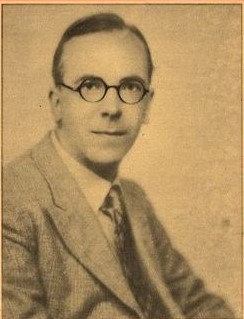
Alec Rowley was an English composer, organist, and pianist who taught composition at Trinity College in London. His name was known to many through his writing and through the many educational pieces that he wrote, staple fare for many a beginner or amateur player. His more demanding work as a composer has been unfairly neglected, save for the music he wrote for choirs and organ.

* at Rossetti's time, 'pitiful' still had the alternate meaning of 'compassionate.'


Friday, October 25, 2019

Music for October 27. 2019

Vocal Music

  • There’s a Wideness in God’s Mercy – Maurice Bevan (1921-2006)
  • Prayer – Lloyd Pfautsch (1921-2003)

Instrumental Music

  • The Sixty-Fifth Psalm – Alec Rowley (1892-1958)
  • Chromhorne sur la taille (Messe pour les Convents) - Francois Couperin (1668-1733)
  • Offertoire sur les grands jeux (Messe pour les Convents) - Francois Couperin 

Congregational Music (all hymns from the Hymnal 1982.)

  • Hymn 506 - Praise the Spirit in creation (FINNIAN)
  • Hymn 552 - Fight the good fight with all thy might (PENTECOST)
  • Hymn 424 - For the fruit of all creation (EAST ACKLAM)
  • Hymn 314 - Humbly I adore thee (ADORO DEVOTE)
  • Hymn 680 - O God, our help in ages past (ST. ANNE)
  • Psalm 65 – Tone V 
I've sung the hymn, "There's a Wideness in God's Mercy," for years - all my life, really - using the tune BEECHER which our hymnal uses. But several years ago, Maurice Bevan, a British bass-baritone who sang with The Deller Consort, St Paul's Cathedral in London, and the BBC, wrote a beautiful new tune which has since gained popularity. One of the things that won my heart in this arrangement was the inclusion of a couple of couplets that are left out of most hymnals:
But we make his love too narrow
By false limits of our own;
And we magnify his strictness
With a zeal he would not own.
There is plentiful redemption
In the blood that has been shed;
There is joy for all the members
In the sorrows of the Head.
There is grace enough for thousands
Of new worlds as great as this;
There is room for fresh creations
In that upper home of bliss.
If our love were but more simple,
We should take him at his word;
And our lives would be all gladness
In the joy of Christ our Lord.
Maurice Bevan
The hymn was written  by the Catholic priest and poet, Frederick William Faber. Raised in the church of England, and ordained an Anglican priest, he was influenced by the teaching of John Henry Newman. In 1845 Faber followed Newman into the Roman Catholic Church and served in the Oratory of St. Philip Neri. Because he believed that Roman Catholics should sing hymns like those written by John Newton, Charles Wesley, and William Cowper, Faber wrote 150 hymns himself. One of his best known, "Faith of Our Fathers."

Dag Hammarskjold
Our communion anthem also has a beautiful text. It is by Dag Hammarskjold, who was  Secretary-General of the United Nations until his death in a plane crash in 1961. He  gave the impression of being an agnostic humanist while he was serving at the UN, but after his death, his private papers were discovered which contained some notes entitled “negotiations with myself – and with God”. His prayers have a naked honesty which is deeply moving. This text is one of those.

Hammarskjold's words were set to a haunting, chant-like melody by Lloyd Pfautsch, composer and one-time Director of Choral Activities at Southern Methodist University in Dallas. He was one of my teachers, and from him I learned much, including these two things.

Lloyd Pfautsch
1. WORDS MATTER -- Lloyd considered it important for those who sing great words of faith to consider, and carefully articulate them while singing them. For him, the choir’s diction was essential
in prompting the hearers’ informed response.

2. MUSIC MATTERS -- Lloyd taught all of us that when choosing worship music --- congregational, choral, instrumental or keyboard --- the liturgy should inform the appropriateness of the music, and, the music, particularly the music of hymns, should compliment the words. I try to do that every Sunday.

That's why I chose this week's opening voluntary, a Tone Poem by English composer Alec Rowley on Psalm 65, which is the Psalm of the day. It's a longer work than usual (almost 8 minutes), so I want you to listen for these themes found in the music: (The text is from the Coverdale translation of the Bible, which had been used as the Psalter in all Books of Common Prayer, back to the first in 1549, until 1979.

Verse 1: Thou, O God, art Praised in Zion - Majestic 3/4 time
Verse 3: My misdeeds prevail against me - Softer, lyrical section, melody in the oboe (a plaintive sound).
Verse 7: Who stilleth the raging of the sea and the madness of the peoples. -  The organ becomes more agitated, growing in volume, tempo, and intensity, until it relaxes into a feeling of peace.
Verse 9: Thou Visiteth the earth, and blessest it. -  A broad, sweeping, descending melody modulating downward through three different keys as it "visits the earth" (descending)
Verse 14: The Valleys also shall stand so thick with corn, that they shall laugh and sing. - The music growing in volume and breadth, "thick" 

Friday, December 7, 2018

Music for December 9, 2018 + The Second Sunday of Advent

Vocal Music

  • There’s a Voice in the Wilderness  – Craig Phillips (b. 1961)

Instrumental Music

  • Benedictus – Alec Rowley (1892-1958)
  • Partita on Comfort, comfort, ye my people (PSALM 42) – Johann Pachelbel (1661–1733)
  • Prepare the Way, O Zion – Paul Manz  (1919-2009)

Congregational Music (all hymns from the Hymnal 1982 with the exception of those marked “R” which are from Renew.)

  • Hymn 76 - On Jordan’s bank the Baptist’s cry (WINCHESTER NEW)
  • Hymn R128 - Canticle 16 – The Song of Zechariah: Blessed be the God of Israel (FOREST GREEN)
  • Hymn 67 - Comfort, comfort, ye my people (PSALM 42)
  • Hymn 60, st 6 - Creator of the stars of night (CONDITOR ALME SIDERUM)
  • Hymn R152 - I want to walk as a child of the light (HOUSTON)
  • Hymn R92 - Prepare the way of the Lord (Taizé Community)
  • Hymn 65 - Prepare the way, O Zion (BEREDEN VAG FOR HERRAN)
The offertory is an anthem setting of a hymn that is in our hymnal, but has probably never been sung in our church. Here's the story behind it.

In 1925, the Congregational, Methodist, and Presbyterian churches in Canada united as the United Church of Canada. To celebration this union, the journalist and poet James Lewis Milligan wrote the hymn, There's a voice in the wilderness crying. It's a paraphrase of the passage from Isaiah 40. In 1938, the committee for the Hymnal for the Anglican Church in Canada wanted to use this text, but could not come up with a suitable tune. Hugh Bancroft, then organist and choir master at All Saints Church, Winnipeg, was hosting the group in his home, and he told about the struggle to find a fitting melody.
Each one they tried was poor indeed. I suggested that I should go down to the basement, where there was a piano, and see if I could evolve something better. I came up about a half an hour later with a rough sketch of the tune, ASCENSION.
The resulting tune was folk-like in its form and simplicity, and its union with the poem by Milligan has been so successful that it has been included in ten different hymnals, including The Hymnal 1982.
Our choir sings an arrangement of this hymn by the California composer and church musician, Craig Phillips. Phillips preserves the rustic feel of the folkish melody.

As you know, each Sunday we sing a Psalm that is part of the lectionary readings for the day, but this year, three of the four Sundays in Advent designate a Canticle be sung instead of a Psalm. (A Canticle is a hymn or chant, typically with a biblical text, forming a regular part of a church service. The most common Canticle is Glory to God in the highest (Gloria in excelsis), which is Canticle 6 (Rite I) or 20 (Rite II). The canticle for Advent II is Canticle 4 or 16, The Song of Zechariah (Benedictus Dominus Deus). That's why I am playing a piece called Benedictus for the opening voluntary. However, it is not based on the canticle, but on two lines from a poem by Christina Rossetti, a litany of praise entitled: "All Thy Works Praise Thee, O Lord: A Processional Of Creation".  Those two lines are
I bring refreshment —  I bring ease and calm.
Because so much of Rossetti's poetry is Christian, one can assume that Rossetti is talking about Christ. But in this poem (very much like a canticle, actually), Rossetti has each individual piece of creation sing a three line hymn of praise, starting with seraphs, cherubs, angels, heavens, sun, moon, comets, winds, fire, heat, winter, spring, frost, night, light, thunder, clouds, until we finally get down to Medicinal Herbs, who sing:

I bring refreshment,—
                      I bring ease and calm,—
I lavish strength and healing,—
                                I am balm,—
We work His pitiful* Will and chant our psalm.

Alec Rowley was an English composer, organist, and pianist who taught composition at Trinity College in London. His name was known to many through his writing and through the many educational pieces that he wrote, staple fare for many a beginner or amateur player. His more demanding work as a composer has been unfairly neglected, save for the music he wrote for choirs and organ.
Alec Rowley


* at Rossetti's time, 'pitiful' still had the alternate meaning of 'compassionate.'

Friday, February 2, 2018

Music for February 4, 2018 + The Fifth Sunday of Epiphany

Vocal Music

  • O Christ, the Healer – Richard Gieseke (b. 1952)

Instrumental Music

  • Pavane - Alec Rowley (1892 –1958)
  • The Quiet Church – Mark Fax (1911-1974)
  • Processional on “Praise to the Lord” – Martin Shaw (1875-1958)

Congregational Music (all hymns from the Hymnal 1982 with the exception of those marked “R” which are from Renew.)

  • Hymn 423 - Immortal, invisible, God only wise (ST. DENIO)
  • Hymn 529 - In Christ there is no East or West (MCKEE)
  • Hymn 135 - Songs of thankfulness and praise (SALZBURG)
  • Hymn R 223 - Soften my heart (Graham Kendrick)
  • Hymn R 224 - Healer of my soul (John Michael Talbot)
  • Hymn R 227 - Jesus, remember me (Taizé)
  • Hymn 390 - Praise to the Lord, the Almighty (LOBE DEN HERREN)
  • Psalm 147:1-12 - Laudate Dominum – Tone Ih

February is Black History Month, celebrating the accomplishments of African-Americans and their contributions to American society and culture. We're pretty familiar with the Spirituals and Gospel songs that Black Americans have contributed to our sacred music repertoire, but not so much with music in the more classical vein, and especially organ music.

Mark Oakland Fax was an African American educator and composer from Baltimore, Maryland.  He showed early promise as a musician, and by the time he was a teenager, he was accompanying silent movies on the organ at Baltimore's Regent Theatre and playing for church on Sundays.

He enrolled as a student at Syracuse University and graduated with honors in 1933. As a student, Fax won the prestigious Julius Rosenwald Fellowship in a national competition and was elected to the All-University Honor Society.  Depression-era conditions forced him to forgo graduate school, and he accepted a position at Paine College in Georgia, where he founded and chaired the music department.

In 1942, he the entered the Eastman School of Music, where he also studied piano at Bennington College in Vermont. During this time he composed music for the Martha Graham Dance Troupe. After receiving his Masters of Music in 1945, he taught at Black Mountain College in North Carolina for one year before moving to Washington, D.C. for a faculty position at Howard University, teaching theory and serving as director of the music school.

In addition, he held numerous posts at churches, most notably Asbury United Methodist Church, Washington, DC where he was the music director, organist, and composer.

In Washington, he received favorable attention. Washington Post critic Paul Hume praised Fax’s Sonata for Clarinet and Piano as “striking…difficult…a work of surprising contrapuntal texture” and declared the composer’s oeuvre “music of rare power.” ’Til Victory is Won (1967), Fax’s epic operatic history of the African American experience, was mounted at the Kennedy Center. Today, except for a small group of organists and conductors, few musicians know his music.

 A review of Fax’s works reveals that his compositions range in genres including vocal solo, choral, operatic, symphonic, chamber and solo instrumental works. Very little has been published, though several organ works have been included in a relatively new series of books highlighting the organ music of African American composers.