Showing posts with label Gerald Near. Show all posts

Saturday, April 8, 2023

Music for Easter 2023

Vocal Music

  • Christ, Victorious, Christ, Now Reigning - Stephen Caracciolo (b. 1962)
  • Forth He Came at Easter - David H Williams (1919-2002)

Instrumental Music

  • A Prelude for Easter Morning – Gerald Near (b. 1942)
  • Symphony V: Toccata – Charles-Marie Widor (1844 – 1937)

Congregational Music (all hymns from The Hymnal 1982 with the exception of those marked “R” which are from Renew.)

  • Hymn 207 Jesus Christ is risen today (EASTER HYMN)
  • Hymn 417 This is the feast of victory (FESTIVAL CANTICLE)
  • Hymn 210 The day of resurrection (DIADEMATA)
  • Hymn 174 At the Lamb’s high feast we sing (SALZBURG)
  • Hymn I come to the garden alone (IN THE GARDEN)
  • Hymn R237 Jesus, stand among us (WEM IN LEIDENSTAGEN)
  • Hymn 193 That Easter day with joy was bright (PUER NOBIS)
  • Hymn 179 “Welcome, happy morning!” (FORTUNATUS)
  • Psalm 118 – Tone VIIIa, refrain by Hal H. Hopson


Christ, Victorious, Christ, Now Reigning


This is an original hymn-anthem that accesses the many and varied images of Christ as set forth in the lections for Christ the King Sunday, which also makes it a strong choice for Easter. It was  commissioned by Overbrook Presbyterian, Columbus, Ohio from Stephen Caracciolo, a nationally known composer and arranger whose choral works have been performed throughout the United States and Europe.

Caracciolo is the Artistic Director of the LancasterChorale, central Ohio’s premier all-professional chamber choir. He also performs as a professional bass at Washington National Cathedral where he  serves as a composer and substitute conductor for services. The chamber choir of Washington National Cathedral has recorded a CD of Caracciolo's choral music.

Forth He Came at Easter


This text, found at hymn 204 in our hymnal, is usually sung to the French Tune NOEL NOUVELET, but David H. Williams chose to use another French tune in his setting of the hymn by the English priest John Crum.  

David Henry Williams was an acclaimed church organist, choirmaster, and composer who was born in  Caerphilly, Wales but moved to America where he became a prolific composer of church music in the 50s and 60s. From 1966 until 1984, David served as Minister of Music, organist, choirmaster and composer-in-residence at Catalina United Methodist Church Tucson, Arizona.  William's published works are part of the repertoire of church and school libraries throughout the United States, Canada and Europe.

Prelude for Easter Day


A powerful organ work for Easter based upon the Gradual for Easter Day, Haec dies (This is the day) and the hymn O filii et filiae (O Sons and Daughters, Let Us Sing, hymn 206). It begins quietly and mysteriously but ends with full organ.

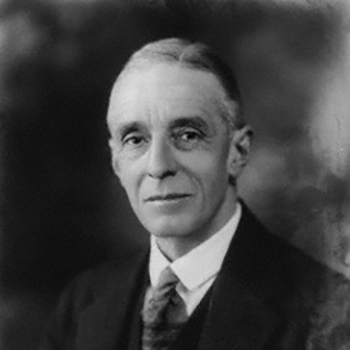
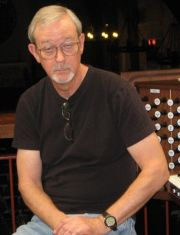
Gerald Near is considered one of the finest composers of church music writing today. He was born the Twin Cities area of Minnesota, where he was introduced to some of the finest choirs in America. He studied theory and composition at the American Conservatory of Music in Chicago with Leo Sowerby, and continued those studies with Leslie Bassett at the University of Michigan, Ann Arbor. While at the University of Michigan, he also studied organ with Robert Glasgow, published organ and choral music, and completed his Master's degree in orchestral conducting while studying under Gustav Meier.

Since then Near has held such positions as Organist/Choirmaster and then Canon Precentor at St. Matthew’s Cathedral in Dallas, Texas; Composer in Residence at St. John’s Cathedral in Denver, Colorado; and Music Director at The Church of Holy Faith in Santa Fe, New Mexico. He is currently Director of Music and Organist at St. Francis in the Valley Episcopal Church in Green Valley, Arizona and a freelance composer.

Toccata, Symphony V


For some, it isn't Easter until they have heard the strains of the final movement of Charles-Marie Widor's Fifth Organ Symphony. Well, here it is. I hope you find joy in it! Although written as a finale, the Toccata stands alone as a popular piece suitable for joyous

occasions. Its perpetual 16th-note motion in the right hand, crisp repeated chords in the left hand, and octave-leaping melody in the pedals follow faithfully the distinctive elements of the French organ toccata, in an exhilarating and iconic way

Saturday, March 4, 2023

GOD SO LOVED THE WORLD Music for March 5, 2023 + The Second Sunday in Lent

Vocal Music

  • God So Loved the World – John Stainer (1840-1901)

Instrumental Music

  • Jesus, meine Zuversicht – Gerald Near (b. 1942)
  • Suite for Organ: III. Aria – Philip E. Baker (b. 1934)
  • Aus Tiefer Not – Gerald Near

Congregational Music (all hymns from The Hymnal 1982 with the exception of those marked “R” which are from Renew.)

  • Hymn 401 The God of Abraham praise (LEONI)
  • Hymn R 132 As Moses raised the serpent up (THE GIFT OF LOVE)
  • Hymn 143 The glory of these forty days (ERHALT UNS, HERR)
  • Hymn 691 My faith looks up to thee (OLIVET)
  • Hymn R231 How blessed are you (Taizé)
  • Hymn 473 Lift high the cross (CRUCIFER)
  • Psalm 121 – tone IIa

God So Loved the World


The Gospel reading this week is one of the most familiar pieces of scripture in the world. It sums up the Gospel message - "For God so loved the world, that he gave his only begotten son, that whoso believes in him should not perish, but have everlasting life." I felt called to once again use the familiar anthem by John Stainer, from his famous oratorio, The Crucifixion, as our offertory anthem today. Stainer had been the organist-choir master at St. Paul's, London in the late 1800s and wrote a large amount of organ and choral music, as well as a popular treatise on organ playing.

The Crucifixion: A Meditation on the Sacred Passion of the Holy Redeemer. The work is dedicated "to my pupil and friend W. Hodge and the choir of Marylebone Church", who first performed it on 24 February 1887, the day after Ash Wednesday. There have been performances in Marylebone Church annually since then, and has been recorded several times.

Despite the popularity of God So Loved the World, critical opinion of the entire oratorio has not been kind. The composer Ernest Walker dismissed the work, writing in 1924 that "Musicians today have no use for The Crucifixion". Edmund Fellowes said: "It suffers primarily from the extreme poverty, not to say triviality, of the musical ideas dealing with a subject which should make the highest demand for dignity of treatment". Kenneth Long said that Stainer had a libretto "which for sheer banality and naïveté would be hard to beat". Stainer himself characterized his work as "rubbish."

Gerald Near


American composer Gerald Near is a composer with broad appeal to musicians in all liturgical denominations. With an extensive catalogue of compositions, he has added to the literature of organists, harpsichordists, and choirs. He is particularly adept at writing organ music based on hymn-tunes and chant-tunes. I play two such works today, using tunes appropriate for Lent, but not so well known to our congregation.

The first is the communion hymn, Let thy blood in mercy poured, found at hymn 313. The closing voluntary is a setting of the hymn 151, From deepest woe I cry to thee. Both tunes are German Chorale tunes. Both settings feature the melody played in the left hand using the trumpet stop, while the right hand and feet use fragments of the melody to provide the accompaniment. Of the two tunes, AUS TIEFER NOT is the most famous. Both the text and tune were written by Martin Luther in 1524 as a paraphrase of Psalm 130. Since then, the tune has been used by many musicians, most notably J. S. Bach, Felix Mendelssohn, and Max Reger. Georg Friedrich Handel quoted the characteristic intervals from the beginning of the chorale's tune several times at the end of the last aria of his oratorio Messiah, If God be for us, leading into the final chorus Worthy is the Lamb

Aria


The communion voluntary is by Philip Baker, organist and composer who was director of music at Highland Park United Methodist Church in Dallas for many years, including those I spent at Southern Methodist University working on my masters. His Suite for Organ was published just before I moved to Dallas, and it includes one of the loveliest melodies of all time, and one of my personal favorite organ pieces to play, Aria

Since retiring from active music making, he and his wife Tissa have moved to Houston.

Thursday, September 1, 2022

Music for September 4, 2022 + The Thirteenth Sunday after Pentecost

Vocal Music

  • I Love You, O My God Most High – David Hogan (1949-1986)

Instrumental Music

  • Trio in D Minor – Johann Ludwig Krebs (1713-1780)
  • Ubi Caritas – Gerald Near (b. 1942)
  • Praeludium in F Major – Johann Ludwig Krebs

Congregational Music (all hymns from The Hymnal 1982 with the exception of "I can hear my Savior calling" which is from LEVAS II.)

  • Hymn 594 - God of grace and God of glory (CWM RHONDDA)
  • Hymn - I can hear my Savior calling (NORRIS)
  • Hymn 576 - God is love, and where true love is (MANDATUM)
  • Hymn 675 - Take up your cross, the Savior said (BOURBON)
  • Psalm 1 – Tone VIIIa


I Love You, O My God Most High


I’m always moved by stories of talented people who are cut down in the prime of life. Such is the story of David Hogan, the composer of today’s anthem. Hogan was an American composer, teacher, and performer with ties to both the East and West Coasts. He had moved to France to teach at the American Conservatory at the Palace of Fontainebleau in Paris, and was flying back to Paris on July 17, 1996 on TWA Flight 800, when it suddenly crashed into the Atlantic Ocean near East Moriches, New York. Thus ended a life dedicated to music.

A native of Virginia, Hogan graduated from the Peabody Institute at Johns Hopkins University with a bachelor's degree in 1971, and would go on to earn a master's degree in voice in 1975. He enjoyed enormous success both as a composer and teacher and still found time to perform internationally as a concert tenor and pianist. For three years in a row, his students won first place in the Student Composers Competition of the Music Teachers National Association.

Dedicated to God as well as his craft, he had the distinction of being one of the two composers chosen to write new works for the Consecration of the Washington National Cathedral in 1989. Our kids choir learned his Magnificat and Nunc Dimittis a few years ago for the Diocesan Youth Choral Festival. But he also wrote simple sacred music too, such as today’s anthem, written for his small choir at St. Francis Lutheran Church in San Francisco.  It’s a simple setting of a traditional Irish melody, Daniel, arranged for two-part mixed choir. Simple but elegant, it uses the text by St Ignatius of Loyola, as translated by Edward Caswall.
I love you, O my Lord most high,
for first your love has captured me;
I seek no other liberty:
bound by your love, I shall be free.

May memory no thought suggest
but shall to your pure glory tend,
may understanding find no rest,
except in you, its only end.

All mine is yours: say but the word,
say what you will, it shall be done;
I know your love, most gracious Lord,
I know you seek my good alone.

Apart from you, nothing can be,
so grant me this, my only wish,
to love you, Lord, eternally,
you give me all in giving this.

Johann Ludwig Krebs


Wait, Who?

Krebs was an organist and composer from a highly musical family.  His father, both brothers, and his three sons all received formal musical training; his son Johann Gottfried was also an extremely prolific composer.

Best remembered as a pupil of Bach, Krebs was educated at the Thomasschule in Leipzig, as were his brothers.  The oft-repeated story that Bach punningly referred to him as the finest 'crab' in his "brook" (Krebs im Bach) is apocryphal, but Bach did provide a written testimonial as to his skill in composition and in playing the keyboard, lute, and violin.

Over his career Krebs held three organ posts, all in the viscinity of Leipzig: first at the St Marien church in Zwicken, then at the castles of Zeitz and, finally, Altenburg.

His status as a student of Bach tended to shade many of his compositions.  Although many of his works do stay very close to the outdated Bach model, with a conservative love of counterpoint, other compositions exhibit a more up-to-date style galant, a light and elegant free homophonic style of musical composition in the 18th century as contrasted with the serious contrapuntal style of the baroque era. 

In today's two organ pieces, the opening voluntary is an example of his mastery of Baroque counterpoint. The Trio in D Minor is written in three parts: two top parts played separately by the hands, and a bass line played by the feet. There is a lot of imitation between the two keyboard parts.

The closing volutary is an example of the more 'modern' style galant. This meant simpler, more song-like melodies, a decreased use of polyphony, short, periodic phrases, and a reduced harmonic vocabulary emphasizing tonic and dominant

Monday, April 11, 2022

Music for Holy Week

Maundy Thursday

Vocal Music

  • As In that Upper Room – Carl Haywood (b. 1949)
  • Three Holy Days Enfold Us Now – Carl Haywood
  • According to thy Gracious Word – W. A. Mozart (1756-1791)

Instrumental Music

  • Ubi Caritas – Gerald Near (b. 1942)
  • Adoro te Devote – Gerald Near

Congregational Music (all hymns from The Hymnal 1982 with the exception of those marked “R” which are from Renew.)

  • Hymn 439 - What wondrous love is this (WONDROUS LOVE)
  • Hymn R289 - Jesu, Jesu, fill us with your love (CHEREPONI)
  • Hymn R148 - Brother, let me be your servant (THE SERVANT SONG)
  • Hymn R226 - Ubi Caritas et amor (UBI CARITAS)
  • Hymn R235 - O sacred head, now wounded (HERZLICH TUT MICH VERLANGEN)
  • Hymn 171 - God to dark Gethsemane (PETRA)
  • Psalm 22 – IVe

Good Friday

Vocal Music

  • Were you there? – Negro Spiritual
    • Richard Murray, baritone

Instrumental Music

  • As Jesus Stood Beside the Cross – Samuel Scheidt (1587-1654)
  • O Sacred Head, Sore Wounded – Dietrich Buxtehude (1637-1707)

Congregational Music (all hymns from The Hymnal 1982 with the exception of those marked “R” which are from Renew.)

  • Hymn 158 - Ah, holy Jesus, how hast thou offended (HERZLIEBSTER JESU)
  • Hymn 474 - When I survey the wondrous cross (ROCKINGHAM)
  • Hymn 441 - In the cross of Christ I glory (RATHBUN)
On Maundy Thursday the choir will sing two hymns by Carl Haywood, an eminent African-American composer in the Episcopal Church.

Carl W. Haywood, a native of Portsmouth, Virginia, has degrees from Norfolk State University, Southern Methodist University, (Master of Sacred Music in organ and Master of Music in choral conducting), and a Doctor of Musical Arts degree from the University of Southern California. 

Dr. Haywood is recognized as a superb choral conductor/organist with superior musical acumen.  His anthems, spirituals, and organ music are published by GIA, Walton, and Alliance Publishing companies. 

For twenty-six years he served as organist/choir director at Grace Episcopal Church, Norfolk and has served on the Liturgical Commission for the Diocese of Southern Virginia, the Standing Commission on Liturgy and Music for the Episcopal Church of America and as Director of Music for the Union of Black Episcopalians.

Dr. Haywood, who has sustained a long tenure at Norfolk State University, is a devoted teacher and friend of students and young musicians. A dynamic advocate of NSU, he is Director of Choral Activities and conducts the NSU Concert Choir and the Spartan Chorale. Dr. Haywood frequently serves as a clinician, adjudicator, guest conductor, and lecturer for schools, colleges, and churches throughout the country. He also serves as a National Conductor for the 105 Voices of History, the Historically Black Colleges and Universities Choir.


Friday, February 11, 2022

Music for February 13, 2022 + The Sixth Sunday after the Epiphany

Vocal Music

  • Blessed Is the Man – Pyotr Ilyich Tchaikovsky (1840-1893)

Instrumental Music

  • If Thou But Trust in God to Guide Thee – Georg Böhm (1661–1733)
    • Hymn 635 in The Hymnal 1982
  • Holy Manna – arr.Charles Callahan (b. 1951)
    • Hymn 580 in The Hymnal 1982
  • Erhalt Uns, Herr – Gerald Near (b. 1942)
    • Hymn 191 in Renew

Congregational Music (all hymns from The Hymnal 1982 with the exception of those marked “R” which are from Renew.)

  • Hymn 48 - O day of radiant gladness (ES FLOG EIN KLEINS WALDVOGELEIN)
  • Hymn R191 - O Christ, the healer, we have come (ERHALT UNS, HERR)
  • Hymn 635 - If thou but trust in God to guide thee (WER NUR DEN LIEBEN GOTT)
  • Hymn R127 - Blest are they, the poor in spirit (BLEST ARE THEY)
  • Hymn 493 - O for a thousand tongues to sing (AZMON)
  • Psalm 1 – Tone Va
Pyotr Ilyich Tchaikovsky was arguably, one of Russia's greatest composers. After his triumphant tour of America in 1891, and being awarded an honorary doctorate at Cambridge University in 1893, he was accepted as a world figure, not a merely national composer but one of universal significance. In 1891 the Carnegie Hall program booklet proclaimed him, together with Brahms and Saint-Saëns, to be one of the three greatest living musicians, while music critics praised him as "a modern music lord".

He wrote several works which still enjoy popularity, including the ballets Swan Lake and The Nutcracker, the 1812 Overture, his First Piano Concerto, several symphonies, and the opera Eugene Onegin. But he also wrote many smaller works, including an Album for the Young, op. 39. Robert Schumann wrote a similar book some years earlier, under the same title. Schumann wrote his collection because there wasn’t much good piano material at an easier level, and Tchaikovsky likely wrote his own collection for the same reasons.

In this collection, Tchaikovsky wrote pieces inspired by Russia, his travels, dances, and various children’s concepts (like "The Sick Doll"). It’s a really diverse collection both in emotion and content.

Today's anthem is an adaptation of one of those pieces, titled "In Church." The text comes from different scripture sources, including the psalm appointed for today, Psalm 1.

All of the organ music today is based on hymn tunes, two of which are being sung in the service today. The opening voluntary is a set of two variations of the tune WER NUR DEN LIEBEN GOTT, which we will sing at the presentation of the offering. The hymn in our hymnal is in 3/4 time, while the setting by the German composer Georg Böhm, is in 4/4 time.

Georg Böhm was one of the leading organists and organ composers in North Germany in the years around 1700. He is notable for his development of the chorale partita and for his influence on the young J. S. Bach. The opening voluntary is from one of his chorale partitas, large-scale compositions consisting of several variations on a particular chorale melody. He effectively invented the genre, writing several partitas of varying lengths and on diverse tunes. Later composers also took up the genre, most notably 

Bach. Böhm's chorale partitas feature sophisticated figuration in several voices over the harmonic structure of the chorale. His partitas generally have a rustic character and can be successfully performed on either the organ or the harpsichord.

Saturday, December 19, 2020

Music for December 20, 2020 + The Fourth Sunday of Advent

Vocal Music

  • O Come, O Come, Emmanuel – Latin Chant, arr. Jackson Hearn (b. 1958)
  • Come, thou Long Expected Jesus - Stuttgart
    • Amy Bogan, soprano

Instrumental Music

  • Three Advent Preludes – Gerald Near (b. 1942)
    • Savior of the Nations, Come
    • Ave Maria
    • Veni, Emmanuel
  • Lo, How a Rose E’er Blooming – Alfred V. Fedak (b. 1953)
  • Herr Christ, der ein'ge Gottes-Sohn, BWV 601 – J. S. Bach (1685-1750)
    • (Lord Christ, the only Son of God)
Since we are not able to sing safely yet in our services, I have made the effort to include as many hymns in the vocal and instrumental music as possible. Today, Amy Bogan is singing two of our most favorite and well-known Advent hymns.

Probably the first Latin chant that any of us learn is the Advent hymn, Veni, Emmanuel (O Come, O Come, Emmanuel). This ancient advent hymn originated in part from the “Great ‘O’ Antiphons,” part of the medieval Roman Catholic Advent liturgy. On each day of the week leading up to Christmas, one responsive verse would be chanted, each including a different Old Testament name for the coming Messiah. When we sing each verse of this hymn, we acknowledge Christ as the fulfillment of these Old Testament prophesies. We sing this hymn in an already-but not yet-kingdom of God. Christ's first coming gives us a reason to rejoice again and again, yet we know that all is not well with the world. So along with our rejoicing, we plead using the words of this hymn that Christ would come again to perfectly fulfill the promise that all darkness will be turned to light. The original text created a reverse acrostic: “ero cras,” which means, “I shall be with you tomorrow.” That is the promise we hold to as we sing this beautiful hymn.

The other hymn is "Come, Thou Long Expected Jesus." Charles Wesley  wrote this Advent hymn and printed it in his Hymns for the Nativity of our Lord (1744). Like so many of Wesley's texts, "Come, Thou Long-Expected Jesus" alludes to one or more Scripture passages in virtually every phrase. The double nature of Advent is reflected in this text, in which we remember Christ's first coming even while praying for his return. Stanzas 1 and 2 recall Advent prophecies in the Old Testament; 

Saturday, November 14, 2020

Music for November 15, 2020 + The Twenty-fourth Sunday after Pentecost

Instrumental Music

  • Partita on “St. Anne” – Paul Manz (1919-2009)
                I. Theme
                II. Adagio
                III. Canon
                IV. Presto
                V. Pastorale
                VI. Fugue-Finale
  • A Pleasant Thought – Florence B. Price (1887-1953)
  • Mit Freuden Zart – Gerald Near (b. 1942)
Paul Manz
O God, our help in ages past, by Issac Watts, is one of the best paraphrases of the first six verses of Psalm 90. Since that is the psalm for this Sunday, I decided to play Paul Manz's partita (or variations) on ST. ANNE, which is the tune used for the hymn. Paul Manz was a Lutheran organist, who had a particular talent of improvising organ music based on hymns. These variations were probably improvised by Manz during a recital or one of his Hymn Festivals, and later published as Partita on St. Anne.

There are six movements which may or may not correspond to the six stanzas of Watt's hymn. The first movement is very straightforward, with an underlying rhythmic motive reminiscent of J. S. Bach's organ setting of the German Choral WER NUR DEN LIEBEN (BWV 642). The second movement also harkens back to music of Bach and German baroque composers with its ornamented solo line over an imitative accompaniment. You'll still be able to hear the melody if you listed closely.

In the third movement, Manz leaves the familiar realm of 18th century counterpoint and becomes more impressionist in style. The melody will be found in canon, with the right hand playing the melody in an undulating style in normal quarter-note rhythms, while the left hand plays the same melody, but in HALF-NOTE rhythms, and with some harmonies that we might find disconcerting. It sounds as if the two hands are playing two different songs in two different keys!

The fourth movement is much lifelier, as you can tell by its title, Presto. The accompaniment will be in both hands, featuring a spinning counter-melody against a leaping part in the other hand. These melodic fragments bounce back and forth between the two hands while the feet play the melody.

One of the loveliest movements is the Pastorale (fifth movement). Pastorales are generally in 6/8 or 9/8 metre, at a moderate tempo, and this is no exception. The accompaniment has a lyrical melody which could stand alone by itself, without the addition of the hymn-tune that comes in, played by the left hand.

I'll play the last movement as the closing voluntary, for it's drive and excitement is perfect for music that should encourage us to leave this place with joy and commitment.

During communion I'll play a simple melody by the African American composer, Florence B. Price. I discovered her in February when I was looking for non-idiomatic music by Black composers. She has a fascinating story, and I encourage you to review what I wrote about her here. 

During the preparation of the elements I will be playing Gerald Near's setting of the hymn tune MIT FREUDEN ZART. The order of service will have the words to the hymn Lord Christ, when first thou cam'st to earth, Hymn 598 in The Hymnal 1982. It is especially appropriate to the Gospel reading this day.

Friday, November 6, 2020

Music for November 8, 2020 + The Twenty-fourth Sunday after Pentecost

Vocal Music

  • How Great Thou Art – Stuart K. Hine (1899-1989), Amy Bogan, soprano

Instrumental Music

  • Suite for Organ – Gerald Near (b. 1942)
  • Let All Mortal Flesh Keep Silence – Rudy Davenport (b. 1948)
  • Festive Trumpet Tune – David German (b. 1954)

Amy Bogan sings a favorite of many in the congregation, "How Great Thou Art," by Stuart K. Hine. Hine was a British Methodist missionary on a mission trip in Ukraine in 1931 when he heard the Russian translation of a German song inspired by Carl Boberg's poem "O Store Gud" (O Great God). Hine began to translation the song to English and added several verses. The third verse was inspired by the conversion of villagers in Russia who cried out to God loudly as the repented and realized God's love and mercy - "And when I think that God, His Son not sparing, sent Him to die, I scarce can take it in." 
Stuart K. Hine
Stuart Hine and his family left Ukraine as famine and World War Two began, and settled in Somerset, Britain where he continued to serve as a missionary to Polish refugees. The fourth verse of "How Great Thou Art" was inspired by displaced Russians who experienced great loss and looked forward to seeing their loved ones again in heaven - "When Christ shall come with shout of acclamation to take me home, what joy shall fill my heart."

The final English version of "How Great Thou Art" was published in 1949 and quickly spread among Britain, Africa, India and America. 

The opening voluntaries are all from a suite by American composer Gerald Near. Now living in Arizona, he is director of music and organist at St. Francis in the Valley Episcopal church in Green Valley, Arizona. He's been connected to Episcopal churches most of his career, including St. Matthew's Cathedral in Dallas. I think it's because of his understanding of Anglican music that I find his compositions very appealing. He's written much music based on chant, and traditional hymn-tunes of the church, but this Suite, written in 1965 when he was 27 years, has only one movement based on a hymn tune. 

It opens with a Chaconne. Originally a fiery and suggestive dance that appeared in Spain about 1600 in moderate triple meter, the chaconne became a popular compositional form of composers of the 17th and 18th centuries. It was a series of variations built on a short phrase in the bass. This form often is confused with the form Passacaglia, and honestly, there is little difference. Near uses a short, 2-bar motive as the repeated bass line (called a "ground bass") in the pedal while he employs the tonal resources of the organ to vary the accompanying music found in the manuals (keyboards). You will hear the same eight notes in the pedal 18 times (except for variation 14 which finds the motive, not in the pedal, but in the top line of the music.

In the middle movement, the American folk tune Land of rest is set as a sarabande. A sarabande is also a dance in triple meter that originated in Central America back in the sixteenth century. It became popular in the Spanish colonies before making its way to Europe. At first, it was regarded as being rather scandalous, even being banned in Spain for its obscenity. Baroque composers, such as Handel, adopted the sarabande as one of the movements for the suites they were writing at the time.

The Suite ends with a Final (We musicians pronounce it fee-nahl) in A-B-A form. The A section is a dialogue between the Full organ on the great with a less-full organ sound on the accompanying choir manual. In the B section, you will hear a jaunty melody played on the organ's trumpet stop, accompanied by flutes. Then the A section returns just like the beginning to bring the whole thing to a close.

LAND OF REST is the tune used for hymn 620 in our hymnal, Jerusalem, my happy home, which is appropriate for today's readings. (It is also used for the communion hymn I come with joy and a favorite setting of the Sanctus that we often sing in the summer.)

Another hymn that was appropriate for today is the hymn Let all mortal flesh keep silence. During communion, I will be playing a piano setting of that tune, PICARDY, arranged by the composer Rudy Davenport. I played another piece by him last month.


Saturday, January 18, 2020

Music for January 19, 2020 + The Second Sunday after Epiphany

Vocal Music

  • Lead Me, Lord – S. S. Wesley (1810-1876)

Instrumental Music

  • Blessed Jesus, at Thy Word – Gerald Near
  • Meditation on “Kingsfold” – Charles Callahan
  • Roulade – Gerald Near

Congregational Music (all hymns from the Hymnal 1982 with the exception of those marked “R” which are from Renew.)

  • Hymn 7 - Christ, whose glory fills the skies (RATISBON)
  • Hymn 439 – What wondrous love is this (WONDROUS LOVE)
  • Hymn 533 - How wondrous and great thy works (LYONS)
  • Hymn - I have decided to follow Jesus (ASSAM)
  • Hymn 550 - Jesus calls us; o’er the tumult (GALILEE)
  • Psalm 40:1-12 - Expectans, expectavi (simplified Anglican chant by Jerome Meachan)
S. S. Wesley
The choir (still recovering from Christmas break) sings an extract from a larger anthem by Samuel Sebastian Wesley, the grandson of Charles Wesley. The popular short anthem Lead me, Lord is an extract from Praise the Lord, O my soul.

Famous in his lifetime as one of his country's leading organists and choirmasters, he composed almost exclusively for the Church of England. He was appointed organist at Hereford Cathedral, Exeter Cathedral, Winchester Cathedral, and Gloucester Cathedral.

He was the illegitimate son of the composer Samuel Wesley's and his teenage housemaid Sarah Suter, with whom he had seven children after separating from his wife Charlotte. His middle name derived from his father's lifelong admiration for the music of Bach.

Considering his love of Bach, I should have included a piece by Bach, but instead, I've focused on two living musicians who many consider among the most prominent, if not most prolific, church musicians in America today.

Gerald Near has written much organ music, including many settings of hymns and chants for the church. The opening voluntary is a highly ornamented arrangement of the Chorale Liebster Jesu, which we find in our hymnal at hymn 440: Blessed Jesus, at thy Word.

The closing voluntary is one of Gerald Near's earliest pieces from 1965. Culinarily speaking, a Roulade is a slice of meat rolled around a filling and cooked. It comes from the French word rouler: to roll. Musically, roulade is an embellishment consisting of a rapid run of several notes sung to one syllable. So Near's Roulade is a rapid, light piece.


Tuesday, December 24, 2019

Music for the Christmas Services

Monday, December 24: Christmas Eve

(4:00 PM) The Coventry Choir

Vocal Music

  • What Child Is This? – English Carol, arr. Jackson Hearn (b. 1958)
  • Candlelight, Burning Bright – Helen Kemp (1918-2015)
  • How Far Is It to Bethlehem – arr. Jackson Hearn

Instrumental Music

  • The Alfred Burt Carols – Arr. Mark Hayes (b. 1953)
    • Caroling, Caroling
    • The Star Carol
    • Some Children See Him
    • Come, Dear Children
  • Bells of Christmas – arr. Patricia Sanders Cota (b. 1954)
    • Come, All Ye Faithful
    • Angels We Have Heard on High
    • Away in a Manger
    • Joy to the World
  • Carillon On A Ukrainian Carol - Gerald Near (b. 1942-)

Congregational Music (all hymns from the Hymnal.)

  • Hymn 83 -  O come, all ye faithful (ADESTE FIDELES)
  • Hymn 96 - Angels we have heard on high (GLORIA)
  • Hymn 100 -  Joy to the world! (ANTIOCH)
  • Hymn 87 - Hark! the herald angels sing (MENDELSSOHN)
  • Hymn 111 - Silent night, holy night  (STILLE NACHT)                     
  • Hymn 99 - Go, tell it on the mountain (GO, TELL IT ON THE MOUNTAIN)

(6:30 PM) The Good Shepherd Choir

Vocal Music

  • My Dancing Day –Alice Parker (b 1925)
  • A Great and Mighty Wonder – Michael Praetorius (1571-1621)
  • Ding Dong, Merrily on High – Charles Wood (1866-1926)
  • And There Were Shepherds (from Christmas Oratorio) – J. S. Bach (1685-1750)
  • Lully, Lulla, Lullay – Philip Stopford (b. 1977)
  • Falan Tidings – Donald Pearson (b. 1959)
  • The Little Road to Bethlehem – Michael Head (1900-1976), Allison Gosney, soprano

Instrumental Music

  • Noel X – Louis-Claude Daquin (1694-1772)
  • Lo, How a Rose Is Springing  – Johannes Brahms (1833-1897)
  • Carillon On A Ukrainian Carol - Gerald Near (b. 1942)

Congregational Music (all hymns from the Hymnal 1982.)

  • Hymn 83 -  O come, all ye faithful (ADESTE FIDELES)
  • Hymn 96 - Angels we have heard on high (GLORIA)
  • Hymn 100 - Joy to the world! (ANTIOCH)
  • Hymn 87 - Hark! the herald angels sing (MENDELSSOHN)
  • Hymn 111 - Silent night, holy night  (STILLE NACHT)                     
  • Hymn 79  - O little town of Bethlehem (ST. LOUIS)
  • Hymn 89 - It came upon a midnight clear (TUNE)
  • Psalm 96  - (setting by Thomas Pavlechko)
British composer Philip Stopford composed this version of the Coventry Carol in 2008.

The original Coventry Carol dates from the 16th century and was traditionally performed in Coventry as part of a mystery play called The Pageant of the Shearmen and Tailors. The rocking lullaby tells the story of the Massacre of the Innocents — when King Herod ordered all male infants under the age of two to be killed.

It's sung though from a mother's perspective, as a beautiful lament for her doomed child.

(10:00 PM) Allison Gosney, soprano

  • Jesu Bambino – Pietro Yon (1886-1943)
  • The Little Road to Bethlehem – Michael Head (1900-1976)

Instrumental Music

  • Noel X – Louis-Claude Daquin (1694-1772)
  • Lo, How a Rose Is Springing  – Johannes Brahms (1833-1897)
  • Carillon On A Ukrainian Carol - Gerald Near (b. 1942)

Congregational Music (all hymns from the Hymnal.)

  • Hymn 83 -  O come, all ye faithful (ADESTE FIDELES)
  • Praise 96 - Angels we have heard on high (GLORIA)
  • Hymn 87 - Hark! the herald angels sing (MENDELSSOHN)
  • Hymn 79 - O little town of Bethlehem (ST. LOUIS)
  • Hymn 89 - It came upon a midnight clear (TUNE)
  • Hymn 111 - Silent night, holy night  (STILLE NACHT)                     
  • Hymn 100 - Joy to the world! (ANTIOCH)

Tuesday, December 25: Christmas Day (10:00 AM)

Organ music and hymns

Instrumental Music

  • Noel X – Louis-Claude Daquin (1694-1772)
  • Lo, How a Rose Is Springing  – Johannes Brahms (1833-1897)
  • The Alfred Burt Carols – Arr. Mark Hayes (b. 1953)
    • I. Caroling, Caroling
    • II. The Star Carol
    • III. Some Children See Him
    • IV. Come, Dear Children
  • Carillon On A Ukrainian Carol - Gerald Near (b. 1942)

Congregational Music (all hymns from the Hymnal.)

  • Hymn 83 -  O come, all ye faithful (ADESTE FIDELES)
  • Praise 96 - Angels we have heard on high (GLORIA)
  • Hymn 89 - It came upon a midnight clear (TUNE)
  • Hymn 87 - Hark! the herald angels sing (MENDELSSOHN)
  • Hymn 100 - Joy to the world! (ANTIOCH)


Saturday, December 21, 2019

Music for December 22, 2019 + Advent IV

Vocal Music

  • Maria Walks Amid the Thorn – Hugo Distler (1908-1942)

Instrumental Music

  • Ave Maria – Gerald Near (b. 1942)
  • Nun komm, der Heiden Heiland, BWV 659 & 661 – J. S. Bach (1685-1750)

Congregational Music (all hymns from the Hymnal 1982 with the exception of those marked “R” which are from Renew.)

  • Hymn 66 - Come, thou long expected Jesus (STUTTGART)
  • Hymn 54 - Savior of the nations, come! (NUN KOMM, DER HEIDEN HEILAND)
  • Hymn 475  - God himself is with us (TYSK)
  • Hymn R 26 - Jesus, name above all names (HEARN)
  • Hymn 56 - O come, O come, Emmanuel (VENI EMMANUEL)
  • Psalm 80:1-7, 16-18 (setting by Thomas Pavlechko)
This Sunday the choir is really stretching themselves and singing a (hopefully) unaccompanied setting of a German folk song, "Maria durch ein Dornwald ging" (English: "Maria walks amid the thorns", arranged by the 20th century German composer, Hugo Distler.
Hugo Distler

The carol comes from sixteenth century Germany (although it is probably much older) and commemorates the barrenness of the the Old Testament, the longing and waiting, and the flowering of sanctity and joy with the coming of the Messiah. It describes the walk of Mary with the child "under her heart," referring to the story of the visit of Mary to Elizabeth as recorded in the Gospel of Luke, Luke 1:39–56. It ends with the motif of the dead thornwood, a symbol of fertility and death, which begins to bloom during pass of Mary with the divine child.

Hugo Distler is at once one of the more promising and yet most tragic of the German composers of the first half of the twentieth century. John Lienhard, of Houston Public Radio's "Engines of Our Ingenuity," talked about Distler on one of those episodes. I will include his remarks below. (You can listen to it here, in case you'd rather do that - just NOT in church!)
As I listened to a piece by German composer Hugo Distler yesterday, it struck me how remarkable his music was. Distler wrote primarily for chorus and organ, and, if you know his work, you're aware of an utterly distinctive musical flavor.
Hugo Distler was born in Nuremberg in 1908. His high-school years were those of the Weimar Republic and the intense flowering of high German culture that followed WW-I. He studied music at Leipzig Conservatory. The sound of hobnail boots was being heard in the streets of Bavaria, but the sound still seemed far away.
 Just a few years later, Hitler came to power, and the great minds of that period began scattering out of Germany -- people like Albert Einstein, Theodore von Kármán, Paul Tillich, and Bruno Walter. Goebbels named composer Paul Hindemith a cultural Bolshevist and a spiritual non-Aryan in 1934. Hindemith wound up at Yale, Einstein at Princeton, and von Kármán at Cal Tech.
 But Distler was only 25 when Hitler took over -- the newest musical talent of his age. He'd just been made head of the chamber music department at Lübeck Conservatory, and he was still too young to be a target. Yet he was driven by spiritual imperatives that cast a whole new light on traditional church music.
 He brought the declamatory joy of baroque composers like Heinrich Schütz to the foursquare old melodies of the German Reformation. His music was quirky but beautiful, tonal yet chromatic. He made the old melodies dance with delight. It is a sound utterly unlike any other. Once you hear it, you don't forget it.
 But it was a sound heard in the wrong place at the wrong time. A trip I took in 1978 reminds me of what Distler faced. A Polish colleague, driving me down the valley from Silesia to Krakow, stopped to show me Auschwitz. What a chamber of horrors! A sign on one wall explained how the exterminations were scheduled. Jews were allowed to starve for months as they waited their turn in the gas chambers. But clergy were rushed to the head of the line. They were considered too dangerous to keep around.
 Suppressing the established German church was dicey business for the Nazis. But suppress it they would. Distler represented religious intensity the Nazis couldn't tolerate. They told him he was trouble and his music was degenerate. He would be taken from his church post and shipped off to the Wehrmacht! Conscientious objection was treason punishable by death, and Distler could never support the war. So, disillusioned and depressed, he put his head in his own gas oven and ended his life at the age of 34.
He lived not even as long as Mozart, and he worked in a far more hostile climate. His brilliance was a side road that never properly joined the mainstream of twentieth-century musical evolution. Music would not sound the same today if it had. I'll never forget my sense of pure surprise the first time I sang Distler.

Friday, August 16, 2019

Music for August 18. 2019

Vocal Music

  • Lord God of Abraham – Felix Mendelssohn (1809-1847), Richard Murray, bass

Instrumental Music

  • Sonata II: Grave/Adagio – Felix Mendelssohn
  • Sonata II: Allegro Maestoso e Vivace – Felix Mendelssohn
  • Ave Verum Corpus – Gerald Near (b. 1942)

Congregational Music (all hymns from the Hymnal 1982 with the exception of those marked “R” which are from Renew.)

  • Hymn 366 - Holy God, we praise thy Name (GROSSER GOTT)
  • Hymn 691- My faith looks up to thee (OLIVET)
  • Hymn 495 - Hail, thou once despised Jesus (IN BABILONE)
  • Hymn 490 - I want to walk as a child of the light (HOUSTON)
  • Hymn 324 - Let all mortal flesh keep silence (PICARDY)
  • Hymn R 291 - Go forth for God (GENEVA 124)
  • Psalm 80:1-2, 8-18 – Tone VIIIa
I love the music of Johann Sebastian Bach. I think I could play nothing but Bach and not grow weary of him. After Bach, I love playing the music of Felix Mendelssohn. It's quite a jump going from the 18th century Baroque to the 19th century Romantic period, but there are some very strong connections.
Felix Mendelssohn, By James Warren Childe
- watercolor painting, Public Domain,
https://commons.wikimedia.org/w/index.php?curid=123195
By the time Felix came along, the music of J. S. Bach was all but forgotten, a relic of a bygone era that was considered more math than music. When Felix was 14 years old, his maternal grandmother presented him with a hand-copied manuscript score of J.S. Bach's St. Matthew Passion. She recognized in this little-known work one of the most deeply spiritual works ever composed; and it had a profound effect on the young boy. He conceived an idea of presenting the entire work, and five years later, he himself conducted the first full performance of this masterwork in over 100 years.

The idea of writing a large choral work also captivated Mendelssohn's imagination, for in his short life, he wrote three oratorios, Paulus, Elias, and Christus (which remained unfinished). It is from Elias (Elijah) that we draw today's offertory.

At this place in the story, Israel is in a great drought. The prophet Elijah is accused of causing Israel’s troubles but he charges that the people have brought their problems on themselves by worshipping false gods. Elijah challenges the priests of the god Baal. In a scene that would be perfect for the reality tv shows of today, the priests pray to Baal as Elijah prays to his God. Baal’s failure to answer is symbolized by dramatic silences. Elijah mockingly demands that the priests call him louder. This happens for the third time, but still there is no answer. When Baal fails to end the drought, Elijah exhorts the people of Israel to turn their prayers to the one true God.  A consuming fire from the heavens convinces everyone to turn again to God, and they launch prayers for rain. At first it only brings a little white cloud and then, finally, the longed-for waters that “laveth the thirsty land,” symbolized by a downward rush of musical scales.

During the last years of his life, Mendelssohn paid further homage to J.S. Bach by preparing an edition of the latter's organ works (published in London in 1845-46). Mendelssohn's own Six Sonatas for organ, op. 65 (of which I play two movements this morning) not only renewed interest in the organ repertoire, and especially that of Bach, but also prompted the composition of new works for organ by other major composers. 

Friday, May 17, 2019

Music for May 19, 2019 + The Fifth Sunday of Easter

Senior Sunday

Vocal Music

  • I Give You a New Commandment – Peter Aston (b. 1938-2013)

Instrumental Music

  • Air – Gerre Hancock (1934-2012)
  • Ubi Caritas – Gerald Near (b. 1942)
  • When in Our Music God Is Glorified – Robert A. Hobby (b. 1962)

Congregational Music (all hymns from the Hymnal 1982 with the exception of those marked “R” which are from Renew.)

  • Hymn 492 - Come, ye faithful, sing with gladness (FINNIAN)
  • Hymn 529 - In Christ there is no East or West (MCKEE)
  • Hymn 295 - Sing praise to our creator (CHRISTUS, DER IST MEIN LEBEN)
  • Hymn 297 - Descend, O Spirit, purging flame (ERHALT UNS, HERR)
  • Hymn 576 - God is love, and where true love is (MANDATUM)
  • Hymn 324 - Let all mortal flesh keep silence (PICARDY)
  • Hymn 296 - We know that Christ is raised and dies no more (ENGLEBERG)
  • Psalm 148 - Simplified Anglican Chant by Jerome W. Meachen

In the Gospel this Sunday, we will hear the first of a collection of passages known as the Farewell Discourse. Jesus is preparing the disciples for a life without his physical presence. More than offering comfort, Jesus is trying to reorient them toward their mission. He tells them
I give you a new commandment, that you love one another. Just as I have loved you, you also should love one another. By this everyone will know that you are my disciples, if you have love for one another." - John 13:34,35
Peter Aston
The anthem this morning is a simple setting of that very text, by the English composer Peter Aston
Aston's published compositions include chamber music, choral and orchestral works and a children’s opera, but he is best known as a composer of church music, much of which is performed regularly throughout the English-speaking world. As a conductor and lecturer, he directed many courses and workshops for composers in the UK and overseas, especially in the USA.  He was also a musicologist and baroque-music scholar.

Gerre Hancock
 The world lost an exceptional musician and gentleman with the death of Gerre Hancock in 2012 who, from 1971 to 2004, was master of the choristers at St. Thomas Episcopal Church in New York City and, more recently, professor of organ and sacred music at the University of Texas-Austin. He was renowned for his improvisatory skills at the organ, his work with the St. Thomas Boy Choir, and his compositions. The Air that is this morning's opening voluntary is one of his first published organ works, written in 1960 and dedicated to his future wife, Judith Eckerman.

Robert Hobby
The closing voluntary is an organ work based on the same tune as the closing hymn. "When in Our Music God Is Glorified," by American organist Robert Hobby,  is bright, rollicking setting of the tune we sing quite frequently. The melody will be heard in the bass clef, played by the left hand, while the right hand plays an infectious rhythm and the pedals punctuate the accompaniment with octave leaps on the weak beats.

Friday, April 26, 2019

Music for April 28, 2019 + The Second Sunday of Easter

Vocal Music

  • Now the Green Blade Riseth – Ken Heitshusen (c. 1950)

Instrumental Music

  • For the Feast of the Resurrection of Our Lord: O angelos evoa – Gerald Near (b. 1942)
    • (The angel cried out to Lady of grace)
  • O Sons and Daughters, Let Us Sing – Denis Bédard (b. 1950)
  • Good Christians All, Rejoice and Sing – Paul Manz (1919-2009)

Congregational Music (all hymns from the Hymnal 1982 with the exception of those marked “R” which are from Renew.)

  • Hymn 494 - Crown him with many crowns (DIADEMATA)
  • Hymn 206 - O sons and daughters, let us sing (O FILII ET FILIAE)
  • Hymn 432 - O praise ye the Lord (LAUDATE DOMINUM)
  • Hymn R271 - Alleluia, alleluia! Give thanks  (ALLELUIA NO. 1)
  • Hymn R91 - Open our eyes, Lord (OPEN OUR EYES)
  • Hymn R258 - To God be the Glory (TO GOD BE THE GLORY)
  • Hymn R119 - Psalm 150: Hallelujah, praise the Lord (ORIENTIS PARTIBUS)
It's the second Sunday of Easter, traditionally called "Thomas Sunday." The day commemorates the appearance of Christ to his disciples eight days after Easter, when Thomas was present and proclaimed "My Lord and my God" upon seeing the hands and side of Christ. (Today is also called Quasimodo Sunday, having nothing to do with Hunchbacks nor Notre Dame, but coming from the Latin text of the traditional Introit for this day, which begins "Quasi modo geniti infantes..." from 1 Peter 2:2, roughly translated as "As newborn babes [desire the rational milk without guile]...". Literally, quasi modo means "as if in [this] manner".

To commemorate Thomas Sunday, we will sing the hymn O sons and daughters, let us sing, which contains the stanzas
4 When Thomas first the tidings heard
that some had seen the risen Lord,
he doubted the disciples' word.
Lord, have mercy! 
5 At night the apostles met in fear;
among them came their Master dear
and said, "My peace be with you here."
Alleluia! 
6 "My pierced side, O Thomas, see,
and look upon my hands, my feet;
not faithless but believing be."
Alleluia!  
7 No longer Thomas then denied;
he saw the feet, the hands, the side.
"You are my Lord and God!" he cried.
Alleluia! 
8 How blest are they who have not seen
and yet whose faith has constant been,
for they eternal life shall win.
Alleluia! 
Thomas Sunday is particularly important among Orthodox Christians. So the quirky thing is that today is NOT Thomas Sunday in the Orthodox Church, but, instead, is Easter Day! In observance of  that, I am playing a setting of a Paschal hymn from the Orthodox tradition, as found in the collection 
Meditations on Byzantine Hymns by Gerald Near. The melody is a chant, much like the Gregorian Chant of the Early Roman church. 

Friday, January 11, 2019

Music for January 10, 2019 + The Baptism of our Lord Jesus Christ

Vocal Music

  • Tomorrow Shall Be My Dancing Day – John Gardner

Instrumental Music

  • Erhalt Uns, Herr – Gerald Near
  • Schműcke dich – Gerald Near
  • Salzburg – Gerald Near

Congregational Music (all hymns from the Hymnal 1982.)

  • Hymn 76 - On Jordan’s bank, the baptist’s cry (WINCHESTER NEW)
  • Hymn 636 - How firm a foundation (FOUNDATION)
  • Hymn 295 - Sing praise to our Creator (CHRISTUS, DER IST MEIN LEBEN)
  • Hymn 132 - When Christ’s appearing was made known (ERHALT UNS, HERR)
  • Hymn 510 - Come, holy Spirit, heavenly dove (ST. AGNES)
  • Hymn 339 - Deck thyself, my soul, with gladness (SCHMŰCKE DICH)
  • Hymn 135 - Songs of thankfulness and praise (SALZBURG)
  • Psalm 29 -  simplified Anglican Chant by Jerome W. Meachen
This is the Baptism of Christ window here at Good Shepherd. It reminds us that this Sunday is the commemoration of Christ’s baptism. For that reason, I have chosen a setting of the old English carol, Tomorrow Shall Be My Dancing Day, for the last stanza:
Then afterwards baptized I was;
The Holy Ghost on me did glance,
My Father’s voice heard I from above,
To call my true love to my dance.
The text is not set to the original, lilting carol tune, but is in a contemporary 20th century setting by John Gardner, an English musician who once tried to teach Paul McCartney the rudiments of music. In 1966 Gardner was asked by a mutual friend to help the Beatle with his composition, but the experience was not a great success. He discovered that McCartney “didn’t, in a sense, know anything [about composition]”, though he had somehow worked out for himself, by sheer musical instinct, compositional techniques which tested even classically-trained musicians. Gardner told him that he felt it would be better if they stopped the lessons so that McCartney  did not lose his creative spark.

Gardner had written today’s anthem one year prior for his students at St Paul’s Girls’ School . While his arrangement is beautifully melodic, it also throws in some mischief for the singers with its ever-changing time signature. One former student recalled how she and her colleagues sang it “obsessively in the locker rooms”. Even as Gardner experimented with modern music for the Church, he was despairing at the way many of his contemporaries were “lowering the brow”, adding: “It is probable that many of the attempts to bring the atmosphere of the Espresso bar to the chancel are as hypocritical as they are misguided.”

The organ music for this Sunday comes from the pen of Gerald Near, and are all settings of tunes which we will sing during the 10:15 service.

Friday, December 14, 2018

Music for December 16, 2018 +The Third Sunday of Advent

Vocal Music 


  • Rejoice in the Lord Alway – 16th C. Anon. 

Instrumental Music 


  • Veni Emmanuel -  Edward Bairstow (1874-1946)
  • Savior of the Nations, Come – Gerald Near 
  • Hark! A Thrilling Voice Is Sounding – Gerald Near 

Congregational Music (all hymns from the Hymnal 1982 with the exception of those marked “R” which are from Renew.) 


  • Hymn 59 - Hark! A thrilling voice is sounding (MERTON) 
  • Hymn R122 - Canticle 9 - The First Song of Isaiah (Jack Noble White) 
  • Hymn R276 - Soon and very soon (Andrae Crouch) 
  • Hymn 60 - Creator of the stars of night (CONDITOR ALME SIDERUM) 
  • Hymn R229 - Let all mortal flesh keep silence (PICARDY) 
  • Hymn R278 - Wait for the Lord (Taizé Community) 
  • Hymn 68 - Rejoice, rejoice, believers (LLANGLOFFLAN) 

The choir sings a setting of the words from today's Epistle reading, the fourth chapter of St Paul’s letter to the Philippians. It is the anonymous sixteenth-century anthem Rejoice in the Lord alway which was formerly attributed to John Redford. The only known source of this anthem is in the Mulliner Book which is held in the British Library. The Mulliner Book is a historically important musical book compiled, probably between about 1545 and 1570, by Thomas Mulliner, about whom practically nothing is known, except that he is listed as modulator organorum of Corpus Christi College, Oxford in 1563.

The music—a careful setting of the words—varies between imitative passages and homophonic sections as, for example, at the words ‘Let your softness be known unto all men," where the entire choir sings the same words at the same time.

The text is appropriate for the third Sunday of Advent, which is known as Gaudete Sunday. Its name is taken from the entrance antiphon of the Catholic Mass, which is the same as our Epistle reading.
Rejoice in the Lord always; again I say, rejoice.
Indeed, the Lord is near.
The color for the"Rejoice" Sunday is rose, a deviation from the blue we use on the other three Sundays of Advent.

My opening voluntary is the great Advent hymn O Come, O Come Emmanuel, as set by the early 20th century English composer Edward Bairstow. Better known in his time as an organist, Bairstow is best remembered today for his Choral music, particularly for "Save Us, O Lord," "Blessed City," and "Let all mortal flesh keep silence." He also wrote much other sacred music and a handful of organ and piano compositions.
Edward Bairstow

Bairstow received his education at the University of Durham, where he studied organ and music theory, graduating in 1894. He obtained a doctorate degree in music from that university in 1901. He was organist at several parish churches until 1913, when he became organist at York Minster, a position he would retain for the rest of his life.

Bairstow accepted a professorship at Durham University in 1929, but remained a resident in York owing to the light teaching demands at his alma mater. Bairstow received knighthood in 1932.

Saturday, December 1, 2018

Music for December 2, 2018 + Advent I

Vocal Music

  • Christ Hath a Garden – Gerald Near (b. 1942)
  • Missa Oecumenica in Byzantine Style - Richard Proulx (1937-2010)

Instrumental Music

  • Lob sei dem allmächtigen Gott (BWV 602) – Johann Sebastian Bach (1685-1750)
  • Creator of the stars of night – Gerald Near
  • Herr Christ, der ein'ge Gottes-Sohn (BWV 601) – Johann Sebastian Bach

Congregational Music (all hymns from the Hymnal 1982 with the exception of those marked “R” which are from Renew.)

  • Hymn 616 - Hail to the Lord’s Anointed (ES FLOG EIN KLEINS WALDVOGELEIN)
  • Hymn 57 - Lo! he comes with clouds descending (HELMSLEY)
  • Hymn 60, st 6 - Creator of the stars of night (CONDITOR ALME SIDERUM)
  • Spiritual - Steal away to Jesus (STEAL AWAY)
  • Hymn R278 - Wait for the Lord (Taizé Community)
  • Hymn 436 - Lift up your heads, ye mighty gates (TRURO)
  • Psalm 25:1-9 – Tone Ig
This anthem by the American organist and composer Gerald Near was published in 1973. The tune is based on the Scottish folk song "O Waly, Waly," best known as "The Water Is Wide" or "The Gift of Love." The words are from a hymn by Isaac Watts (1674-1748), a Nonconformist minister and prolific hymnodist whose many well-known works include the words to the carol "Joy to the World" and "O God, Our Help in Ages Past."

Watts's original verses ("We are a garden walled around / Chosen and made peculiar ground; / A little spot enclosed by grace / Out of the world’s wide wilderness") were adapted in the late 19th century by Robert Bridges – physician, future poet laureate of the UK and a selfless champion of the work of his friend Gerard Manley Hopkins, whom he knew to be a much better poet. I love the last two stanzas, which are appropriate for Advent:

Awake, O wind of heav'n and bear
Their sweetest perfume through the air:
Stir up, O south, the boughs that bloom,
Till the beloved Master come:
That he may come, and linger yet
Among the trees that he hath set;
That he may evermore be seen
To walk amid the springing green.
Near also wrote the communion organ voluntary based on the Gregorian hymn for Advent "Conditor alme siderum." (Hymn 60 - we'll be singing it each Sunday as the presentation hymn.) This same chant is the basis for the melody of the Advent chorale Lob sei dem allmächtigen Gott. 

J. S. Bach included that chorale in his Orgelbuchlein, a collection of organ works based on hymns from the Lutheran church. Bach had planned 146 chorale preludes arranged according to the seasons of the church year, but only finished 46. Bach provided titles of two texts for this chorale. The first of these, Praise to the almighty God, an Advent hymn, is the likely basis for the prelude. The second, actually a table grace, bears no liturgical relationship to Advent or Christmas. It is the last of four Advent hymns in the collection.

Thursday, September 6, 2018

Music for September 9, 2018

Vocal Music

  • O God, My Heart Is Ready – Simon Lindley (b. 1948)

Instrumental Music

  • Suite for Organ – Gerald Near (b. 1942)
    • I. Chaconne 
    • II. Sarabande on “Land of Rest”
    • III. Final 

Congregational Music (all hymns from the Hymnal 1982 with the exception of those marked “R” which are from Renew, and the communion hymn which is from Wonder, Love, and Praise.)

  • Hymn 429 - I’ll praise my Maker while I’ve breath (OLD 113TH)
  • Hymn 371 - Thou, whose almighty word (MOSCOW)
  • Hymn R266 - Give thanks with a grateful heart (GIVE THANKS)
  • Hymn R191 - O Christ, the healer (ERHALT UNS, HERR)
  • Hymn  - Heal me, hands of Jesus (SHARPE)
  • Hymn 493 - O for a thousand tongues to sing (AZMON)
  • Psalm 146 - Tone VIIIa
Simon Lindley
The Good Shepherd Choirs sings a spirited anthem by the British composer Simon Lindley  who is retired as Organist of Leeds Parish Church and of Leeds Town Hall; He continues on Music Director of St Peter's Singers, one of England's leading Chamber Choir; and of the Sheffield Bach Society. He is a graduate of Magdalen College, Oxford and the Royal College of Music.

The anthem is based on verses from Psalm 108, and is perfect for the beginning of a new choir season. "O God, my heart is ready. I will sing, and give praise with the best member that I have." Though we have already sung two Sundays, it is still appropriate. It is described as a "carillon." I am not sure how he came about that denotation; A carillon is a set of  10 or more chromatically tuned bells, fixed in place and played by hammers (clappers) controlled from a keyboard. I suppose the accompanying ostinato pattern could be imagined as a peal being rung by bells.

All the organ music is from a Suite for organ by the prominent American composer of organ and church music, Gerald Near. He was a composition student of Leo Sowerby at the American Conservatory of Music in Chicago before going to the University of Michigan in Ann Arbor where he studied composition),  organ, and conducting. He continued his composition studies at the University of Minnesota under Dominick Argento .

After working as a choirmaster at the Calvary Church in Rochester, Minnesota, Near was musical director and organist at St. Matthew's Cathedral , Dallas, Texas, and Composer in Residence at the Cathedral of St. John, Denver, Colorado. Eventually he became choirmaster and cantor at the Holy Faith Episcopal Church in Santa Fe, New Mexico.

The suite opens with a chaconne, a type of musical composition popular in the baroque era which involves numerous variations on a repeated short harmonic progression, in this case a two measure repetitive bass-line (ground bass) which is the outline for variation, decoration, figuration and melodic invention.

The second movement is a sarabande on the familiar tune LAND OF REST. A sarabande was a old dance form in triple meter. There will be no dancing during communion, however, as I play this.


Friday, November 24, 2017

Music for November 26, 2017 + Christ the King Sunday

Vocal Music

  • King of Glory, King of Peace – Gerald Near (b. 1942)
  • My Shepherd Will Supply My Need – Virgil Thomson (1896-1989)

Instrumental Music

  • The Lord My Shepherd Is and Guide – Helmut Walcha (1907-1991)
  • Partita on Auf meinen lieben Gott, BuxWV 179- Dieterich Buxtehude (1637-1707)
  • Postludium in C – Helmut Walcha

Congregational Music (all hymns from the Hymnal 1982 with the exception of those marked “R” which are from Renew.)

  • Hymn 450 - All hail the power of Jesus’ name (CORONATION)
  • Hymn R267 - The King of Glory comes (PROMISED ONE)
  • Hymn 460 - Alleluia! Sing to Jesus (HYFRYDOL)
  • Hymn R29 - He Is Lord (HE IS LORD)
  • Hymn 494 - Crown him with many crowns (DIADEMATA)
  • Canticle S-35 – Come, let us sing unto the Lord (Jack Noble White)
Just a few notes about this Sunday's music for Christ the King Sunday. As we end this holiday weekend, it seems appropriate that, on the Sunday following one of the most American Holidays, we hear choral works of two American composers. I've written about Gerald Near before, so you can click here to read about him. The other composer is Virgil Thomson, a composer and a music critic from the 20th century.  He composed in almost every genre of music, producing a highly original body of work rooted in American speech rhythms and hymnbook harmony.

Born 121 years ago on November 25 in Kansas City, Missouri, Thomson was inspired by a strong sense of place—rooted in heartland America and its Protestant traditions. The biography on the webpage VirgilThomson.org tells us
His early connection to music came through the church, through piano lessons beginning at age 5, and stints accompanying theatricals and silent films. The music he heard was part and parcel of the wide world around him: Civil War songs, cowboy songs, the blues, barn-dance music, Baptist hymns, folk songs, popular songs, in addition to the canons of Western art music that he studied. 1
Virgil Thomson
 When he finished junior college, he joined the army to fight in World War I, stationed in New York City. He trained in radio telephony and in aviation and was set for embarkation for France when the war ended. 

In 1919, he enrolled as a student at Harvard where he became interested in all things French, so he secured a fellowship in 1921 to study organ and counterpoint with Nadia Boulanger, where he met Jean Cocteau, Gertrude Stein, Igor Stravinsky and Eric Satie, among many others. Returning to Harvard in 1922, he graduated in 1923. 

Between 1923 and 1940 he live between New York and Paris, composing opera, film scores, ballet scores, incidental music for the theater, and musical portraits, a genre in which he created more than 140 works. 

He finally settled in New York in 1940 when he accepted a job as chief music critic for the New York Herald Tribune, a position he held until 1951. 

His many honors and awards included the Pulitzer Prize a Brandeis Award, the gold medal for music from the American Academy of Arts and Letters, the National Book Circle Award, the Kennedy Center Honors, and 20 honorary doctorates.

In contrast to the American choral music for today, the instrumental music for this Sunday all comes from Germany. The communion voluntary is a partita by Dietrich Buxtehude on the German chorale In my beloved God. What is unusual about this partita (set of variations) is that the hymn is arranged for clavier, or keyboard (harpsichord) as opposed to the organ, which was normally used for sacred tunes. Buxtehude also used the typical dance rhythms of the day (sarabande, courante, gigue) as framework for different variations. These are forms that would normally be reserved for secular music.

Helmut Walcha
The opening and closing voluntaries are by 20th century organist and composer Helmut Walcha, a specialist in Bach and neo-baroque music.  As a result of a smallpox vaccination, Walcha had poor eyesight since childhood, and was fully blind by sixteen. He learned new pieces by having musicians (including his mother in his childhood and his wife in later years), play for him four times (each hand separately, the pedal part separately, and the complete piece). Having perfect pitch, he would memorise the piece while listening. Read this article from Pipedreams about his prodigious memory skills here.

His own music followed some of the same principles of music from the Baroque era, while incorporating harmonies and sounds found in more modern music.

1 http://www.virgilthomson.org/about/biography Accessed November 24, 2017.

Thursday, June 22, 2017

Music for Sunday, June 25, 2017 + The Third Sunday after Pentecost

Vocal Music


  • Let There Be Peace on Earth – Mark Hayes (b. 1953), arr., Bruce Bailey, soloist

Instrumental Music


  • Chorale prelude on Herr Jesu Christ (hymn 3) – Gerald Near
  • Chorale Prelude on Es ist das Heil (hymn 298)– Dietrich Buxtehude
  • Postlude on St. Dunstan’s (hymn 564) – Gerald Near

Congregational Music (all hymns from the Hymnal 1982 with the exception of "I have decided," which is from Lift Every Voice and Sing II: An African American Hymnal.)


  • Hymn 524 - I love thy kingdom, Lord (ST. THOMAS (WILLIAMS))
  • Hymn 296 - We know that Christ is raised and dies no more (ENGLEBERG)
  • Hymn 679 - Surely it is God who saves me (THOMAS MERTON)
  • Hymn 676 - There is a balm in Gilead (BALM IN GILEAD)
  • Hymn - I have decided to follow Jesus (INDIAN FOLK MELODY)
  • Hymn 530 - Spread, O Spread, thou mighty word (GOTT SEI DANK)
  • Psalm 69:8-11, 18-20  - Salvum me fac (tone IVe)

This Sunday Bruce Bailey is singing the song Let There Be Peace On Earth, written in 1955 by the husband/wife team of Jill Jackson Miller and Sy Miller in 1955. It was initially written for the International Children's Choir of Long Beach, California, and is still their theme song.

Mark Hayes
This beautiful arrangement by the contemporary pianist Mark Hayes uses the updated lyrics which change the gender specific terms Father/He/Brother to gender neutral terms (where "father" is replaced with "creator", and "brother" is replaced with "family" or "each other"), The gender-neutral lyrics have been copyrighted by the original licensing agent of the song. 

You can read the lyrics and a brief history of the song by checking out the History of Hymns blog written by Michael Hawn, who just retired as professor of sacred music at Perkins School of Theology, SMU, in Dallas.

None of the tunes used in the organ voluntaries today are particularly well-known among our congregation. The communion voluntary uses a chorale melody associated (among Lutherans) with the text "Salvation now has come for all." In our hymnal it is used for the baptism hymn "All who believe and are baptized" (Hymn 298). The tune was written in the 16th century by Hans Leo Hassler. Since this chorale text focused on essential Lutheran theology (Man is saved by grace, not works), the tune was often used as the basis for both organ and choral works. 

Gerald Near
 2017 marks the 75th birthday of American composer Gerald Near, a composer with broad appeal to musicians in all liturgical denominations. With an extensive catalogue of compositions, he has added to the literature of organists, harpsichordists, and choirs. He is particularly adept at writing organ music based on hymn-tunes and chant-tunes. I play two such works today, beginning with a short chorale-based prelude on the tune found in our hymnal at #3. It is straight-forward; the melody is heard quite plainly in the right hand on a distinctive solo stop, without any ornamentation.

The closing voluntary begins with a fanfare, then a complete statement of the great hymn, "He Who Would Valiant Be," with a tune written by Charles Winfred Douglas.