Showing posts with label Mark Hayes. Show all posts

Saturday, June 30, 2018

Music for July 1, 2018

Vocal Music
  • Ride On, King Jesus – Hall Johnson (1888-1970), arr.; Richard Murray, baritone
Instrumental Music
  • O Beautiful for Spacious Skies – Emma Lou Diemer (b. 1927)
  • Neo-Classique – Mark Hayes (b. 1953)
  • Come, Thou Fount of Every Blessing – Emma Lou Diemer
Congregational Music (all hymns from the Hymnal 1982 with the exception of those marked “R” which are from Renew.)
  • Hymn 718 - God of our Fathers, whose almighty hand (NATIONAL HYMN)
  • Hymn R23 - The steadfast love of the Lord (Edith McNeill)
  • Hymn 707 - Take my life, and let it be (HOLLINGSIDE)
  • Hymn 716 - God bless our native land (AMERICA)
  • Hymn 773 - Heal me, hands of Jesus (SHARPE)
  • Hymn R191 - O Christ, the healer, we have come (ERHALT UNS, HERR)
  • Hymn 610 - Lord, whose love through humble service (BLAENHAFREN)
The Fourth of July (Independence Day) is one of the most American of Holidays, where we unabashedly celebrate our patriotism. Though it does not take precedence over the prescribed readings for the day, we can still celebrate America with truly American music and composers.

Hall Johnson
One truly American genre is the Negro Spiritual. Richard Murray will sing an upbeat spiritual arranged by Hall Johnson, a highly regarded African American choral director, composer, arranger, and violinist of the 20th century who dedicated his career to preserving the integrity of the Negro spiritual as it had been performed during the era of slavery.

Johnson was born in Athens, Georgia, taught himself to play the violin by reading a book about it, moved to New York City where he played in the orchestra of Broadway musicals, and set out to preserve the heritage of the Spiritual. He arranged spirituals for his own ensemble, the Hall Johnson Singers as well as soloists such as the famed Marion Anderson. He also provided the scores for several films, his last being “Cabin in the Sky” in 1943 with Ethel Waters and Lena Horne.
Emma Lou Diemer


Another American treasure (who is still alive, by the way) is the composer Emma Lou Diemer. Born in Missouri to a family that valued arts and education (her father was a university president, he mother a church worker), she began piano lessons at a very early age and became organist in her church at age 13. Her great interest in composing music continued through College High School in Warrensburg, MO, and she majored in composition at the Yale Music School (BM, 1949; MM, 1950) and at the Eastman School of Music (Ph.D, 1960). She studied in Brussels, Belgium on a Fulbright Scholarship and spent two summers of composition study at the Berkshire Music Center.

Through the years she has written many works of varying levels of difficulty from hymns and songs to concertos and symphonies. Her church music background is evidenced in her works for choir and organ.

The piano offertory is a piece written in a quasi Classical style ("Classical" meaning the period in Music History, as typified by Mozart and Haydn.) The Classical era was an era of formality and its music was characterized by careful attention to form and by elegance and restraint.

Classical music tends to be more homophonic and lighter in texture than that of the Baroque. Instead of a multi-voiced fugue, you'll find a single melody line over a choral accompaniment. You'll also find a slower harmonic movement. Baroque music is characterized by frequent harmonic changes, sometimes on every beat. Classical music changes chords much less frequently, giving it a more graceful sweep and lightness of phrasing than that created by the rapidly changing embellished chords. This is the effect that Mark Hayes has tried to emulate.
Hayes, like Diemer, is an internationally known and award-winning composer, arranger, and performer with over 1200 publications in print. And, like Diemer, he hails from Missouri, making his home in Kansas City.


Thursday, June 14, 2018

Music for Sunday, June 17, 2018

Vocal Music

  • Let There Be Peace on Earth – Mark Hayes (b. 1953), arr., Bruce Bailey, soloist

Instrumental Music

  • Our Father in Heaven – Georg Philipp Telemann (1681-1767)
  • Adagio from Fantasie in C – César Franck (1822-1890)
  • Jubilee March – R. M. Stults (1861-1933)

Congregational Music (all hymns from the Hymnal 1982 with the exception of those marked “R” which are from Renew.)

  • Hymn 525 - The Church’s one foundation (AURELIA)
  • Hymn 558 - Faith of our fathers (ST. CATHERINE)
  • Hymn R250 - O Lord my God, when I in awesome wonder (O STOR GUD)
  • Hymn 657 - Love divine, all loves excelling (HYFRYDOL)
  • Psalm 92 - Bonum est confiteri
This Sunday Bruce Bailey is singing the song Let There Be Peace On Earth, written in 1955 by the husband/wife team of Jill Jackson Miller and Sy Miller in 1955. It was initially written for the International Children's Choir of Long Beach, California, and is still their theme song.

This beautiful arrangement by the contemporary pianist Mark Hayes uses the updated lyrics which change the gender specific terms Father/He/Brother to gender neutral terms (where "father" is replaced with "creator", and "brother" is replaced with "family" or "each other"), The gender-neutral lyrics have been copyrighted by the original licensing agent of the song. 

You can read the lyrics and a brief history of the song by checking out the History of Hymns blog written by Michael Hawn, retired as professor of sacred music at Perkins School of Theology, SMU, in Dallas.


The communion voluntary is an excerpt from a large-scale organ work by the Belgian/French composer César Franck. The work, the Fantasy in C Major, is in three large parts separated by short transitional passages. I'm playing the last section, Adagio, for communion. 

Unlike many musicians whose parents had other aspirations for their children, César Franck was encouraged by his father to pursue a career as a virtuoso pianist. But at the Paris Conservatoire he failed to achieve the necessary distinction as a performer, so he turned his attention to composition and the organ. (Can’t play piano? Be an organist!) It was a smart move, for he became famouse in Paris as organist at the newly built church of Ste Clotilde, with its Cavaillé-Coll organ. He drew to himself a loyal and devoted circle of pupils and in 1871 became organ professor at the Conservatoire.

As a composer, his best known orchestral works are the Symphonic Variations for solo piano and orchestra and the Symphony in D minor. Though he was best known in his day as a very distinguished organist, Franck wrote remarkably little for the instrument on which his improvisations had won him fame and pupils. The Organ pieces he did write, however, form the backbone of French Romantic organ literature, and have never gone out of style. 

I've talked before about my humble beginnings as organist at my home church, First United Methodist Church, in Tiptonville, Tennessee. I grew up across the street from the church, and spent many an hour roaming through the unlocked building. (Can you imagine letting youth have free access today, unsupervised in a public building?) 

I was always fascinated by the 1924 Möller pipe organ and the stacks of old music stashed on the floor of the choir room closet. Much of it was music purchased when the organ was new. One piece that caught my interest was a single page out of "The Organist" Magazine from 1928. It was the Jubilee March by R. M. Stults, an American composer of popular music in the late 19th century and early 20th century whose most popular work, The Sweetest Story Ever Told, was still popular for weddings into the middle of the 20th century. 

At the time it was built, our church was one of the larger public buildings in Tiptonville, and host to the local high school assemblies. Mae Peacock was organist at First Methodist at the time, and wrote in pencil at the top of the page, "T.H.S. graduation 1933."  The second half of the piece is missing, so several years ago I wrote a "B" section to extend the march, returning to the original to end the piece. 

Wednesday, July 5, 2017

Music for Sunday, July 9, 2017 + The Fifth Sunday after Pentecost

Vocal Music

  • Shine, Jesus, Shine – Mark Hays, arr.

Instrumental Music - Jill Kirkonis, organist

  • Make the Sounds of Praise - Robert J. Hughes (1916–1999)
  • What Wondrous Love is This -Southern Harmony, 1843, arr. Cathy DeRousse (b. 1954)
  • Song for a Feast Day - Hugh S. Livingston, Jr. (1945–2014)

Congregational Music (all hymns from the Hymnal 1982 with the exception of those marked “R” which are from Renew.)

  • Hymn 657 - Love divine, all loves excelling (HYFRYDOL)
  • Hymn 414 - God, my King, thy might confessing (STUTTGART)
  • Hymn 488 - Be thou my vision (SLANE)
  • Hymn 302 - Father, we thank thee (RENDEZ A DIEU)
  • Hymn R147 - Softly and Tenderly Jesus is calling (THOMPSON)
  • Hymn 644 - How sweet the name of Jesus sounds (ST. PETER)
The offertory this morning features a piano setting of a British contemporary hymn arranged by the American pianist Mark Hayes. It will feature a small group of choir members signing the words instead of singing them.

Cathy DeRousse
The organ communion voluntary is by a living Texas-born woman, Cathy DeRousse. Born in Dallas, Texas, she began piano studies at the age of eight and was accompanying choirs at school and church by the age of thirteen. She earned the bachelor of music degree in church music with an emphasis in piano at Oklahoma Baptist University, where she also studied composition with C.L. Bass, and the master of music degree in piano from Southwestern Baptist Theological Seminary. She has served as a staff accompanist at several colleges, most recently at East Texas Baptist University in Marshall, Texas, where she also serves as College Organist and Director of the Bennett Technology Lab. She is also a member of Baroque Artists of Shreveport and is active as an adjudicator for piano festivals and competitions and as a clinician for church organists and pianists.   

Mrs. DeRousse lives in Shreveport, Louisiana, with her husband Paul, a minister of music. They have three grown sons.

Robert J. Hughes was born in Toronto, Canada. He held degrees in music from the Royal Conservatory of Music (Toronto), Trinity College of Music (London, England), and a doctorate from Oxford University (England). Hughes served as organist-choirmaster in Toronto and as bandmaster for the Royal Canadian Air Force Band during World War II.

Hugh S. Livingston, Jr. grew up in Tennessee, where he pursued his interest in music ministry, learned to play several instruments, and began composing original works. He served in music ministries in Tennessee, Indiana, and Ohio, providing his talents as a choral director, pianist, organist, and trumpeter. Even in his retirement, Hugh remained active as a church musician, and shared his musical gifts with hundreds of people in assisted living and nursing homes. He will always be linked with the Lorenz Publishing Company. For decades, his compositions and arrangements have been featured prominently in the Lorenz catalog, including a vast number of contributions to our keyboard and choral magazines as well as numerous anthems and keyboard collections. In all, he has published thousands of pieces.

Jackson Hearn is away this week and next, attending the annual conference of the Association of Anglican Musicians. This year the conference is at Winchester, England, where he will worship at and tourr Winchester, Salisbury, and Chichester Cathedrals, attend workshops, and gather with other Episcopal Musicians from around the world. He would like to thank Jill Kirkonis for leading the music while he is away.

Thursday, June 22, 2017

Music for Sunday, June 25, 2017 + The Third Sunday after Pentecost

Vocal Music


  • Let There Be Peace on Earth – Mark Hayes (b. 1953), arr., Bruce Bailey, soloist

Instrumental Music


  • Chorale prelude on Herr Jesu Christ (hymn 3) – Gerald Near
  • Chorale Prelude on Es ist das Heil (hymn 298)– Dietrich Buxtehude
  • Postlude on St. Dunstan’s (hymn 564) – Gerald Near

Congregational Music (all hymns from the Hymnal 1982 with the exception of "I have decided," which is from Lift Every Voice and Sing II: An African American Hymnal.)


  • Hymn 524 - I love thy kingdom, Lord (ST. THOMAS (WILLIAMS))
  • Hymn 296 - We know that Christ is raised and dies no more (ENGLEBERG)
  • Hymn 679 - Surely it is God who saves me (THOMAS MERTON)
  • Hymn 676 - There is a balm in Gilead (BALM IN GILEAD)
  • Hymn - I have decided to follow Jesus (INDIAN FOLK MELODY)
  • Hymn 530 - Spread, O Spread, thou mighty word (GOTT SEI DANK)
  • Psalm 69:8-11, 18-20  - Salvum me fac (tone IVe)

This Sunday Bruce Bailey is singing the song Let There Be Peace On Earth, written in 1955 by the husband/wife team of Jill Jackson Miller and Sy Miller in 1955. It was initially written for the International Children's Choir of Long Beach, California, and is still their theme song.

Mark Hayes
This beautiful arrangement by the contemporary pianist Mark Hayes uses the updated lyrics which change the gender specific terms Father/He/Brother to gender neutral terms (where "father" is replaced with "creator", and "brother" is replaced with "family" or "each other"), The gender-neutral lyrics have been copyrighted by the original licensing agent of the song. 

You can read the lyrics and a brief history of the song by checking out the History of Hymns blog written by Michael Hawn, who just retired as professor of sacred music at Perkins School of Theology, SMU, in Dallas.

None of the tunes used in the organ voluntaries today are particularly well-known among our congregation. The communion voluntary uses a chorale melody associated (among Lutherans) with the text "Salvation now has come for all." In our hymnal it is used for the baptism hymn "All who believe and are baptized" (Hymn 298). The tune was written in the 16th century by Hans Leo Hassler. Since this chorale text focused on essential Lutheran theology (Man is saved by grace, not works), the tune was often used as the basis for both organ and choral works. 

Gerald Near
 2017 marks the 75th birthday of American composer Gerald Near, a composer with broad appeal to musicians in all liturgical denominations. With an extensive catalogue of compositions, he has added to the literature of organists, harpsichordists, and choirs. He is particularly adept at writing organ music based on hymn-tunes and chant-tunes. I play two such works today, beginning with a short chorale-based prelude on the tune found in our hymnal at #3. It is straight-forward; the melody is heard quite plainly in the right hand on a distinctive solo stop, without any ornamentation.

The closing voluntary begins with a fanfare, then a complete statement of the great hymn, "He Who Would Valiant Be," with a tune written by Charles Winfred Douglas.

Thursday, January 26, 2017

Music for January 29, 2017 + The Fourth Sunday after the Epiphany

Vocal Music

  • Servants of Peace – K. Lee Scott (b. 1950)

Instrumental Music

  • Praise Ye the Triune God – Friedrich F. Fleming
  • You Are My Hiding Place – Michael Ledner, arr. Mark Hayes (b. 1952)
  • Praise Him With the Sound of the Trumpet – Carl Simone (1918-2003)

Congregational Music (all hymns from the Hymnal 1982 with the exception of those marked “R” which are from Renew.)

  • Hymn 616 - Hail to the Lord’s Anointed (ES FLOG EIN KLEINES WALDVÖGELEIN)
  • Hymn 605 - What does the Lord require (SHARPTHORNE)
  • Hymn 441 - In the cross of Christ I glory (RATHBUN)
  • Hymn R243 - You shall cross the barren desert (BE NOT AFRAID)
  • Hymn R305 - Lord, you give the great commission (ABBOT’S LEIGH)
A contemporary setting of the traditional prayer attributed to St. Francis of Assisi is the text of the anthem this Sunday, which is a perfect match for the readings this week. (Micah 6:1-8 and the Beatitudes.) The  Prayer of St. Francis is a famous prayer which first appeared around the year 1915 A.D., and which embodies the spirit of St. Francis of Assisi's simplicity and poverty.

According to Father Kajetan Esser, OFM, the author of the critical edition of St. Francis's Writings, the Peace Prayer of St. Francis is most certainly not one of the writings of St. Francis. According to Father Schulz, this prayer first appeared during the First World War. It was found written on the back of a holy card of St. Francis. The prayer bore no name; but in the English speaking world, on account of this holy card, it came to be called the Peace Prayer of St. Francis.

The music is by Alabama native K. Lee Scott. He is widely known throughout the United States as a conductor and composer of choral music. His more than 250 published compositions, arrangements, and editions are represented in the catalogues of 15 publishing companies. In addition to many choral works, he has written an opera and has published works for organ, solo voice, and brass.

A graduate of the University of Alabama School of Music with two degrees in choral music under the tutelage of Frederick Prentice, Scott has served as an adjunct faculty member at both the University of Alabama School of Music and the University of Alabama at Birmingham Department of Music. His appearances as guest conductor and clinician have taken him throughout the United States, to Canada, and Africa. 

The closing voluntary is by one of the many musicians of the past century who wrote music which filled a need for the the many organists, often un-trained or with minimal training, who played at the various churches across the country at a time when the organ was THE instrument for worship. Carl Simone was a native of Los Angeles, and having been an "early bloomer", became organist in a Lutheran church in his early teens. He later studied theory and composition with Arnold Schoenberg at the University of California before World War II altered his plans and he became an army cryptographer, assisting the chaplains from time to time as an organist. After his army stint, it was back to school to earn a master's degree at USC, followed by a period of public school teaching, where one of his students was Debbie Reynolds. He also played club engagements (at one time he played organ intermissions for the Harry James Orchestra in Santa Monica, California), a TV program called "Inspirational Hour", and Sunday worship services. 

Friday, December 30, 2016

Music for January 1, 2017 + The Holy Name of Jesus

There will be no choir this Sunday

Instrumental Music

  • Das alte Jahr vergangen ist [The old year now hath passed away] BWV 614 – Johann Sebastian Bach
  • Jesus, Name Above All Names/O, How I Love Jesus – arr. Mark Hayes
  • Praise the Name of Jesus – arr. Fred Bock
  • In dir ist Freude [In Thee Is Gladness] BWV 615 – Johann Sebastian Bach

Congregational Music (all hymns from the Hymnal 1982 with the exception of those marked “R” which are from Renew.)

  • Hymn 450 - All hail the power of Jesus’ name (Coronation)
  • Hymn 644 - How sweet the name of Jesus sounds (St. Peter)
  • Hymn 250 - Now greet the swiftly changing year (Sixth Night)
  • Hymn R26 - Jesus, name above all names (Hearn)
  • Hymn R98 - How Majestic Is Your Name (How Majestic) 
  • Hymn R28 - Emmanuel (McGee)
  • Hymn R37 - Father, we love you (Glorify Your Name)
  • Hymn 477 - All praise to thee, for thou, O King divine (Engleberg)
Jesus publicly received his Holy Name when he was presented
at the Temple and circumcised, under the Law
According to the liturgical calendar, the first of January, while still part of the twelve days of Christmas, is known as The Feast of the Holy Name of Jesus. The celebration is held eight days after Christmas to commemorate the naming of the child, because the Gospel of Luke tells us, "at the end of eight days, when he was circumcised, he was called Jesus, the name given by the angel before he was conceived in the womb."

I've included many hymns and songs this Sunday which exult the name of Christ. Two of the piano voluntaries are settings of contemporary songs extolling Jesus' name.

This is, of course, also New Year's Day. While not a liturgical feast day, there is indeed music written for the church's observance of the day. Two of the most famous pieces for New Year's Day come from Johann Sebastian Bach's Orgelbuchlein. I'll be playing both of them for this Sunday's single Eucharistic service at 10:15. The opening voluntary is rather melancholy, with its intensely chromatic, highly ornamented melody of the chorale Das alte Jahr vergangen ist [The old year has passed] played slowly in the right hand on one keyboard while the left hand and feet accompany on another manual and the pedal board.

The other piece, played at the close of the service, is much more jubilant and bright. In Thee is Gladness is a hymn by  Johann Lindemann written for a balletto (dance tune) by Giovanni G. Gastoldi, a priest and composer from Mantua, Italy. Only the first four notes of the chorale are used as a recurring motif used as an ostinato during the piece, along with the "short-short-short-long" rhythm of the ultra short melodic fragment that also appears throughout the hymn. 

Thursday, July 7, 2016

Music for July 10, 2016 + The Eighth Sunday after Pentecost

Vocal Music
  • Give Me Jesus – Mark Hayes (b. 1953), Mitchell Hutchins, tenor
Instrumental Music
  • Jubilation 2: Variant on “Every time I Hear the Spirit"– Dennis Janzer (b. 1954)
  • Aria – John S. Dixon (b. 1957)
  • Postlude in C Minor – George Blake (1912-1986)
Congregational Music (all hymns from the Hymnal 1982 with the exception of those marked “R” which are from Renew.)
  • Hymn 390 Praise to the Lord, the Almighty (Lobe den Herren)
  • Hymn 660 O Master, let me walk with thee (Maryton)
  • Hymn R266 Give thanks with a grateful heart (Give Thanks)
  • Hymn 602 Jesu, Jesu, fill us with your love (Chereponi)
  • Hymn 609 Where cross the crowded ways of life (Gardiner)
During these slow summer months I've been going through the choir's choral library, categorizing each title as to its place in musical history. So far I have these categories:
  • Chant-based (Medieval c.1150 - c.1400)
  • Renaissance (c.1400 - c.1600)
  • Baroque (c.1600 - c.1750)
  • Classical (c.1750 - c.1830) 
  • Early Romantic (c.1830 - c.1860)
  • Late Romantic (c.1860 - c.1920)
  • Modern (1920 - present)
  • Hymn-based
  • Spiritual and folk based
  • Contemporary (anything in the style of music from the 60's to the present)
  • Traditional (anything that doesn't fit squarely in the last four categories.)

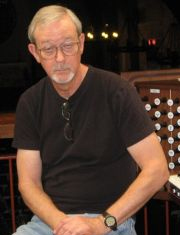
Mark Hayes
One classification I haven't used is "easy listening." You know what it is. It usually consists of covers of popular music from the 40s to the present day. There is a lot of church music out there that could fall into that category. One composer who does work well in this genre is Mark Hayes, an internationally known composer, arranger, concert pianist and conductor from Kansas City, Missouri, with over 1000 publications in print. (The catalog of his works has over 160 pages.) He has written and arranged songs for choir, piano, soloists, instrumentalists, organ and handbells, and travels extensively performing and leading workshops in churches of all denominations, including Episcopal. Surprisingly, we don't have any of his anthems in our library.

This Sunday, however,  we get to hear one of his arrangements when Mitchell Hutchins sings his arrangement of the spiritual, "Give Me Jesus." Mitchell was a choral scholar here at Good Shepherd back when he was a student at Lone Star Kingwood. He has since moved on to Stephen F. Austin to study Music Education, and sings in the choir at First Presbyterian Church, Kingwood. He's a favorite among many here at Good Shepherd, and you will love hearing him sing this setting of the familiar spiritual.

Two of the organ pieces are by composers who attended the recent convention of the American Guild of Organists held here in Houston (I was chair of Hospitality for this national meeting that brought more than 1200 organists from all over the globe to our city.) The first is the opening voluntary, a "jubilation" on the spiritual, Every Time I Feel the Spirit. It is a bright, rollicking little piece (only lasting 1'30") that reminds me of a Bach Invention. (The Inventions are a collection of short pieces J. S. Bach wrote for pedagogical purposes. These fifteen two-part works, each named 'inventio', along with fifteen three-part pieces, named 'sinfonia', were written as technical exercises for the independence of two hands, but are also beautiful works of art.) This piece by Dennis Janzer, organist-choir master at St. Mary's Episcopal Cathedral in Memphis, is also written in just two parts, requiring an independance between the left and right hand.

The other piece is a lovely Aria by an John Dixon, an Englishman with an MBA from Harvard who is now the organist and composer-in-residence at a Presbyterian Church in Virginia Beach.

The closing voluntary is by a little known organist from New Jersey, George Blake. In 1926, at age fourteen, Blake began to play the theater organ professionally at the Franklin Theatre in Nutley, New Jersey. His father having died when he was very young, Blake quickly became the primary supporter of his family through his performing, and he lived with his mother in New Jersey for many years until her death. His younger brother was the cartoonist Bud Blake (of the popular comic strip "Tiger.") George Blake served as principal organist for a number of theaters in New Jersey and New York City, including the New Roxy (later the Center Theatre) in Rockefeller Center. He was also a regular performer on several radio programs of the day, including the "Lucky Strike Hour." As the age of the cinema organist ended, Blake focused primarily on sacred music. He was organist at several churches in New Jersey including St. Andrew's Episcopal (South Orange) and Grace Episcopal (Nutley).


Saturday, February 6, 2016

Music for February 7 + The Last Sunday after the Epiphany

Vocal Music
  • Gospel Adoramus – Mark Hayes
  • Round the Lord in Glory Seated – David McCarthy
  • "Circle" Sanctus - Sheldon Curry
  • The Storm is Passing Over – Barbara Baker
Instrumental Music
  • I’m Goin’ to live So God Can Use Me – Paul Taylor
  • Come, We That Love the Lord – Timothy Shaw
  • Toccata Brilliante on We Will Glorify – Twila Paris, arr. Fred Bock
Congregational Music (all hymns from the Hymnal 1982 with the exception of those marked “R” which are from Renew.)
  • Hymn 7 - Christ, whose glory fills the skies (Ratisbon)
  • Hymn 383 - Fairest Lord Jesus (St. Elizabeth)
  • Hymn 135 - Songs of thankfulness and praise (Salzburg)
  • Hymn R201 - Be still, for the Spirit of the Lord (Be Still)
  • Hymn R247 - Lord, the light of your love is shining (Shine, Jesus, Shine)

It's Gospel Sunday!


After I first arrived at Good Shepherd, I would schedule music that had not been in the typical rotation of an Episcopal Congregation. Things such as spirituals, old hymns and gospel songs from my youth would find their way onto my music lists. I never thought anything of it until I overheard a choir member remark to another singer, "It must be his Methodist upbringing."

"Pardon Me, your Methodist is showing."

It's going to show with all it's Protestant glory this Sunday, the last Sunday before Lent begins. Since Lent brings with it a quieter, more subdued set list, we're going to leave Epiphany with a bang. 
The service will start with an organ arrangement of the spiritual, I'm Gonna Live So God Can Use Me. 
I'm gonna live so God can use me anywhere, Lord, anytime!
Then instead of the Gloria in Excelsis, we will sing Mark Hayes' setting of Gospel Adoramus, written in a contemporary Rock-Gospel style, using both the Latin and English texts of the Adoramus Te. In the Hayes inserts a quasi-baroque style five-part round. It's fun to sing!

I'll use the piano again for the offertory, a Gospel-inspired setting of an Anglican hymn by a Canadian-born composer! David McCarthy was born in Winnipeg, Canada with degrees in music from McGill University, the Eastman School of Music, and Houghton College. He is the organist and choir director at Incarnation Episcopal church in Penfield, NY, and also teaches at the Rochester Institute of Technology in Rochester, New York.

David wraps the text Round the Lord in Glory Seated in a tune that sounds like it came right out of a Black Baptist Church in South Carolina. (Or Georgia. Or Alabama. Or Detroit, for that matter.) The three stanzas feature the choir in unison, then the men with three part treble descant, then a four-part setting of the tune with a clever descant of "Holy, Holy, Holy" sung above. With a modulation to a higher key on each stanza, do not be surprised if you feel transfigured after hearing it!

For over 30 years, in Texas, Tennessee, and Arizona, Sheldon Curry has conducted church choirs – some in large Episcopal Cathedrals; others in rural Baptist communities. (He was, for a short time, director of music at St Stephens Episcopal Church here in Houston.) During that time, he has taught off and on – mostly poor, at-risk minority students. He teaches at Imago Dei Middle School in Tuscon where he also serves as Director of Music at St. Andrew’s Episcopal Church as well music editor for Alfred Music Company.  He has used the old tune, May the Circle Be Unbroken for the Rev. Susan Anderson-Smith's setting of the Sanctus for use at chapel services at Imago Dei.