Vocal Music
- Rejoice in the Lord Alway – 16th C. Anon.
Instrumental Music
- Veni Emmanuel - Edward Bairstow (1874-1946)
- Savior of the Nations, Come – Gerald Near
- Hark! A Thrilling Voice Is Sounding – Gerald Near
Congregational Music (all hymns from the Hymnal 1982 with the exception of those marked “R” which are from Renew.)
- Hymn 59 - Hark! A thrilling voice is sounding (MERTON)
- Hymn R122 - Canticle 9 - The First Song of Isaiah (Jack Noble White)
- Hymn R276 - Soon and very soon (Andrae Crouch)
- Hymn 60 - Creator of the stars of night (CONDITOR ALME SIDERUM)
- Hymn R229 - Let all mortal flesh keep silence (PICARDY)
- Hymn R278 - Wait for the Lord (Taizé Community)
- Hymn 68 - Rejoice, rejoice, believers (LLANGLOFFLAN)
The choir sings a setting of the words from today's Epistle reading, the fourth chapter of St Paul’s letter to the Philippians. It is the anonymous sixteenth-century anthem
Rejoice in the Lord alway which was formerly attributed to John Redford. The only known source of this anthem is in the Mulliner Book which is held in the British Library. The Mulliner Book is a historically important musical book compiled, probably between about 1545 and 1570, by Thomas Mulliner, about whom practically nothing is known, except that he is listed as
modulator organorum of Corpus Christi College, Oxford in 1563.
The music—a careful setting of the words—varies between imitative passages and homophonic sections as, for example, at the words ‘Let your softness be known unto all men," where the entire choir sings the same words at the same time.
The text is appropriate for the third Sunday of Advent, which is known as Gaudete Sunday. Its name is taken from the entrance antiphon of the Catholic Mass, which is the same as our Epistle reading.
Rejoice in the Lord always; again I say, rejoice.
Indeed, the Lord is near.
The color for the"Rejoice" Sunday is rose, a deviation from the blue we use on the other three Sundays of Advent.
My opening voluntary is the great Advent hymn
O Come, O Come Emmanuel, as set by the early 20th century English composer
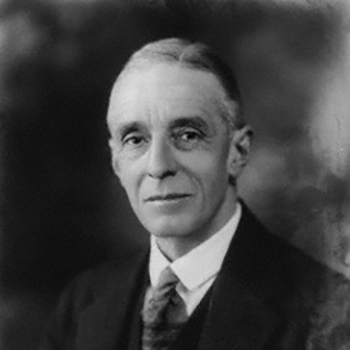
Edward Bairstow. Better known in his time as an organist, Bairstow is best remembered today for his Choral music, particularly for "Save Us, O Lord," "Blessed City," and "Let all mortal flesh keep silence." He also wrote much other sacred music and a handful of organ and piano compositions.
 |
| Edward Bairstow |
Bairstow received his education at the University of Durham, where he studied organ and music theory, graduating in 1894. He obtained a doctorate degree in music from that university in 1901. He was organist at several parish churches until 1913, when he became organist at York Minster, a position he would retain for the rest of his life.
Bairstow accepted a professorship at Durham University in 1929, but remained a resident in York owing to the light teaching demands at his alma mater. Bairstow received knighthood in 1932.