Showing posts with label Jean Langlais. Show all posts

Monday, March 21, 2022

Music for Sunday, March 27, 2022

Vocal Music

  • Lord, For Thy Tender Mercy’s Sake – Richard Farrant (c. 1525-1580)

Instrumental Music

  • Rhosymedre – Ralph Vaughan Williams (1872-1958)
    • My Song Is Love Unknown
  • Prelude au Kyrie – Jean Langlais (1907-1991)
  • Cwm Rhondda – Paul Manz (1919-2009)

Congregational Music (all hymns from The Hymnal 1982 with the exception of those marked “R” which are from Renew.)

  • Hymn 690 - Guide me, O thou great Jehovah (CWM RHONDDA)
  • Hymn R249 - Great is thy faithfulness (FAITHFULNESS)
  • Hymn 686 - Come, thou fount of every blessing (NETTLETON)
  • Hymn 693 - Just as I am, without one plea (WOODWORTH)
  • Hymn 411 - O bless the Lord, my soul (ST. THOMAS (WILLIAMS))
  • Psalm 32 – tone IIa
The English composer Ralph Vaughan Williams is the composer of this morning's opening voluntary. Vaughan Williams is one of the first composers who wrote in what you could call a “distinct English style”; he made a point of breaking away from the German style which had a profound influence on classical music forms like symphonies, concertos, and chamber music. His studies with Ravel likely had something to do with this. He was also interested in folk tunes of the British Isles, as evidenced by today's prelude.

"RHOSYMEDRE" is Vaughan Williams's best-loved work for organ. It is sometimes used for the Lenten hymn "My Song is Love Unknown." (Our hymnal uses the tune LOVE UNKNOWN.) Though originally written for pipe organ, it's been arranged for orchestra and almost every ensemble possible. (I've even heard it played by a saxophone quintet.) As usual, in his arrangements of British folk music, Vaughan Williams succeeds here in turning an apparently simple tune into a work of profound emotional impact. Renaissance cadences much in evidence, in this short but sweet work Vaughan Williams crafts a wistful piece of great beauty. It's one of my favorites, and one that I want played at my funeral one day.
Ralph Vaughan Williams in World War I

Vaughan Williams had a strong sense of integrity, in that he believed music should be accessible to everyone. He also believed in being of service to his fellow citizens, to the point that he signed up at age 42 when World War One broke out. He was an ambulance wagon driver and became a lieutenant in the Royal Artillery, being sent to fight in France in 1918. The constant sound of guns damaged his hearing and lead to his deafness in his old age. The war had an impact on his music, culminating in his Dona nobis pacem (“Grant us peace”) completed in 1936, at a time there must have been speculation of another war brewing.

A humble man, Ralph Vaughan Williams declined the honor of a knighthood. His ashes were interred at Westminster Abbey.

The communion voluntary is part of a larger work by French composer Jean Langlais called Hommage à Frescobaldi, written in 1952. This is the first piece in that collection, entitled, appropriately enough, "Prélude au Kyrie." It begins with a slowly-ascending melodic figure against suspended chords. When the opening material returns, halfway through, it is now accompanied by the pedal, which plays the chant theme from the Kyrie of the Mass "Cunctipotens genitor Deus."

Born in La Fontenelle, Brittany, France, a small village near by the Mont Saint-Michel, Jean Langlais became blind from the age of two. At the age of eleven, he was sent to the Paris National Institute for the Young Blind where he studied piano, violin, harmony and organ. Later, he entered the Paris National Conservatory of Music, obtaining a First Prize in 1930. 

In 1945, he became the successor to Cesar Franck and Charles Tournemire at the prestigious Sainte-Clotilde in Paris. He left that position in 1987 at the age of 80, having been organist for 42 years!

The closing voluntary is the well-known (at least among organists!) improvisation on our opening hymn this morning, CWM RHONNDA. (Guide me, O thou great Jehovah). It is by the American Lutheran composer Paul Manz. 

It's a little exuberant for the season of Lent, but today is Laetare Sunday, or the fourth Sunday in the season of Lent. Traditionally, this Sunday has been a day of celebration, within the austere period of Lent. It gets its name from the first few words of the traditional Latin Introit of the day from the Roman Catholic Mass, "Laetare Jerusalem" ("Rejoice, O Jerusalem"). Hence, I don't feel too badly that the opening of the piece sounds a lot like Handel's "Hxllelujxh" from Messiah.



Thursday, July 4, 2019

Music for July 7, 2019 +

Vocal Music

  • O Had I Jubal’s Lyre – George Frederick Handel (1685-1759)

Anna Zhang, soprano
Instrumental Music

  • Aria from Water Music – George Frederick Handel
  • There Is a Fountain – Jean Langlais
  • Postlude in G – George Frederick Handel

Congregational Music (all hymns from the Hymnal 1982 with the exception of those marked “R” which are from Renew.)

  • Hymn R-270 - Join all the glorious names (DARWALL)
  • Hymn 441 - In the cross of Christ I glory (RATHBUN)
  • Hymn 424 - For the fruit of all creation (EAST ACKLAM)
  • Hymn R305 - Lord, you give the great commission (ABBOT’S LEIGH)


The offertory this Sunday is the jubilant aria for soprano from Handel's opera, Joshua. Joshua tells the story of the Israelites from their passage over the Jordan River into Canaan and through the Battle of Jericho. This aria comes at the end of the oratorio. It will be sung by our soprano section leader this past year, Anna Zhang. Anna was a student at Lone Star College, and will be entering Stephen F. Austin in Nacogdoches in the fall.

If you were raised in the Baptist, Methodist or other southern denominations, chances are great that you will remember an old hymn called "There is a fountain filled with blood." This old revival tune was given a new treatment by the French organist Jean Langlais. The melody is played in the pedals, while a slow, modal accompaniment hovers above.

Thursday, February 22, 2018

Music for February 25, 2016 + The Second Sunday of Lent

Vocal Music

  • Take Up Your Cross – Richard Corp (b. 1951)
  • Mass for Three Voices – William Byrd (1539/40?-1623)

Instrumental Music

  • Suite Breve: Cantilène – Jean Langlais
  • Suite Breve: Plainte – Jean Langlais

Congregational Music (all hymns from the Hymnal 1982 with the exception of those marked “R” which are from Renew.)

  • Hymn 142 - Lord, who throughout these forty days (ST. FLAVIAN)
  • Hymn 675 - Take up your cross, the Savior said (BOURBON)
  • Hymn 707 - Take my life, and let it be (HOLLINGSIDE)
  • Hymn R217 - You satisfy the hungry heart (GIFT OF FINEST WHEAT)
  • Hymn 401 - The God of Abraham praise (LEONI)
  • Psalm 22:22-30 Tone IIa

This Sunday the choir will sing parts of the Mass for Three Voices by William Byrd at the 10:15 Service.

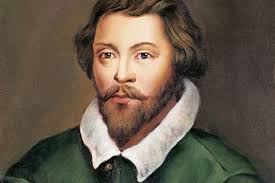
The greatest English Renaissance composer and one of the finest English composers of all times, William Byrd was born in London around 1540. Not much is known of Byrd’s early life. Two of his older brothers were listed as choristers at London’s St. Paul’s Cathedral, but there is no listing for young William. Scholars surmise that he was a boy chorister in the Chapel Royal, the choir of the royal family, although his name does not appear on any list of members. He studied with Thomas Tallis, the father of the English anthem, and composer John Sheppard. Scholars also believe that after his voice changed, Byrd remained with the Chapel Royal as assistant organist and choir trainer for the boy choristers.

A faithful Catholic, Byrd experienced both musically and personally the effects of the tremendous religious upheavals in 16th and 17th century England. Byrd lived under the reigns of five monarchs:
  1. Henry VIII (1491-1547), a Catholic until his 1530’s differences with the Pope over his marriage; 
  2. Edward VI (1537-1553), a Protestant; 
  3. Mary Tudor (1516-1558), a Catholic; 
  4. Elizabeth I (1533-1603), who steered a middle course between Protestantism and Catholicism
  5. James I, a Protestant (1603-1625). 
With the accession of each monarch came a change in procedures and practices, greatly affecting the style, content and language of the music that was performed.

His tenure under Elizabeth I was a fruitful one. Although Byrd was a Catholic, Elizabeth esteemed his music highly, most probably saving him from the severe persecution that befell other Catholics.  He composed an anthem, Look and bow down, set to Elizabeth’s words. He wrote an anthem honoring the 20th anniversary of her accession to the throne, and he wrote the first known madrigal in her praise, This sweet and merry month of May.  It was during this time that he wrote three Latin masses which are among his most popular works—the Mass for Three Voices (1593-1594), the Mass for Four Voices (1592-1593), and the Mass for Five Voices (1595). The were probably written for the private Catholic services that were held in secret, meant not to be sung by a choir, but by solo voices, as the homes where the recusant Catholics met would not have room for an entire choir.

The anthem this Sunday is by the contemporary English composer and conductor Ronald Corp. He is founder and Artistic Director of the New London Orchestra and the New London Children's Choir. Corp is Musical Director of the London Chorus, a position he took up in 1994, and is also Musical Director of the Highgate Choral Society. Born and raised in Wells, Somerset, Corp studied music at Oxford University. Ronald Corp was awarded an OBE for services to music in the Queen’s 2012 New Year Honours

The text is perfect for this Sunday, as it is references the Gospel Reading:  “If any want to become my followers, let them deny themselves and take up their cross and follow me." The middle section comes from Psalm 51.

The organ music comes from the Suite Brève by Jean Langlais. Born in great poverty in rural Northwest France, he was blind by age two, and his musical talent became evident when he sang in the choir of the local church. At ten he was sent to the National Institute for Blind Children in Paris, where he began to study the organ. From there, he progressed to the Paris Conservatoire, obtaining prizes in organ and composition. By 1945 he was organist at one of Paris's great churches, St. Clotilde. It was here that he wrote today's voluntaries in 1947.

The communion voluntary, the lyrical "Cantilene," is based on an original modal theme heard on a reed stop in the pedal and accompanied by soft chords., which reinforce the modal character (neither Major nor Minor key) of the melody. The next section plays of the melody canonically between high and low registers, simultaneously using the two melodies in the pedal. The third section has the melody once again in the pedal, but with an add flute obbligato in the treble register. It's not easy. Pray for the organist.

The opening voluntary is the piece that follows "Cantilene" in the suite. Titled "Plainte," it sounds like just what it is, a "lamentation," an expression of sorrow. It is dark and moody, and fitting for the season of Lent.

Thursday, November 2, 2017

Music for November 5, 2017 + All Saints Sunday

Vocal Music

  • I Heard a Voice from Heaven – John Goss (1800-1880)

Instrumental Music

  • Fanfare Flourish – Ron Mallory (B. 1973)
  • Chant de Paix – Jean Langlais (1907-1991)
  • Placare Christe Servulis (O Christ Forgive Thy Servants) – Marcel Dupré (1886-1971)

Congregational Music (all hymns from the Hymnal 1982 with the exception of those marked “R” which are from Renew.)

  • Hymn 287 - For all the saints, who from their labor rest (SINE NOMINE)
  • Hymn 526 - Let saints on earth in concert sing (DUNDEE)
  • Hymn 618 - Ye watchers and ye holy ones (LASST UNS ERFREUEN)
  • Hymn R127 - Blest are they, the poor in spirit (BLEST ARE THEY)
  • Hymn 625 - Ye holy angels bright (DARWALL’S 148TH)
  • Hymn - Taste and See (James Moore) Paraphrase of Psalm 34:1-4, 8

The choral music of the English composer Sir John Goss is among the core works of Anglican choirs’ repertoire; our choir often sing his works and we sing his best known hymn tune, LAUDA ANIMA with the text, “Praise, my soul, the King of heaven” (#410). Goss is best remembered for his vocal music and is one of the last English composers who devoted their work almost entirely to writing church music.


Sir John Goss, by unknown artist, circa 1835.

Born in Fareham, Hampshire, England, Goss was a descendant of a long line of English musicians. Several in his family were excellent singers, and his father was the organist of the parish church in Fareham. Goss was educated in London, sang as a chorister for the Chapel Royal, and studied organ with Thomas Attwood, organist of St. Paul’s Cathedral in London. Goss was appointed to several prestigious organist positions in London including Stockwell Chapel in South London, St. Luke’s Church in Chelsea, and St. Paul’s Cathedral, succeeding his former teacher there in 1838. While at St Paul’s, Goss had little influence over the music of the cathedral, and he struggled to improve musical standards there.

Goss was also an active teacher, serving as a professor at the Royal Academy of Music where he taught harmony from 1827 to 1874, and taught at St. Paul’s. His instructional book written in1833, An Introduction to Harmony and Thorough-Bass, was a standard music text of the era.

Goss was remembered by his students for his pious, religious life, patience and gentleness of character. Following years of poor health during the 1870s, Goss died in his home in Brixton. He is buried in St. Paul’s Cathedral.

Goss was knighted by Queen Victoria when he retired from St. Paul’s in 1872. In 1876, he received an honorary doctorate in music from the University of Cambridge. Numerous posthumous memorials honoring Goss were erected in London and Fareham.

The closing voluntary is a wonderful work by Marcel Dupré on the chant Placare Christe Servulis which is traditionally sung at Vespers on the Feast of All Saints in the Roman Breviary. It is the last piece in Dupré's organ collection, Tombeau de Titelouze (16 Chorals sur des Hymnes liturgiques), Op 38. During an Organ Week held in Rouen in 1942, the Abbé Robert Delestre, Maître de Chapelle of Rouen Cathedral showed Dupré the unmarked grave of Jean Titelouze, the founding father of French organ music. It immediately inspired Dupré to compose this volume which he inscribed to the Abbé. Placare Christe servulis treats the hymn melody in the form of a toccata (D major, 12/8) for All Saints Day.

Thursday, March 30, 2017

Music for April 2, 2017

Vocal Music

  • Christus Factus Est – Felice Anerio (1560-1614)

Instrumental Music

  • O Mensch, bewein dein Sünde groß, BWV 622– Johann Sebastian Bach (1685-1750)
  • Prélude au Kyrie (Hommage à Frescobaldi)  –Jean Langlais (1907-1991)

Congregational Music (all hymns from the Hymnal 1982 with the exception of those marked “R” which are from Renew.)

  • Hymn 493 - O for a thousand tongues to sing (AZMON)
  • Hymn R90 - Spirit of the living God (IVERSON)
  • Hymn 411 - O bless the Lord, my soul (ST. THOMAS (WILLIAMS))
  • Hymn 314 - Humbly I Adore thee (ADORO DEVOTE)
  • Hymn 715 - When Jesus wept (WHEN JESUS WEPT)
  • Hymn 610 - Lord, whose love through humble service (BLAENHAFREN)
  • Psalm 130 - Tone IIa
There are only two people who have ever held the post of composer to the Papal choir. One of them was Giovanni de Pierlugi Palestrina and the other was Felice Anerio. Christus factus est is a perfect example of why his fellow musicians held him in such esteem. Its text is from the Epistle to the Philippians which is used in the Gradual for Maundy. It’s a beautifully simple homophonic work that eschews modality and ornamentation in favour of a simple but oh so effective directness. The chromatic harmonic touches show an influence of early baroque madrigal style not found in Palestrina.

O Mensch bewein dein sunde gross, BWV 622 (O Man, Bewail your Great Sins), is a piece from the Orgelbüchlein (Little Organ Book) by Johann Sebastian Bach, a collection of 46 preludes for organ almost exclusively written during the 1708-1717 period, while Bach was court organist in Weimar. The collection is defined by Bach himself in the title page as '[a book] in which a beginning organist receives given instruction as to performing a chorale in a multitude of ways while achieving mastery in the study of the pedal, since in the chorales contained herein the pedal is treated entirely obbligato'. Many consider it a collection also for the liturgical year, as the layout of the book begins with Advent and Christmas hymns and then works its way through the life of Christ, and thus the liturgical year.

O Mensch, bewein dein Sünde gross  is a traditional Passiontide chorale, or hymn, whose melody and text both date from around 1525. Bach's organ treatment of this simple E flat major melody could hardly be more lush -- indeed, this setting is one of the most thoroughly ornamented of all Bach's compositions; the melody as laid out in the top voice of the organ part is coloratura in the best and most original sense of the word. Here is a side-by-side comparison of the Bach treatment (on top) of the first phrase of the original hymn melody (on bottom).

In addition to being the most elaborately decorated piece in the Orgelbüchlein, O Mensch, bewein  is probably the most chromatically adventuresome as well, especially in the final few bars (the last one is marked adagissimo by Bach, calling attention to the last line of text: "stretched out on the cross"), in which we are treated not only to a steadily rising chromatic bass line that moves with great conviction towards a shocking C flat major chord, but also to some wonderfully pungent G flat/F flat decoration in the top voice.

The idea of a musical composition as an homage honoring a great musician is nothing new. Maurice Ravel, composed Le tombeau de Couperin for solo piano between 1914 and 1917 and  Marcel Dupré wrote Le tombeau de Titelouze for organ in 1943.  In Hommage à Frescobaldi, Jean Langlais pays homage to the seventeenth-century Italian keyboard virtuoso and composer Girolamo Frescobaldi. Throughout the work Langlais perhaps purposefully exhibited some of Frescobaldi's idiosyncrasies, including startling harmonic shifts and the quotation of existing melody; but perhaps the most notable similarity is both composers' natural penchant for passionately mystical moments.

The first movement of the work, "Prelude au Kyrie," begins with a slowly-ascending melodic figure against suspended chords. When the opening material returns, halfway through, it is now accompanied by the pedal, which plays the chant theme from the Kyrie of the Mass "Cunctipotens genitor Deus."

Jean Langlais was a French composer and organist who wrote choral and  organ music, often based on Gregorian chant, enhanced by polymodal harmonies. Langlais became blind due to glaucoma when he was only two years old, and was sent to the Institut National des Jeunes Aveugles (National Institute for Blind Children) in Paris, where he began to study the organ, with André Marchal. From there, he progressed to the Paris Conservatoire, obtaining prizes in organ and studying composition with Marcel Dupré and Paul Dukas.

It was as an organist that Langlais made his name, following in the footsteps of César Franck and Tournemire as organiste titulaire at the Basilica of Sainte-Clotilde in Paris in 1945, a post in which he remained until 1988. He was much in demand as a concert organist, and toured widely across Europe and the United States.

Langlais died in Paris aged 84.

Thursday, January 28, 2016

Music for January 31, 2016 + The Fourth Sunday after the Epiphany

Vocal Music
  • Thy Perfect Love – John Rutter (b. 1945)
Instrumental Music
  • Suite Brève: Cantilene – Jean Langlais (1907-1991)
  • Variations on “Liebster Jesu” – Johann Gottfried Walther (1684-1748)
  • Suite Brève: Dialogue sur les mixtures – Jean Langlais 
Congregational Music (all hymns from the Hymnal 1982 with the exception of those marked “R” which are from Renew.)
  • Hymn R49 - Let the whole creation cry (Llanfair)
  • Hymn R155 - Though I may speak with bravest fire (Gift of Love)
  • Hymn 440 - Blessed Jesus, at thy word (Liebster Jesu)
  • Hymn 576 - God is love, and where true love is (Mandatum)
  • Hymn R226 - Ubi Caritas (Taizé)
  • Hymn 530 - Spread, O spread, thou mighty word (Gott Sei Dank)
The English composer John Rutter writes wonderfully approachable and finely crafted choral music. Christmas could hardly happen without his settings of both traditional and original carols. And for decades church choirs have been singing his lyrical anthems on religious texts. One such anthem is this Sunday's offertory, Thy Perfect Love. Based on a 15th century English prayer, the anthem begins with a soprano soloist who presents the poem in its entirety. Then the whole choir sings the prayer in four part harmony, without organ. The hymn sounds easy, but the descending chromatic chords are tricky to sing in tune and on pitch! Pray for the choir.

Jean Langlais
The organ music comes from the Suite Brève by Jean Langlais. Born in great poverty in rural Northwest France, he was blind by age two, and his musical talent became evident when he sang in the choir of the local church. At ten he was sent to the National Institute for Blind Children in Paris, where he began to study the organ. From there, he progressed to the Paris Conservatoire, obtaining prizes in organ and composition. By 1945 he was organist at one of Paris's great churches, St. Clotilde. It was here that he wrote today's voluntaries in 1947.

The opening voluntary, the lyrical "Cantilene," is based on an original modal theme heard on a reed stop in the pedal and accompanied by soft chords., which reinforce the modal character (neither Major nor Minor key) of the melody. The next section plays of the melody canonically between high and low registers, simultaneously using the two melodies in the pedal. The third section has the melody once again in the pedal, but with an add flute obbligato in the treble register. It's not easy. Pray for the organist.

The last piece, "Dialogue sur les mixtures," has fast, repeated chords moving rapidly from the neutral key of C Major to A-flat and back again, with lively echoings between the different manuals (keyboards) of the organ.

Saturday, October 17, 2015

Music for October 18, 2015 + Choir Dedication Sunday + The Twenty-first Sunday after Pentecost

Vocal Music
  • Jubilate Deo – Michael Bedford (b. 1949)
  • Oh, Sing to the Lord a New Song – John Leavitt (b. 1956)
  • Bless, O Lord, Us Thy Servants – John Harper (b. 1947)
Instrumental Music
  • Andantino – Jean Langlais (1907-1991)
  • Fugue in C Major, BWV 846 – Johann Sebastian Bach (1685-1750)
  • Scherzo – Alan Ridout (1934-1996)
Congregational Music (all hymns from the Hymnal 1982 with the exception of those marked “R” which are from Renew.)
  • Hymn 420 - When in our music God is glorified (ENGLEBERG)
  • Hymn R 112 - You who dwell in the shelter of the Lord (ON EAGLES WINGS)
  • Hymn 495 - Hail, thou once despised Jesus (IN BABILONE)
  • Hymn R 289 - Jesu, Jesu, fill us with your love (CHEREPONI)
  • Hymn 492 - Sing, ye faithful, sing with gladness (FINNIAN)
Sunday, October 18 has been designated as Music Sunday by RSCM America. RSCM America is the branch of the Royal School of Church Music in the United States, whose goal is to uplift the spiritual life of religious communities through high quality choral music. On this day, we celebrate the music and musicianship that are a vital and beloved part of church life. On this day we will dedicate new choristers into our choir and reaffirm the ministries of those who have already been singing in the choir. Music Sunday is also a time when we offer a special prayer for our music and musicians--the young and old, professional and amateur, singer and instrumentalist, administrator and practitioner--most of whom work without expectation of recognition but who nonetheless deserve our awareness and thanks.

One of the anthems we will sing is a setting of The Chorister's Prayer.
Bless, O Lord, us Thy servants,
who minister in Thy temple.
Grant that what we sing with our lips,
we may believe in our hearts,
and what we believe in our hearts,
we may show forth in our lives.
Through Jesus Christ our Lord.
Amen.
The Chorister's Prayer in its most common form was first published by the School of English Church Music (as the RSCM was then called) in 1934 in the Choristers' Pocket Book. It has origins which extend back at least to the 4th century, for the tenth canon of the fourth council of Carthage (c 398 AD) decrees that cantors should be blessed with the words Vide, ut quod ore cantas, corde credas, et quod corde credis, operibus comprobes (“See that what thou singest with thy lips thou dost believe in thine heart, and that what thou believest in thine heart thou dost show forth in thy works”)

John Harper
This prayer is used each week at the beginning of our Children's Choirs. We who pray these words weekly carry on a tradition of many centuries and hopefully we both ‘steadfastly fulfil’ and also ‘show forth’ the tenets of our faith in our lives and music.

John Harper composed this setting of The Chorister's Prayer for the 80th anniversary of the RSCM. It was sung at St Paul's Cathedral, London on Easter Monday 2007, to mark the beginning of the RSCM's 80th anniversary celebrations. Harper is RSCM Research Professor of Music and Liturgy, and Director of the new International Centre for Sacred Music Studies (ICSMuS) at Bangor University in Wales. He is Emeritus Director of The Royal School of Church Music.

John Leavitt
The other anthem the Good Shepherd sings this day is a contemporary setting of Psalm 96 with a rippling piano accompaniment with violin obbligato. It is by the American composer, choral director and teacher John Leavitt. A native of Kansas, Dr. Leavitt received the Kansas Artist Fellowship Award from the Kansas Arts in 2003 and in 2010 he was the recipient of a grant from the National Endowment for the Arts’ American Masterpieces to commission a new choral work in celebration of the 150th anniversary of the State of Kansas.  His music has been performed in 30 countries across the globe and his recordings have been featured nationally on many public radio stations. His compositions are represented by nearly every major music publisher in this country. In addition to his academic posts, he has served Lutheran churches in the Wichita area.

The St. Gregory Choir will sing an anthem by the Oklahoma composer and church music Michael Bedford. Bedford retired last year from St. John's Episcopal Church in Tulsa after a twenty-five year tenure as director of music and organist. This anthem, Jubilate Deo, is a setting of Psalm 100 in both Latin and in contemporary English.

Tuesday, February 17, 2015

Music for February 22, 2015 + The First Sunday in Lent

Vocal Music

  • Lead Me, Lord – Samuel S. Wesley (1810-1876)

Instrumental Music

  • Prélude au Kyrie – Jean Langlais (1907-1991)

Congregational Music (all hymns from the Hymnal 1982.)

  • Hymn 150 Forty days and forty nights (AUS DER TIEFE RUFE ICH)
  • Hymn 693 Just as I am, without one plea (WOODWORTH)
  • Hymn 142 Lord, who throughout these forty days (ST. FLAVIAN)
  • Hymn 143, st. 5 O Father, Son, and Spirit blest (ERHALT UNS, HERR)
  • Psalm 25:1-9 TONE II

Lead Me, Lord, is actually a part of a longer anthem by Samuel Sebastian Wesley, Praise the Lord, O My Soul, written in 1861. Wesley was the grandson of hymn-writer Charles Wesley, and the son of Samuel Wesley, another English musician, but it was Samuel Sebastian (named after Johann Sebastian Bach) that became the famous as one of his country's leading organists and choirmasters. He composed almost exclusively for the Church of England, writing some exquisite music, including the hymn-tune AURELIA (The Church's One Foundation). 

Jean Langlais. You can tell
he's French. Look at that beret!
At communion we hear the opening movement from a collection of organ music by French organist Jean Langlais, written as a homage to the 17th century Italian organist, Girolamo Frescobaldi. It features the melody of the Kyrie from the Gregorian Mass IV - Cunctipotens Genitor Deus  played on a flute stop in the pedal, but only after a lengthy, improvisatory section in the manuals that demonstrates Langlais's ideal of mysticism. The slow tempo and long sustained chromatic chords draw the listener into a state of contemplation through the suspension of time. 

Langlais, like a number of organists, was blind, but he easily managed the manifold aspects of the organ without his sight.  As usually happens with the blind, his other sense made up for what he lacked.  By the sheer sound of a student’s playing, he could tell what fingering he was using.  In one famous story, Langlais was giving a lesson and told the student to use the third finger on a particular note.  The student ignored him, figuring that he’d never know.  “You are so stupid," Langlais exclaimed after failing to get through to him.  “The third finger!  Use the third finger!”   

As is my custom during Lent, I omit playing a festive closing voluntary, opting instead to let the Lenten worshiper leave the church in contemplative silence.

  • Forty days and forty nights (AUS DER TIEFE RUFE ICH) - George Smyttan based this hymn on the Gospel reading for today, Mark 1:12-13, dealing with Christ's temptation in the desert, but seemingly it is concerned chiefly with the physical setting rather than the inner spiritual struggles which are more clearly delineated in the other Gospels. It is a great hymn for the first Sunday in Lent (but not of Lent! Sundays don't count!)
  • Just as I am, without one plea (WOODWORTH) - "Every head bowed, and every eye closed!" If you ever went to a revival meeting in the South (or even just a regular service in the Southern Baptist Church), you've sung this hymn while the minister pleaded for the wayward sinner to come to the altar and give their life to Christ. The hymn was written by Charlotte Elliott, an invalid daughter of a minister, in 1836, and has since be included in almost every hymnal in the English speaking world, and translated in almost every major lanquage.
  • Lord, who throughout these forty days (ST. FLAVIAN) - As a result of her life-long interest in religious education, Claudia Hernaman wrote 150 hymns for children. This one attempts to explain the deeper meaning of the forty days of Lent - fasting, praying, tempatations, and penitence which point to the joys of Easter which follow the penitential season.
  • O Father, Son, and Spirit blest (ERHALT UNS, HERR) - Our presentation hymn is the last stanza of the Lenten hymn The glory of these forty days. Since the last stanza is doxological in nature (praising God the Father, the Son, and the Holy Spirit), it is a good choice for this spot in the service. The tune is the same tune that was used as the presentation hymn for the Sundays after Epiphany, though in its original rhythmic form. The Lenten version of the tune is a harmonization by J. S. Bach.

Thursday, January 15, 2015

Music for January 18, 2015 + The Second Sunday after the Epiphany

Vocal Music
  • Hush! Somebody’s Callin’ My Name – arr. Brazeal W. Dennard (1929-2010)
  • Lord, You Have Searched Me – David Hurd (b. 1950)
Instrumental Music
  • Galliard on “Gather Us In” – James Biery (b. 1956)
  • Song of Peace – Jean Langlais (1907-1991)
  • Postlude – Lionel Lackey (1910-1987)
Congregational Music (all hymns from the Hymnal 1982 with the exception of those marked “R” which are from Renew.)
  • Hymn 7 - Christ, whose glory fills the skies (RATISBON)
  • Hymn 707  - Take my life, and let it be (HOLLINGSIDE)
  • Hymn 132 - All glory, Jesus, be to thee (ERHALT UNS, HERR)
  • Hymn R149 - I, the Lord of sea and sky (HERE I AM, LORD)
  • Hymn 535 - Ye servants of God, your master proclaim (PADERBORN)
Hush, hush, somebody’s callin’ my name. Oh my Lord, oh my Lord, what shall I do?
Today we sing an anthem that I like to schedule whenever the Old Testament lesson is the story of the boy Samuel hearing the voice of God call his name. The boy thinks it is his mentor, Eli, but after the third time Eli suggests the boy respond by saying "Master, speak, thy servant heareth." It turns out God is calling Samuel's name.
I use this spiritual because I imagine, if I heard God calling my name out loud, I'd be saying "What am I going to do?!"

But here is a brief history of the spiritual. Dr. Rosephanye Powell says
 “Hush” is to tell those weeping for us during sickness or dying to stop weeping because there is joy in dying. The verse “soon one morning, death come creeping in my room” was something the slave longed for and welcomed because it meant freedom from slavery.
There is a verse that says “sounds like Jesus” and that refers to the fact that they are truly saved and Jesus is calling them home. Relative to slavery in a sociological context, “hush” was an indication to keep quiet and listen because a conductor in the Underground Railroad was in the area and whatever their signal was (whistling, barking, knocking, tapping on the window) was indicative to the slave’s name being called...  In this context, the verse “sounds like Jesus” is a way of letting those in the slave community know that a conductor or liberator was in the area.
Brazeal Dennard
This setting was arranged by Brazeal Dennard, an African-American singer, educator, choral director, and musical arranger who was a significant contributor in the preservation and revitalization of the spiritual musical form. His efforts helped moved the African-American spiritual beyond the confines of the church, exposing not only the beauty of this music, but also its historical importance to a wider audience.
Dennard was invited by the White House to become a member of a special committee to present White House Fellowships to highly motivated young Americans. He is perhaps best known for his work with the Brazeal Dennard Chorale (founded in 1972), a group of highly trained singers dedicated to developing the choral art to its highest professional level. Brazeal Dennard was supervisor of music for the Detroit Public Schools and served as adjunct faculty at Wayne State University. 

Last week, while driving to church, the Sunday morning choral music program on Sirius/XM's classical channel was playing sacred choral music by French composers in solidarity with the French Creative community which had been hit by terrorists. This Sunday I am including my own tribute by playing French organist Jean Langlais' composition, Chant du Paix (Song of Peace) at communion.

Who is Galliard, and why is he on "Gather Us In?"

Well, Galliard isn't a person, it's a dance form, a vigorous 16th-century European court dance with a six-beat pattern.
"Galliard dance pattern" by Hyacinth at the English language Wikipedia.
Licensed under CC BY-SA 3.0 via Wikimedia Commons
James Biery used that pattern in writing our opening voluntary based on the contemporary hymn, Gather Us In, written by Marty Haugen, Haugen is a Catholic musician who has written a lot of music for the Roman church. (Many traditional musicians have issues with his compositions, even to the point of forming a Facebook page called Society for a Moratorium on the Music of Marty Haugen and David Haas.) It is found in our Renew Hymnal at No. 14.
In Biery's composition, you'll first hear an introduction with the distinctive, rollicking rhythm of the galliard. This introduction actually becomes a ritournello, interspersed between each phrase of the melody. Then after the entire first verse is presented, there is a musical bridge with fragments of the tune in various keys, building in intensity and volume before coming back with another stanza of the hymn.
The galliard's four hopping steps and one high leap permitted athletic gentlemen to show off for their partners. When performing the galliard, couples danced the length of the ballroom either together, men leaping higher than women, or separately. Imagine that as the choir, acolytes, and servers process down the aisle this Sunday.

The closing voluntary is another work in rollicking 6/8 time, simply called Postlude. It is written by Lionel Lackey, who, in addition to his work on the English faculty of Baptist College of Charleston (now Charleston Southern University), was a composer and librettist primarily known for his short, one-act operas. In this rare organ work, he composed a theme in G minor which starts the piece. After that detached, angular theme is fully presented, a smoother, legato secondary theme is introduced against the primary theme in the left hand. After a short bridge, the first section is repeated again, but this time the secondary theme is in a major key.
  • Christ, whose glory fills the skies (RATISBON) - Words by Charles Wesley, emphasizing the Epiphany theme of light out of darkness (like the first stanza of Gather Us In.)  The melody was adapted and harmonization written by William Henry Havergal, although we can only guess how closely it resembles the 1524 original.  This may be too short for a processional, so the choir better leap down the aisle quickly!
  • Take my life, and let it be (HOLLINGSIDE) -  This hymn is a beautiful prayer that God would both draw us closer to Himself, and use us to bring others to Him. God calls us to a life of discipleship, and our only response should be, “Here am I. Send me.” The rest of Christendom sings this hymn to another tune, but we Episcopalians sing it to this tune written by John Bacchus Dykes (of Holy, Holy, Holy fame.) Only three other hymnals use this tune, out of more than 80 modern hymnals.
  • All glory, Jesus, be to thee (ERHALT UNS, HERR)  - This is the last stanza of the hymn we sang last Sunday. 
  • I, the Lord of sea and sky (HERE I AM, LORD) - This hymn is a favorite among many in our congregation, and it comes from the same tradition as the hymn Gather Us In mentioned in the opening voluntary. It echoes the same sentiment as Take My Life and Let it Be.
  • Ye servants of God, your master proclaim (PADERBORN) -  Charles Wesley is the author of this hymn text. He wrote it in 1744 for Hymns for Times of Trouble and Persecution in the section titled “Hymns to Be Sung in Tumult.” The occasion for writing was a time of persecution for Methodists in England. They were accused of disloyalty to the British Crown among other things, and were therefore subject to violent persecution.   The text originally had six stanzas, but two of them were quite specific to the Methodist persecution of the time, and are therefore omitted in modern hymnals. Otherwise, the text has been passed down in a very consistent form. The four stanzas elaborate on the theme of God's glory and victorious power. The last two stanzas allude to eschatological passages throughout Revelation.

Thursday, November 20, 2014

Music for November 23, 2014 + The Last Sunday after Pentecost + Christ the King Sunday

Vocal Music
  • Lord of Life and King of Glory – Michelangelo Grancini (1605-1669)
  • Sing, My Soul – Ned Rorem (b. 1923)
Instrumental Music
  • Suite Brève: II. Cantilène – Jean Langlais (1907-1991)
  • Hymne D’action de Grâce “Te Deum” – Jean Langlais
  • There is a Spirit that Delights To Do No Evil – Ned Rorem (b. 1923)
Congregational Music (all hymns from the Hymnal 1982 with the exception of those marked “R” which are from Renew.)
  • Hymn 450 – All hail the power of Jesus’ name (CORONATION)
  • Hymn 494 – Crown him with many crowns (DIADEMATA)
  • Hymn R-268 – King of Kings (KING OF KINGS)
  • Hymn 460 – Alleluia, sing to Jesus (HYFRYDOL)
This Sunday is New Year's Eve, as far as the church calendar goes. Christ the King Sunday (the last Sunday after Pentecost) ends the liturgical calendar for churches such as ours. Christ the King Sunday celebrates the all-embracing authority of Christ as King and Lord.
To honor that feast, the Good Shepherd Choir sings an anthem based on a duet by the 17th century composer Michelangelo Grancini. Originally called Dulcis Christe, it was edited by the Chicago musician Richard Proulx as a work for 2-part mixed voice choir with the English text which we sing today.

Michelangelo Grancini was an Italian organist and composer who spent his entire life in Milan. He served several churches there and eventually became choir master of the Milan Cathedral in 1630, where he remained until his death. He was so highly regarded that he received a special dispensation enabling him to hold the Cathedral post which customarily excluded married men. During his life time he published nearly 20 volumes of his works including both sacred and secular music, but only a few pieces of his are now in existence.

Ned Rorem, during his Paris days.
Photo by Man Ray, 1953
We also feature music by the American composer and author Ned Rorem. He has received a Pulitzer Prize, a Fulbright Fellowship, a Guggenheim Fellowship, and an award from the National Institute of Arts and Letters. Time Magazine called him "the world's best composer of art songs," yet his musical and literary ventures extend far beyond this specialized field. Rorem has composed three symphonies, four piano concertos and an array of other orchestral works, music for numerous combinations of chamber forces, ten operas, choral works of every description, ballets and other music for the theater, and literally hundreds of songs and cycles. He is the author of sixteen books, including five volumes of diaries and collections of lectures and criticism. A native of Richmond, Indiana, he now lives in New York City.

The communion anthem is from his set of Three Hymn Anthems which he wrote for Paul Calloway, director of music at Washington National Cathedral, in 1962. The three hymns, taken from the Episcopal Hymnal, are written for a mixed choir without accompaniment. They are chiefly homophonic, sometimes strophic, and generally one note per syllable, such as one might find in a hymnal. There the similarities end, however, for Rorem adds delicious twists and turns of chromaticism and key-changes, yielding a most listenable and affirming effect in every case

The organ piece is a selection from A Quaker Reader, Rorem's first major work for organ. It was premiered by Leonard Raver at Alice Tully Hall, Lincoln Center in 1977. Rorem was a Quaker, and though he was raised in Quaker silence, he says "I craved Catholic sound". He wrote this suite based on writings of Quakers.“There Is a Spirit That Delights to Do No Evil . . .” is from the dying words of James Naylor (1660)

Rorem spent 7 years of his life after graduate school in Paris, during the same time that our other composer, Jean Langlais, lived and worked as the organist at Sainte-Clotilde in Paris. If Rorem did indeed crave Catholic sound, then he surely must have heard Langlais play the organ, undoubtedly including improvisations or compositions of Langlais.  One wonders if there was any influence on the young composer.

  • Hymn 450 – All hail the power of Jesus’ name (CORONATION) - Who doesn't know this thrilling hymn to Jesus? Written  by Edward Perronet, a friend and advisor of John and Charles Wesley, this hymn has gone through many alterations since it first appeared in 1780. It has also been sung to several tunes, including DIADEM and MILES LANE, in addition to the more familiar CORONATION.
  • Hymn 494 – Crown him with many crowns (DIADEMATA) Speaking of Coronation, we continue the theme of Christ the King with another favorite hymn. Matthew Bridges wrote the hymn to illustrate the text, "And on his head were many crowns" (Revelation 19:12).
  • Hymn R-268 – King of Kings (KING OF KINGS) Naomi Batya Ginsberg wrote "King of Kings" at the age of 13 with her friend Sophie Conty using a Hebrew melody as the tune. She has gone on to make a career out of songwriting and has written hundreds of songs for independent films, cable TV, ads and video games. The song now appears in 12 major hymnals.
  • Hymn 460 – Alleluia, sing to Jesus (HYFRYDOL) And yet another barn-burner favorite of the church universal. One usually does not expect an insurance agent to write hymns, but William C. Dix wrote this text as a new Communion hymn for the Church of England. William Dix also wrote "As with gladness men of old," "What child is this?" and 46 other hymns.