Thursday, May 26, 2022

Music for May 29, 2022 + The Seventh Sunday of Easter

Vocal Music

  • A Song to the Lamb – Donald Pearson (b. 1953)

Instrumental Music

  • Sonata No. 8: Andante Sostenuto – Alexandre Guilmant (1837-1911)
  • Sarabande (Concerto for Oboe in G Minor) – G. F. Handel (1685-1759)
  • Llanfair – Robert J. Powell (b. 1932)

Congregational Music (all hymns from The Hymnal 1982 with the exception of those marked “R” which are from Renew.)

  • Hymn 214 - Hail the day that sees him rise (LLANFAIR)
  • Hymn R168 - If you believe and I believe (ZIMBABWE)
  • Hymn 325 - Let us break bread together on our knees (LET US BREAK BREAD)
  • Hymn 460 - Alleluia! Sing to Jesus (HYFRYDOL)
  • Psalm 97 – Tone IIa

Anthem: A Song to the Lamb

The American composer Donald Pearson wrote this setting of Canticle 18 while he was organist/choir master of St. John's Cathedral in Denver. Now a canticle (from the Latin canticulum, a diminutive of canticum, "song") is a hymn, psalm or other Christian song of praise with lyrics usually taken from biblical or holy texts. Canticles are used in Christian liturgy. You are probably most familiar with canticle 20 - we sing it most Sundays at the beginning of the service. (Glory to God in the Highest.) Other familiar canticles are the Magnificat and the Nunc Dimittis, which are common at evening prayer services.

This setting starts of with a sparkling organ intro, which continues under the refrain which returns after each verse. The refrain was obviously meant for the congregation to sing, but today we will just leave it to the choir.

Opening Voluntary:  Sonata No. 8: Andante Sostenuto

Andante Sostenuto is the fourth movement of Alexandre Guilmant's Eight Sonata in A Major, Opus 9, completed at the composer's home in September 1906 and dedicated to Louis Herbette, a councilor of state. He later orchestrated the work as the Secondo Symphonie pour Orgue & Orchestra. It has some rich, thick chords which remind me of the opening of Camille Saint-Saens Organ Symphony which was written some 20 years earlier.

Félix-Alexandre Guilmant was a French organist and composer who was well known both as a recitalist and as a composer. His organ repertoire includes his 18 collections of Pièces dans différents styles (pieces in differing styles), the more liturgical Soixante interludes dans la tonalité grégorienne (60 pieces in Gregorian tonality) and his 12 books of l'Organiste liturgique (the liturgical organist). He also wrote chamber music, vocal music, a sinfonia cantata (Ariane) as well a lyric scene (Bathsheba).

Communion Voluntary: Sarabande 

This is the third movement of Handel's Oboe Concerto No. 3 in G minor (HWV 287) composed  possibly in 1704-1705. It was arranged for organ by Edward Shippen Barnes, an American organist from the first half of the 20th century who was well known for his editions of organ transcriptions of orchestral works. 

Here is a recording of the Houston Early Music group, Ars Lyrica, performing this movement. (Don't listen to it in church!)

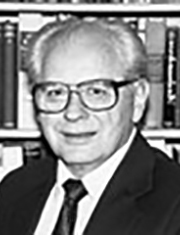
Closing Voluntary: Llanfair


The closing voluntary is a setting of our opening hymn by the living Episcopalian composer Robert J. Powell. He is known to our congregation if for no other reason than his setting of the Gloria (Canticle No. 20 - see above) that we have been singing each Sunday during Eastertide.

Music for May 22, 2022 + The Sixth Sunday of Easter

Vocal Music

  • If Ye Love Me – Philip Wilby (b. 1949)
  • God Help the Outcasts – Alan Menken (b. 1949)
    • Celeste Wilson, soprano

Instrumental Music

  • Lord, I Trust Thee – G. F. Handel (1685-1759)
    • Graham Whitney, Will Soto, violins; Lauren Vogel, viola
  • Chant Heroique - Gordon Young (1919-1998)

Congregational Music (all hymns from The Hymnal 1982 with the exception of those marked “R” which are from Renew.)

  • Hymn 405 - All things bright and beautiful (ROYAL OAK)
  • Hymn 292 - O Jesus, crowned with all renown (KINGSFOLD)
  • Hymn R136 - Alleluia (ALLELUIA)
  • Hymn 533 - How wondrous and great thy works, God of Praise (LYONS)
  • Psalm 67-Tone Va


Philip Wilby is an English composer.

Born in Pontefract, Yorkshire, England, Wilby was educated at the King's School and later at Leeds Grammar School, studying violin, organ and theory. He played violin with the National Youth Orchestra, where he came under the influence of Herbert Howells. This helped form his early decision to take composition seriously. Wilby then studied at Keble College, Oxford. He joined the Covent Garden Orchestra and later the Birmingham Symphony Orchestra. In 1972 he became senior lecturer at Leeds University. There he taught various composition, liturgy, directing, and score reading classes as well as co-founding the Leeds University Liturgical Choir.

His many compositions include works for keyboard, orchestra, educational music, chamber, and sacred choral music, but it is his music for concert band for which he is perhaps best known.

During communion, we have the pleasure of hearing one of our graduating seniors sing a song from the Disney musical, The Hunchback of Notre Dame. 

Thursday, May 12, 2022

Music for the Fifth Sunday of Easter + May 15, 2022


Vocal Music

  • Thy Perfect Love – John Rutter (b. 1945)

Instrumental Music

  • Partita on ‘Salzburg’ - Johann Pachelbel (1653–1706)
  • Land of Rest – George Shearing (1919-2011)
  • Fugue in D – Johann Pachelbel

Congregational Music (all hymns from The Hymnal 1982 with the exception of those marked “R” which are from Renew.)

  • Hymn R75 - Praise the Lord! O heavens adore him (AUSTRIA)
  • Hymn 576 - God is love, and where true love is (MANDATUM)
  • Hymn 304 - I come with joy to meet my Lord (LAND OF REST)
  • Hymn 529 - In Christ there is no East or West (MCKEE)
  • Psalm 148 – setting by Hal H. Hopson
John Rutter has written a beautiful little anthem based on an anonymous 15th century poem, Thy Perfect Love. Written in 1975, you'll hear the text and tune twice; first, in a solo soprano setting, then again with the full choir singing the text with a lot of suspensions and harmonies that just seem to "float." 

John Rutter
London-born John Rutter has written a large body of sacred music: anthems, carols, a Requiem and other choral works, as well as orchestral and other secular music. He has also made significant contributions as an arranger and editor.

Rutter studied at Cambridge and stayed on to found The Cambridge Singers in 1981. He still conducts this ensemble, which records on its own label, Collegium. For his services to music, Rutter was awarded a Lambeth Doctorate of Music by the Archbishop of Canterbury in 1996, and a CBE (Commander of the Order of the British Empire) in the Queen’s New Year Honours List in 2007.

The opening and closing voluntaries are by the South German composer Johann Pachelbel. You know him by his celebrated Canon in D, which has been used at weddings and for diamond commercials ever since it was rediscovered in 1968, when the Jean-François Paillard chamber orchestra made a recording of the piece that would change its fortunes significantly.

But during his lifetime, Pachelbel was best known as an organ composer. He wrote more than two hundred pieces for the instrument, both liturgical and secular, and explored most of the genres that existed at the time. Much of Pachelbel's liturgical organ music, particularly the chorale preludes, is relatively simple and written for manuals only, no pedal is required. This is partly due to Lutheran religious practice where congregants sang the chorales. Household instruments like virginals or clavichords accompanied the singing, so Pachelbel and many of his contemporaries made music playable using these instruments. The quality of the organs Pachelbel used also played a role: south German instruments were not, as a rule, as complex and as versatile as the north German ones which J. S. Bach was accustomed to.
Johann Pachelbel

Chorales and chorale preludes constitute almost half of Pachelbel's surviving organ output, in part because of his organist post in Erfurt which required him to compose chorale preludes on a regular basis. Usually they were composed with one or two verses of the hymn, but today we have an example of a partita, or set of variations on the chorale. You'll hear the chorale first, followed by four different settings of the hymn tune. This is the familiar chorale, SALZBURG, which is used several times in our hymnal. Today we recall the Easter text that goes with it, At the Lamb's high feast we sing.

The communion voluntary is a setting of another hymn-tune, LAND OF REST, which we will sing with the text, I come with joy to meet my Lord. It is by the pianist George Shearing, a British jazz musician who rose to become something of a household name in the US. Blind from birth, Shearing had a natural flair for playing the piano (he started lessons at age five) and was able to memorize tunes he learned from listening to the radio. He studied music at Linden College, a residential school for blind children, where he stayed until he was 16, at which point he began working as pub pianist.

George Shearing
Shearing was much honored during his long career. He played for three different US presidents (Gerald Ford, Jimmy Carter, and Ronald Reagan) and was awarded an OBE in 1996 before receiving a knighthood from the Queen in 2007. “In the quiet moments when I reflect on all this,” wrote Shearing in his autobiography, “I can’t help thinking, not bad for a kid from Battersea!”

Though Shearing became an American citizen in 1956, in later years he spent a lot of time at his home in the Cotswolds, England. A bad fall in 2004 put an end to his performing career and he died seven years later, on Valentine’s Day 2011, aged 91.


Thursday, May 5, 2022

Music for May 8, 2022 + The Fourth Sunday of Easter: GOOD SHEPHERD SUNDAY

Vocal Music

  • Loving Shepherd of Thy Sheep – Philip Ledger

Instrumental Music

  • Jubilate – Julie C. Stitt
  • Rondo Jubilee – Brenda Austin
  • Jesus, Meine Zuversicht – Anton Wilhelm Leupold (1867-1940)

Congregational Music (all hymns from The Hymnal 1982 with the exception of those marked “R” which are from Renew.)

  • Hymn 366 - Holy God we praise thy Name (GROSSER GOTT)
  • Hymn R139 - Halle, halle, Hallelujah (CARRIBEAN)
  • Hymn 343 - Shepherd of souls, refresh and bless (ST. AGNES)
  • Hymn 708 - Savior, like a shepherd lead us (SICILIAN MARINERS)
  • Psalm 23 – setting by Hal H. Hopson
We feature music of two contemporary American female composers as our Handbell Choir plays this morning.

The first piece is a setting of a tune from the early 1800s called VESPER HYMN. It appeared in John A. Stevenson's Selection of Popular National Airs (1818) as a setting for "Hark! The Vesper Hymn Is Stealing." Some later hymnals attributed the tune to Dimitri Bortniansky, but no tune resembling this one has been found in that Russian composer's published works. Stevenson is generally recognized as being the arranger if not also the composer. In this arrangement, you will hear the melody not only in the top line of the bells, but sometimes in the middle of the bell choir, while the upper bells sound like a music box, and the lower bells are played with mallets.

This arrangement is by Julie Stitt, who is a middle school teacher in the northern Minneapolis Metro area. She is also the director of Handbells at at Our Saviour's Lutheran Church in Minneapolis.

Stitt grew up in San Bernardino, CA where she began ringing handbells at an early age at First United Presbyterian Church. After completing a Master’s Degree from the University of Minnesota, she  began composing and arranging handbells.  . She has published handbell pieces in print with several publishing companies. Several pieces have been performed at area festivals around the United States. Her original composition, La Paix, was performed at the Loire Valley Handbell Festival in France in 2004 by Twin Cities Bronze. 

The communion voluntary is Rondo Jubilee. A rondo is a musical form that can be thought of as an extension of Binary and Ternary form. Binary form is AB and Ternary form is ABA, and a rondo takes this a step farther by adding other letters – it goes ABACADAEA. 

Brenda Austin
It essentially takes a principle theme, or refrain, and alternates it with one or more different themes, which are called episodes. So the refrain is the repeating “A” section, and the alternating episodes are the “B”, “C”, “D”, and “E”. In this piece, you will not only hear the bells but also our three octave hand chime set. We will use almost every technique known to humankind in this piece, which is the longest piece we have played to date. 

It is written by Brenda E. Austin, the Artistic Director for the Detroit Handbell Ensemble and Director of Worship and Music at First United Methodist Church in Eaton Rapids, MI, She is Handbell Editor for Agape, a major publishing company for church music.

She graduated with degrees in Vocal Performance from Western Michigan University and a Master of Music in Choral Conducting from the University of Missouri – Kansas City.  

The closing voluntary is a setting of the German Chorale JESUS, MEINE ZUVERSICHT, which is used in our hymnal for the communion hymn "Let thy blood in mercy poured" (hymn 313), but in many churches is also used for the hymn "Jesus lives! Thy terrors now can no longer, death, appall us". (That text is also in our hymnal, but with different tunes.)

A. W. Leupold
The tune is by the early Baroque composer and Lutheran musician Johann Crüger, whom you might know better for his tunes for other hymns such as "Now thank we all our God", "Deck thyself, my soul, with gladness", "Ah, Holy Jesus", and "Christ, whose glory fills the skies." The setting is by the 20th century German composer Anton Leupold, but his arrangement is more 18th century than 20th. He uses the typical compositional style of Bach - use of counterpoint, harmony, and imagery that was common to that great Baroque master. For instance, running throughout the lower three voices is an instrumental motif made up of two short beats followed by a long beat—an anapaest—often used by Bach to signify joy - perfectly appropriate for this season of Easter!

Anton Wilhelm Leupold was the organist at the St. Petri Church in Berlin for almost forty years. He composed motets, sacred and secular songs, chamber music and organ works of all kinds. Leupold left around 200 organ preludes to almost all the melodies in the hymn book. His son Ulrich Leupold (1909-1970) was also a composer and was the editor of his father's music.

Wednesday, April 27, 2022

Music for May 1, 2022 + The Third Sunday of Easter

Vocal Music

  • An Easter Greeting – Martin How (b. 1931)

Instrumental Music

  • Christ Lay in Death’s Strong Bands – J. S. Bach (1685-1750)
  • Chorale – Michael Larkin (b. 1951)
  • Premier Suite: Rondeau – Jean Joseph Mouret (1682-1738)

Congregational Music (all hymns from The Hymnal 1982 with the exception of those marked “R” which are from Renew.)

  • Hymn 374 Come, let us join our cheerful songs (NUN DANKET ALL UND BRINGET EHR)
  • Hymn 417 This is the feast of victory (FESTIVAL CANTICLE)
  • Hymn 255 We sing the glorious conquest (MUNICH)
  • Hymn R202 Sing alleluia to the Lord (SING ALLELUIA)
  • Hymn 535 Ye servants of God, your Master proclaim (PADERBORN)
  • Psalm 30:1,3-6, 12-13– Tone Ib
Martin How
Easter is not just a day. It is a season, and we continue that season by singing An Easter Greeting by the modern English composer Martin How. How has spent most of his career with the Royal School of Church Music where he was known principally as a choir trainer specializing in the training and motivation of young singers. In this capacity he initiated and developed the RSCM Chorister Training Scheme which has since been used in various forms in many parts of the world. Since his retirement from the RSCM he has returned to organ playing as an honorary member of the music staff at Croydon Minster.

The anthem today is evidence of his interest and devotion to writing music for young or beginning singers. While An Easter Greeting may be easy to put together as a choir, it is still quality music which is fun to sing and interesting to listen to.

The opening voluntary is Christ lag in Todesbanden, BWV 625, a selection from the Orgelbüchlein (Little Organ Book) by Johann Sebastian Bach. Orgelbüchlein is a collection of 46 preludes for organ almost exclusively written during the 1708-1717 period, while Bach was court organist in Weimar. The collection is defined by Bach himself  as '[a book] in which a beginning organist receives given instruction as to performing a chorale in a multitude of ways while achieving mastery in the study of the pedal, since in the chorales contained herein the pedal is treated entirely obligatory'. 

The English translation of the title is "Christ lay in death's bonds." It's an Easter hymn by Martin Luther with a melody is by Luther and Johann Walter. The melody as set by Luther (with help from Walter) seems to have strong correlations with parts of the Easter chant, Victimae paschali laudes. It's in a minor key, but it's joyful 16th-note motif in the accompaniment helps to give this work a sort of dignified elation.

Michael Larkin
Michael Larkin, Director of Music Ministry St. Mary Anne's Episcopal Church in North East, MD, has written a contemplative piano piece called Chorale which I am using as a communion voluntary today. In addition to his church work, he is chairperson of the vocal/choral department and a voice teacher at the Wilmington Music School in Wilmington, DE. He also is founder and music director of the New Ark Chorale of Newark, DE. In addition, Dr. Larkin is Eastern Division Chairperson for Music and Worship for the American Choral Directors Association. He is known nationally as a clinician and adjudicator in various aspects of vocal/choral music as well as the church music profession, especially the subjects of liturgy, worship planning, and musical and professional concerns for the church musician.

While you may not recognise the name Jean-Joseph Mouret, you'll surely recognize his music. Mouret  was a French composer whose dramatic works made him one of the leading exponents of Baroque music in his country. Even though most of his works are no longer performed, Mouret's name survives today thanks to the popularity of the Rondeau from his first Suite de symphonies, which has been adopted as the signature tune of the PBS program Masterpiece and is a popular musical choice in many modern weddings. It is the closing voluntary this morning.

Music for April 24, 2022 + Easter II

Vocal Music

  • Most Glorious Lord of Life – William H. Harris (1883-1973)

Instrumental Music

  • Variations on "O Filii et Filiae"– Wilbur Held (1914-2015)
  • Salzburg– Rudy Davenport (b. 1948)
  • Good Christians all, rejoice and sing– Healey Willan (1880-1968)

Congregational Music (all hymns from The Hymnal 1982 with the exception of those marked “R” which are from Renew.)

  • Hymn 182 Christ Is Alive! (TRURO)
  • Hymn R119 Psalm 150: Hallelujah, praise the Lord (ORIENTIS PARTIBUS)
  • Hymn 206 Alleluia! O sons and daughters, let us sing (O FILII ET FILIAE)
  • Hymn 205 Good Christians all, rejoice and sing (GELOBT SEI GOTT)
  • Hymn R29 He is Lord, he is Lord (HE IS LORD)
  • Hymn R91 Open our eyes, Lord (OPEN OUR EYES)
  • Hymn 178 Alleluia, alleluia! Give thanks


Saturday, April 16, 2022

Music for Easter 2022

Vocal Music

  • Tell the News – David Ashley White (b. 1948)
  • Alleluia – Rick Sowash (b. 1950)
  • I Know that My Redeemer Liveth (Messiah) – G. F. Handel (1685-1759)

Instrumental Music

  • Let Heaven and Earth Rejoice – J. S. Bach (1685-1750)
  • Prelude in G, BWV 541 – J. S. Bach

Congregational Music (all hymns from The Hymnal 1982.)

  • Hymn 179 - “Welcome, happy Morning!” (FORTUNATUS)
  • Hymn 207 - Jesus Christ is risen today (EASTER HYMN)
  • Hymn 180 - He is risen, he is risen! (UNSER HERRSCHER)
  • Hymn - Doxology (LAAST UNS ERFREUEN)
  • Hymn 193 - That Easter day with joy was bright (PUER NOBIS)
  • Hymn 210 - The day of resurrection (DIADEMATA)
  • Psalm 118 – Tone VIIIa
My friend David Ashley White has written an Easter anthem for choir and organ that sounds like it came out of the 19th century shaped-note tradition. (We talked about that tradition several months ago, here.) It is a rugged original tune with an equally athletic organ accompaniment. This was commissioned by the Mississippi Conference on Church Music and Liturgy in 2003

The communion anthem is an a cappella setting of the single word, "Alleluia." It was written by Cincinnati composer Rick Sowash, and published last year for choirs struggling to meet and rehearse in the pandemic. Written for two voices (women and men), it is an ingenious canon where the women begin with the melody, and men come 4 beats later, singing an exact duplication of the treble part. I thought it would be easy for the choir, but it has taken us one year to learn it! It is much harder than it looks!

The communion solo is that perennial favorite from Messiah, I Know that my Redeemer Liveth. Handel's masterpiece includes several movements that become required listening during the seasons of the church year. This beautiful soprano solo was last sung in 2020, at our virtual Easter service. Amy Bogan will again sing it in person for us this year.

I'm playing two pieces by Bach for Easter. The opening voluntary is actually an arrangement of a choral piece from his cantata for Trinity Sunday, but it's so festive and it's theme "Let Heaven and Earth Rejoice" is perfect for Easter. And the closing voluntary is the Prelude in G, with it's opening passage that just shoots upward like a rocket, reminding me of the resurrection.