Vocal Music
- Ah, Holy Jesus – Robert Benson (b. 1942)
- My Song is Love Unknown – Mark Schweitzer (1956-2019)
Instrumental Music
- Crown Imperial – William Walton (1902-1983)
- Variation on Ah, Holy Jesus – Robert Benson (1942)
Congregational Music (all hymns from the Hymnal 1982.)
- Hymn 154 All glory, laud, and honor (VALET WILL ICH DIR GEBEN)
- Hymn 435 At the name of Jesus (KING’S WESTON)

Heerman's hymn version first appeared around 1630. He wrote it during the Thirty Years War, a time when many hymn writers became introspective. Writing during this time of uncertainty and trouble, Heerman's hymn emerged from a backdrop of his own personal suffering. In the lyrics, Heerman describes the afflictions of Jesus, and admits his own part in Jesus' death.
"Ah Holy Jesus" continues to challenge Christians today; pushing us to realize it was our personal sins that put Jesus on the cross. And beyond that, Heerman's hymn points us to a proper response, beautifully reminding us that Jesus' death for our salvation calls for us to adore and worship him. (1)
The hymn has been arranged for choir (with additional organ solos) by the Cincinnati organist and composer, Robert Benson. His compositions for choir, organ and other instruments have been published by several reputable sacred music publishers. His works have been performed by the Cincinnati Camerata, the Miami University Men’s Glee Club and Collegiate Chorale as well as in churches. He is an active member of the Association of Anglican Musicians and Dean of the Cincinnati Chapter of the American Guild of Organists.
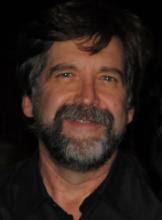
A native of Florida, Mark Schweizer received music degrees from Stetson University in Deland, Florida and the University of Arizona including a doctoral degree in vocal performance. He returned to teach at Stetson University from 1982 to 1985 followed by eight years on the music faculty of Louisiana College. Mark lived in North Carolina where he served as editor of St. James Music Press. He is the author of fifteen “Liturgical Mystery” novels, as well as other books, and several opera and musical librettos. His published musical compositions can be found in the catalogs of five different publishing houses in addition to St. James Music Press.
The opening voluntary is Crown Imperial, a march by the English composer William Walton. Walton derived the march's title from the line "In beawtie berying the crone imperiall" from William Dunbar's poem "In Honour of the City of London". Walton originally composed the march for the planned coronation of Edward VIII, but Edward abdicated in 1936. The coronation was held on the scheduled day, with Edward's brother being crowned instead, so it was premiered then. Crown Imperial was also performed at the coronation of Queen Elizabeth II in 1953. It has been arranged for organ by Herbert Murrill.
The march falls into an ABABC form. The march opens in C major over Waltonesque long pedal points, which build energy. The following strain, an Elgarian trio section, moves into A-flat major. Then both march and trio reappear in C again and come to a conclusion in a small heroic coda.
The closing voluntary is a variation of the Offertory hymn subtitled, Partita IV: The Temple Veil Is Rent in Twain. Benson includes this program note:
At the terrible and sublime moment of Christ's death on the cross, the planet itself experiences the monumental event. An earthquake shakes the Temple in Jerusalem and causes the veil that separates the Holy of Holies from the rest of the temple to be torn in two, announcing that the holy and sacred are no longer a separate realm apart from the human but fully integrated with it, a gift for which we humans did nothing but for which we must be eternally grateful.
(1) https://songsandhymns.org

