Friday, July 29, 2016

Music for July 31, 2016 + The Eleventh Sunday after Pentecost

Vocal Music
  • O Saviour, Hear Me– Christoph Willibald Gluck (1714-1787), arr. Dudley Buck; Jennifer Wright, Mezzo-soprano
Instrumental Music
  • Sonata in A for Oboe: II. Andante – Georg Philipp Telemann (1681-1767)
  • Versets for the Kyrie (Messa della Domenica) – Girolamo Frescobaldi (1583-1643)
  • Trumpet Tune in D – Georg Philipp Telemann
Congregational Music (all hymns from the Hymnal 1982.)
  • Hymn 408 - Sing praise to God who reigns above (Mit Freuden zart)
  • Hymn 510 - Come, Holy Spirit, heavenly Dove (St. Agnes)
  • Hymn 533 - How wondrous and great thy works, God of praise! (Lyons)
  • Hymn 325 - Let us break bread together on our knees (Let Us Break Bread)
  • Hymn 594 - God of grace and God of glory (Cwm Rhondda)
  • Psalm 49:1-2, 4-10 - Audite haec, omnes – tone II


Gluck
Christoph Willibald Gluck was a composer that bridged the Baroque period (Bach and Handel) and the Classical Period (Haydn and Mozart). It was during this time that Italian opera really began to dominate the opera world, and Gluck became one of the major players in that scene. He wrote over 40 operas, and of these, Orfeo ed Euridice is the best known. It is a treatment of the story of the legendary musician Orpheus and his journey to the Underworld to bring back his beloved Eurydice—an ancient illustration of the power of music.

By far the best known excerpts from any of Gluck's operas is the ‘Dance of the Blessed Spirits’ from the French version of Orfeo. This tune (for it was not an aria) constantly appears among lists of the favorite melodies from classical music. (It was the last selection played each night when WKNO-FM, the classical music station in Memphis, went off the air at midnight - back when stations went OFF the air at night!)
Dudley Buck

In 1880, Dudley Buck, the most influential American organist and church musician of that time, wrote sacred lyrics and arranged this piece for alto solo. It has since become a staple of sacred classical solo repertoire. The calm, graceful melody which was originally played on the flute is perfect for the pleading, penitential text that Buck wrote. It's always been a favorite of mine, and this Sunday we are fortunate to have Jennifer Wright, our alto section leader, sing it for us. She last sang in June for the Dvorak Mass in D when we sang it in the Eucharist.

Monday, July 18, 2016

Music for July 24, 2016 + The Tenth Sunday after Pentecost

Vocal Music
  • Precious Lord, take my hand– Thomas A. Dorsey (1899-1993)(Margie VanBrackle, soprano)

Instrumental Music
  • Largo from "Xerxes" - Georg Frederich Handel (1685-1759)
  • Give Thanks - Henry Smith, arr. by Phillip Keveren
  • Hornpipe from "Water Music" - Georg Frederich Handel
Congregational Music (all hymns from the Hymnal 1982.)
  • Hymn 410 - Praise, my soul, the King of heaven (Lauda Anima)
  • Hymn 488 - Be thou my vision (Slane)
  • Hymn 707 - Take my life, and let it be consecrated (Hollingside)
  • Hymn 711 - Seek ye first the kingdom of God (Seek Ye First)
  • Hymn 615 - “Thy kingdom come!” (St. Flavian)
  • Psalm 138 - Confitebor tibi - Kevin R. Hackett, based on In Babilone 
Below are pictures of Tommy Dorsey and Thomas A. Dorsey. Both were musicians.  Both were active in the first part of the 20th century. And both are considered pioneers in their chosen field. But despite these similarities, they are still two very different people. Whereas Tommy Dorsey was one of the first to promote swing music (at least among the white population), Thomas Dorsey was the creator of gospel music -- the African American religious music which married secular blues to a sacred text.

Tommy
Thomas
Dorsey was working as a Blues pianist in Chicago when, at twenty-six, his hectic and unhealthy schedule led to a nervous breakdown, leaving Dorsey unable to play music. After a three year recovery, he committed himself to composing sacred music. Then Dorsey’s life was thrown into crisis when his wife and son died during childbirth. In his grief, he turned to the piano for comfort. The tune he wrote, “Take My Hand, Precious Lord,” came, he says, direct from God, and became a Gospel standard.

The communion voluntary is a piano piece based on the song Give Thanks With A Grateful Heart. It is arranged by Phillip Keveren, a prolific arranger, pianist, orchestrator and producer. His work is featured in numerous instrumental recordings, church choral, educational piano and Christian artist releases. His arrangements and compositions appear on recent projects by Sandi Patty, Travis Cottrell, Sara Groves and Ronan Tynan.

Mr. Keveren holds a Bachelor of Music in Composition from California State University, Northridge, and a Master of Music in Composition from the University of Southern California. He and his wife Lisa live in Brentwood, Tennessee and are parents of two children, Lindsay and Sean. 

Many, many thanks to Margie VanBrackle for singing and  Karen Silva for playing the organ in my absence while I am at the Mississippi Conference for Church Music and Liturgy this week. Good Shepherd is blessed to have some very talented members of our family.

Thursday, July 7, 2016

Music for July 10, 2016 + The Eighth Sunday after Pentecost

Vocal Music
  • Give Me Jesus – Mark Hayes (b. 1953), Mitchell Hutchins, tenor
Instrumental Music
  • Jubilation 2: Variant on “Every time I Hear the Spirit"– Dennis Janzer (b. 1954)
  • Aria – John S. Dixon (b. 1957)
  • Postlude in C Minor – George Blake (1912-1986)
Congregational Music (all hymns from the Hymnal 1982 with the exception of those marked “R” which are from Renew.)
  • Hymn 390 Praise to the Lord, the Almighty (Lobe den Herren)
  • Hymn 660 O Master, let me walk with thee (Maryton)
  • Hymn R266 Give thanks with a grateful heart (Give Thanks)
  • Hymn 602 Jesu, Jesu, fill us with your love (Chereponi)
  • Hymn 609 Where cross the crowded ways of life (Gardiner)
During these slow summer months I've been going through the choir's choral library, categorizing each title as to its place in musical history. So far I have these categories:
  • Chant-based (Medieval c.1150 - c.1400)
  • Renaissance (c.1400 - c.1600)
  • Baroque (c.1600 - c.1750)
  • Classical (c.1750 - c.1830) 
  • Early Romantic (c.1830 - c.1860)
  • Late Romantic (c.1860 - c.1920)
  • Modern (1920 - present)
  • Hymn-based
  • Spiritual and folk based
  • Contemporary (anything in the style of music from the 60's to the present)
  • Traditional (anything that doesn't fit squarely in the last four categories.)
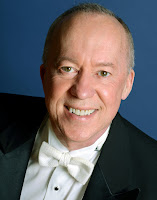
Mark Hayes
One classification I haven't used is "easy listening." You know what it is. It usually consists of covers of popular music from the 40s to the present day. There is a lot of church music out there that could fall into that category. One composer who does work well in this genre is Mark Hayes, an internationally known composer, arranger, concert pianist and conductor from Kansas City, Missouri, with over 1000 publications in print. (The catalog of his works has over 160 pages.) He has written and arranged songs for choir, piano, soloists, instrumentalists, organ and handbells, and travels extensively performing and leading workshops in churches of all denominations, including Episcopal. Surprisingly, we don't have any of his anthems in our library.

This Sunday, however,  we get to hear one of his arrangements when Mitchell Hutchins sings his arrangement of the spiritual, "Give Me Jesus." Mitchell was a choral scholar here at Good Shepherd back when he was a student at Lone Star Kingwood. He has since moved on to Stephen F. Austin to study Music Education, and sings in the choir at First Presbyterian Church, Kingwood. He's a favorite among many here at Good Shepherd, and you will love hearing him sing this setting of the familiar spiritual.

Two of the organ pieces are by composers who attended the recent convention of the American Guild of Organists held here in Houston (I was chair of Hospitality for this national meeting that brought more than 1200 organists from all over the globe to our city.) The first is the opening voluntary, a "jubilation" on the spiritual, Every Time I Feel the Spirit. It is a bright, rollicking little piece (only lasting 1'30") that reminds me of a Bach Invention. (The Inventions are a collection of short pieces J. S. Bach wrote for pedagogical purposes. These fifteen two-part works, each named 'inventio', along with fifteen three-part pieces, named 'sinfonia', were written as technical exercises for the independence of two hands, but are also beautiful works of art.) This piece by Dennis Janzer, organist-choir master at St. Mary's Episcopal Cathedral in Memphis, is also written in just two parts, requiring an independance between the left and right hand.

The other piece is a lovely Aria by an John Dixon, an Englishman with an MBA from Harvard who is now the organist and composer-in-residence at a Presbyterian Church in Virginia Beach.

The closing voluntary is by a little known organist from New Jersey, George Blake. In 1926, at age fourteen, Blake began to play the theater organ professionally at the Franklin Theatre in Nutley, New Jersey. His father having died when he was very young, Blake quickly became the primary supporter of his family through his performing, and he lived with his mother in New Jersey for many years until her death. His younger brother was the cartoonist Bud Blake (of the popular comic strip "Tiger.") George Blake served as principal organist for a number of theaters in New Jersey and New York City, including the New Roxy (later the Center Theatre) in Rockefeller Center. He was also a regular performer on several radio programs of the day, including the "Lucky Strike Hour." As the age of the cinema organist ended, Blake focused primarily on sacred music. He was organist at several churches in New Jersey including St. Andrew's Episcopal (South Orange) and Grace Episcopal (Nutley).


Thursday, June 30, 2016

Music for July 3, 2016 + The Seventh Sunday after Pentecost

The Eve of the Commemoration of Independence

Vocal Music 
  • The Old Rugged Cross – George Bennard (1873-1958), arr. Norman Price 
Instrumental Music
  • Eternal Father, Strong to Save – Alfred V. Fedak (b. 1953) 
  • God Save the King – Charles Wesley (1757-1835) 
  • Semper Fidelis – John Philip Sousa (1854-1932), arr. Jackson Hearn 
Congregational Music (all hymns from the Hymnal 1982 with the exception of those marked “R” which are from Renew.)
  • Hymn 718 - God of our fathers (National Hymn)
  • Hymn 657 - Love divine, all loves excelling (Hyfrydol)
  • Hymn 716 - God bless our native land (America)
  • Hymn R218 – Broken for me (Broken For Me)
  • Hymn 544 - Jesus shall reign where’er the sun (Duke Street)
  • Psalm 30, 1-6, 12-13 (Tone I.g)
OK, there is no liturgical feast called "The Commemoration of Independence." Certainly not "The Eve of..." The Book of Common Prayer does make provisions for readings on Independence Day, and prayers or collects for Independence Day and National Life, but it is not a holiday that replaces the normal Sunday readings as found in the lectionary. (Days such as Christmas and All Saints override the normal Sunday readings when those days fall on a Sunday.) That being said, however, there is no denying that when Sunday falls within a four-day weekend including the 4th of July, one would be hard pressed to ignore that in whatever venue one finds oneself. So I am including some patriotic music in our hymn selections and organ music. I am even giving a nod to that peculiarly American genre of Gospel Music with the offertory, the American hymn "The Old Rugged Cross." I feel justified in including it in the main body of our liturgy as it relates to the Epistle reading.
May I never boast of anything except the cross of our Lord Jesus Christ, by which the world has been crucified to me, and I to the world. - Galatians 6:14
The cross and its meaning for believers are the themes of this hymn. The cross is seen as “the emblem of suffering and shame” in the first stanza, yet it has “a wondrous attraction” in the second and “a wondrous beauty” in the third. Why is such symbol of shame found so attractive? Because it is there that “Jesus suffered and died to pardon and sanctify me.” The joy that is found in contemplating the cross is not found in the shame, but in the promise that someday the saints will exchange the labor of sanctification for the crown of life (James 1:12, Rev. 2:10).

This hymn was begun in 1912 by George Bennard as he was holding evangelistic meetings in Michigan He was unable to finish it, however, until early in 1913, while holding another series of evangelistic services. The song soon achieved wide popularity when it was introduced by evangelist Homer Rodeheaver.

This text was not accepted by most major hymnals until the 1950s, despite great popularity. One reason was the prohibitive fee charged by the copyright owner. Another was the somewhat controversial nature of a hymn expressing such great affection for the cross itself, rather than for Christ, the one who died there. It is still not in the Hymnal 1982, though it is in Lift Every Voice and Sing II, the hymnal for Black Episcopalians (and those that want to sing like them).

The opening voluntary is an organ piece by Alfred Fedak on the Navy hymn, Eternal Father, Strong to Save. A prolific composer, Fedak is Minister of Music and Arts at Westminster Presbyterian Church on Capitol Hill in Albany, New York, Organist/Choir Director of Congregation Beth Emeth in Albany,  is on the adjunct music faculty at Schenectady County Community College, and is Chapel Organist at Emma Willard School in Troy, New York.

The communion voluntary is a set of variations on "God Save the King," or "America," depending on your nationality. (You say toMEHto, I say toMAHto.) It was written for organ or harpsichord, but I will be playing it on the piano. The composer, Charles Wesley, was SON of the famous hymn writer, Charles Wesley.

John Philip Sousa
And I close with one of John Philip Sousa's great marches, Semper Fidelis. When July 4 comes on a Sunday, I always play The Stars and Stripes Forever. Several years ago, when the fourth of July was the day after our Sunday worship, I arranged this march for organ from a piano score I had in my library.  The trickiest part is the trio section that comes in the last half of the piece where the melody is in the pedal line (the trumpets and coronets in the band) while the right hand plays the obbligato line that was assigned to the piccolo, flutes and clarinets.

Semper Fidelis is regarded as the official march of the United States Marine Corps. This piece was one of two composed in response to a request from United States President Chester Arthur for a new piece to be associated with the United States President. The words Semper Fidelis are Latin for "Always Faithful."

Thursday, June 16, 2016

Music for June 19, 2016

Vocal Music
  • Crucifix – Jean-Baptiste Faure (1830-1914), Bidkar Cajina, baritone
Instrumental Music
  • We pray now to the Holy Ghost – Dietrich Buxtehude (1637-1707)
  • Elevation – Paul Benoit (1893-1979)
  • Fugue in C Major – Dietrich Buxtehude (1637-1707)
Congregational Music (all hymns from the Hymnal 1982)
  • Hymn 388 - O worship the King (Hanover)
  • Hymn 529 - In Christ there is no East or West (McKee)
  • Hymn 707 - Take my life, and let it be (Hollingside)
  • Hymn 652 - Dear Lord and Father of mankind (Rest)
  • Hymn 535 - Ye servants of God, your master proclaim (Paderborn)

Jean Baptiste Faure
(painted by Edouard Manet)
Jean-Baptiste Faure was a operatic baritone who is best known today as the composer of Les Rameaux (The Palms), which has been a Palm Sunday staple for years in many churches (but not Good Shepherd, strangely enough.)

A choir boy in his youth, he entered the Paris Conservatory in 1851 and made his operatic debut the following year at the Opéra-Comique. He debuted at the Royal Opera House, Covent Garden, London, in 1860, and at the Paris Opera in 1861. His last stage appearances are recorded as taking place in Marseilles and Vichy in 1886.

In addition to singing, Faure composed several enduring songs, including Sancta Maria, Les Rameaux (The Palms), and Crucifix. The latter two were recorded by Enrico Caruso, among others.

Though this was chosen for this Sunday several weeks ago, it's text is fitting for this first Sunday after the terrible shootings in Orlando. This is the English text:
Come unto Him, all ye who weep, for He too weepeth,
Come unto Him, all ye who mourn, for He can heal.
Come unto Him, all ye who fear,
Come unto Him, in woe and weal.
Come unto Him, in your last sleep, He never sleepeth.

Friday, June 10, 2016

Music for June 12, 2016


Vocal Music
  • Ride On, King Jesus! – Hall Johnson
Instrumental Music
  • Suite Gothique III. Prière à Notre-Dame – Léon Boëllmann (1862-1897)
  • Suite Gothique IV. Toccata – Léon Boëllmann
  • Farewell to Stromness– Peter Maxwell Davies (1934-2016)
Congregational Music (all hymns from the Hymnal 1982 with the exception of those marked “R” which are from Renew.)
  • Hymn 610 - Lord, whose love through humble service (Blaenafren)
  • Hymn 470 - There’s a wideness in God’s mercy (Beecher)
  • Hymn 691 - My faith looks up to thee (Olivet)
  • Hymn 178 - Alleluia, alleluia! give thanks to the risen Lord (Alleluia No. 1)
  • Hymn 410 - Praise, my soul, the King of heaven (Lauda Anima)
We welcome home one of our former staff singers, Allison Gosney, to our worship this morning. She is back in Kingwood after her first year in the graduate program of the Crane School of Music at SUNY Potsdam, studying vocal performance. You will be delighted to hear her singing the spiritual, Ride On, King Jesus, as arranged by Hall Johnson.

Johnson was born in Athens, Georgia, taught himself to play the violin by reading a book about it, moved to New York City where he played in the orchestra of Broadway musicals, and set out to preserve the heritage of the Negro Spiritual. He arranged spirituals for his own ensemble, the Hall Johnson Singers as well as soloists such as the famed Marion Anderson. He also provided the scores for several films, his last being “Cabin in the Sky” in 1943 with Ethel Waters and Lena Horne.

Peter Maxwell Davies
I first heard Farewell to Stromness this Spring when it was played on the radio in honor of the life of Peter Maxwell Davies, the famed conductor and composer who died in March at age 81. The piano piece is one that is not explicitly religious, but when I heard it, all I could imagine were people quietly coming forward to communion. Stromness is a town on the largest island in Orkney, Scotland, which was threatened in the early 1970s when it was discovered that vast uranium deposits were underground. the South of Scotland Electricity Board wanted to mine the uranium to fuel a nuclear power plant. Once the islanders understood the ramifications of mining the island, they (and the Orkney Islands Council) opposed the initiative unilaterally. Davies, who is English, was moved to write The Yellow Cake Revue after a public examiner's report advised the Secretary of State for Scotland to deny the SSEB's request to mine. The first interlude, "Farewell to Stromness", has become one of Davies' most popular pieces, and has been arranged for various instruments.

Friday, June 3, 2016

Music for June 5, 2016 + The Third Sunday After Pentcost

Vocal Music
  • Mass in D Major – Antonín Dvořák 
Instrumental Music
  • New World Symphony: Largo - Antonín Dvořák
  • Prelude in D Major – Antonín Dvořák
Congregational Music (all hymns from the Hymnal 1982)
  • Hymn 411 - O bless the Lord, my soul! (St. Thomas (Williams))
  • Hymn 255 - We sing the glorious conquest (Munich)
  • Hymn 390 - Praise to the Lord, the almighty (Lobe den Herren)
  • Hymn 493 - O for a thousand tongues to sing (Azmon)
  • Psalm 146:1, 4, 6-9 Lauda, anima mea - tone II
Every year for almost 10 years now, the Good Shepherd Choir ends the choir year by singing a large work, usually a mass setting, as part of the 10:15 liturgy. This year our chosen work is by that Bohemian composer, Antonín Dvořák. 

Most people know him for his Symphony No. 9 in E minor, Op. 95, also known as the New World Symphony. Others might know him for the lyrical Humoresque and the song "Songs My Mother Taught Me." Like his fellow Czech composer, Bedřich Smetana, he was noted for turning folk material into the language of 19th-century Romantic music.

He started out, like most great musicians do (wink), as an organist. In addition to piano and violin, he began studying organ when he was twelve years old. His teacher, the German Anton Liehmann, realized the youth had gone beyond his own modest abilities to teach him, and urged Antonin's father to enroll him at the Institute for Church Music in Prague. The father agreed, on the condition that the boy should work toward a career as an organist. (Father Knows Best).

Dvořák graduated from the school in 1859, ranking second in his class. (I wonder who was first?) He applied unsuccessfully for a position as an organist at St. Henry's Church, but remained undaunted in pursuing a musical career. Ultimately. he was to succeed as a composer.

The Mass in D is one of his many choral works that have fallen from favor in the performance world. It was written in 1887 in response to a commission from architect and patron of the arts Josef Hlavka, later the founder and first president of the Czech Academy of Sciences. In 1886 Hlavka had built a chapel at his summer residence, a castle in Luzany in Western Bohemia. Hlavka asked his friend Dvorak to write a new mass for the occasion of its consecration. Dvorak wrote a mass for soloists, choir and organ. He completed the work within three months.

Given the purpose for which the mass was written, and conscious of the fact that it would be performed by semi-professionals, Dvorak opted for a simple form and clearly arranged choral parts. The Luzany chapel was quite small, so he also restricted the instrumentation, and wrote an accompaniment only for organ, making it a perfect vehicle for the Good Shepherd Choir. Even with these modest means, however, the composer created an exquisite work rich in melodic and harmonic imagery, whose exceptional quality destined it for far greater things than a mere occasional piece. Particularly appealing is its evocation of old church modes combined with the most up-to-date approaches in harmony at that time, distinct elements which Dvorak uniquely brought together with unerring spontaneity.

Soloists for the mass will be former choir member Kim Livingston Bollinger, from Portsmouth, Rhode Island, Soprano, Jennifer Wright, choir director for the Pasadena ISD and member of the Houston Opera Chorus, Mezzo‐soprano; Jamie Dahman, Lone Star College, Kingwood voice faculty and also a member of the HGO chorus, Tenor; and Sean Elgin, presently singing with the Good Shepherd Choir and formerly with the HGO chorus, Bass.