Showing posts with label Henry Smart. Show all posts

Friday, August 10, 2018

Music for August 12, 2018

Vocal Music

  • Steal Away – Harry T. Burleigh (1866-1949) Bidkar Cajina, baritone

Instrumental Music

  • Lord, enthroned in Heavenly Splendor – Bernard Wayne Sanders (b. 1957)
  • Prelude on Adoro te devote - Charles Callahann (b. 1951)
  • March in G – Henry Smart (1813-1879)

Congregational Music (all hymns from the Hymnal 1982 with the exception of those marked “R” which are from Renew.)

  • Hymn 48  - O day of radiant gladness (ES FLOG EIN KLEINS WALDVOGELEIN)
  • Hymn R37 - Father, we love you (GLORIFY YOUR NAME)
  • Hymn R220 - Let the hungry come to me (ADORE TE DEVOTE)
  • Hymn 301 - Bread of the world, in mercy broken (RENDEZ À DIEU)
  • Hymn R246 - I am the bread of life (I AM THE BREAD OF LIFE)
  • Hymn R226  - Ubi Caritas et amor (Taizé)
  • Hymn 307 - Lord, enthroned in heavenly splendor (BYRN CALFARIA)
  • Psalm 34 - Taste and See (James E. Moore, Jr.)
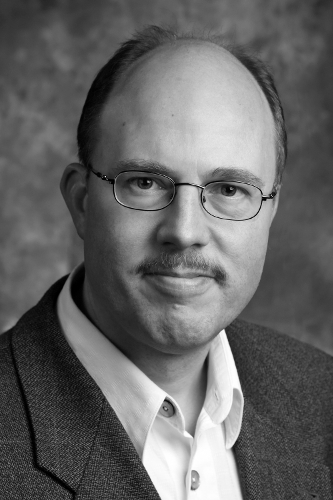
Bernard Wayne Sanders
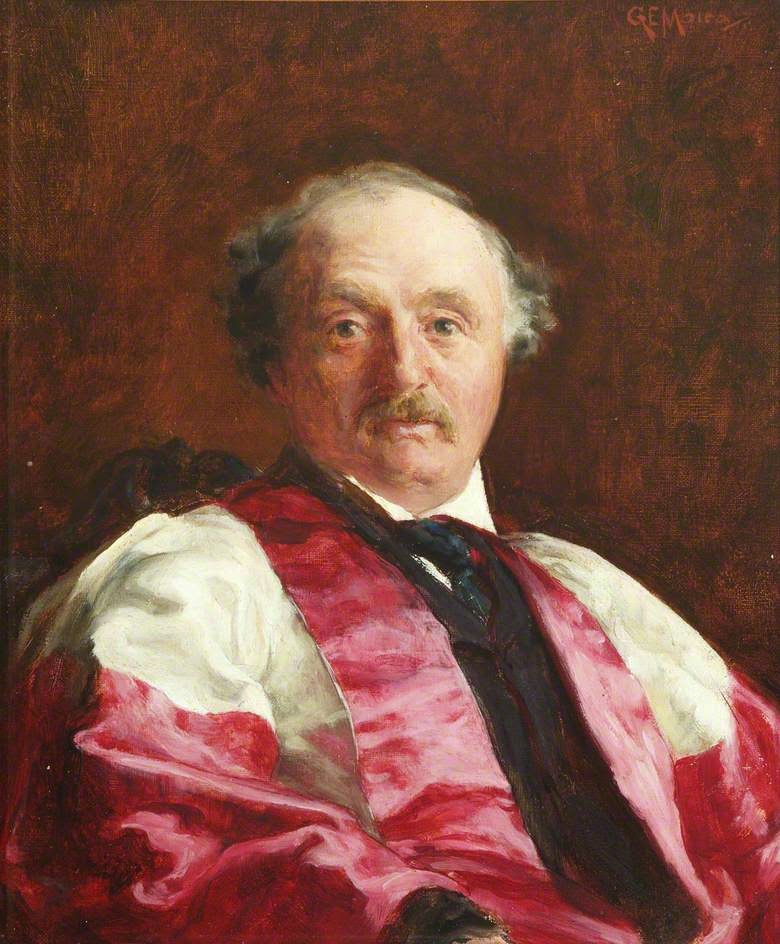
Henry Smart
We continue our journey toward familiarity with the Welsh tune BRYN CALFARIA this week with an organ prelude by Bernard Wayne Sanders. A native of DePere, Wisconsin, Sanders was educated at St. Norbert College, Wichita State University, and the Hochschule für Musik in Hamburg, Germany. Germany apparently agreed with him, as he currently serves as a full-time director of music at the parishes of St. Gallus and Mary Queen of Heaven in Tuttlingen, Germany, in addition to serving as a diocesan liaison and an official organ consultant for the Tuttlingen area. As a composer, he has published many works and composed the award‑winning piece Ornament of Grace, sponsored by the American Guild of Organists as part of a world-wide "Organ Spectacular" in 2008 to advance the use of the organ in church and concert settings. I was the organist for the Houston premier of this work at Christ Church Cathedral in October of 2008. (I think Sanders looks a lot like the composer of today's closing voluntary, Henry Smart, albeit without all the hair!)

Admittedly, the prelude is nothing terribly inspired. The melody is heard on the trumpet, played by the left hand, while the right hand accompanies on the principle stops of the Great. The melody, written by William Owen, is used as a setting for several hymns, most notably the English "Lord, Enthroned in Heavenly Splendor" (the text for which our hymnal uses this tune.) The tune is reputed to have been originally written by Owen on a piece of slate whilst on his way to work at the Dorothea Quarry in Gwynedd, North Wales. "Bryn Calfaria" is Welsh for "Hill of Calvary," reflecting the first words set to this tune, the famous Welsh hymn "Gwaed y Groes" (The blood of the Cross"). [1]

Harry T. Burleigh
by Maud Cuney-Hare,1936 [5]
The offertory solo is an arrangement of one of the "code songs" of the American Negro Slaves. Spirituals such as "Steal Away to Jesus", "Swing Low, Sweet Chariot", and "Wade in the Water" are songs with hidden codes, not only about having faith in God, but containing hidden messages for slaves to run away on their own, or with the Underground Railroad.[2]

The arrangement is by Harry T. Burleigh, one of the first African-Americans to elevate the spiritual to an art form. He was highly influenced by Antonin Dvořák, who had been brought to America to head the the National Conservatory of Music in New York City. The Conservatory had been founded by Jeannette Thurber, a wealthy and philanthropic woman, who made it open to women and black students as well as white men, which was unusual for the times. Burleigh was accepted, with a scholarship, to the Conservatory at the age of 26.

Burleigh, who later became known worldwide for his excellent baritone voice, sang spirituals while cleaning the Conservatory's halls, which drew the attention of Dvořák, who asked Burleigh to sing for him. Burleigh said: "I sang our Negro songs for him very often, and before he wrote his own themes, he filled himself with the spirit of the old Spirituals."[3] Dvořák said: "In the negro melodies of America I discover all that is needed for a great and noble school of music."[4]

[1] Glover, Raymond F. The Hymnal 1982 Companion. Vol. 3, Church Hymnal Corp., 1994.
[2] "New Jersey's Underground Railroad Heritage website also claims "Steal Away" as a song related to escape from slavery" (PDF). Slic.njstatelib.org. Archived from the original (PDF) on 2013-08-23. Retrieved 2018-08-10.
[3] Jean E. Snyder, "A great and noble school of music: Dvořák, Harry T. Burleigh, and the African American Spiritual". In Tibbetts, John C. (ed.), Dvořák in America: 1892-1895, Portland, OR: Amadeus Press, 1993, p. 131.
[4] Interviewed by James Creelman, New York Herald, May 21, 1893.
[5] Maud Cuney-Hare, 1874-1936 - Negro musicians and their music by Maud Cuney-Hare. Washington, D.C.: The Associated Publishers, Inc., 1936, p. 328. Copyright not renewed, Public Domain, https://commons.wikimedia.org/w/index.php?curid=41871028

Friday, October 3, 2014

Music for October 5, 2014 + The Seventeenth Sunday after Pentecost

Vocal Music
  • A Repeating Alleluia– Calvin Hampton (1938-1984)
  • Everywhere I Go – Natalie Sleeth (1930-1992)
  • God So Loved the World – John Stainer (1840-1901)
Instrumental Music
  • Andante – John Stainer
  • March in G – Henry Smart (1813-1879)
Congregational Music (all hymns from the Hymnal 1982 with the exception of those marked “R” which are from Renew.)
  • Hymn 518 – Christ is made the sure foundation (WESTMINSTER ABBEY)
  • Hymn 458 – My song is love unknown (LOVE UNKNOWN)
  • Hymn R-173 – O Lord hear my prayer (Jacques Berthier)
  • Hymn 495 – Hail, thou once despised Jesus (IN BABILONE)
In many traditions, especially Catholic and Episcopal congregations, it is customary to sing an Alleluia before the reading of the Gospel. Most protestant churches sing a hymn instead. This morning we are using A Repeating Alleluia by Calvin Hampton. One of the most important composers of American church music in the twentieth century, Hampton was Director of Music at Calvary Episcopal Church, New York City, from 1963 to 1983. Before his untimely death from AIDS at the age of 46, he developed a unique compositional voice, which is heard in his extensive catalogue of hymn-tunes and works for choir and organ; A Repeating Alleluia features an imaginative set of variations on a repeating eight-bar theme which the congregation will sing while the choir provides the two counter melodies. 

Calvin Hampton
Hampton had an energetic and inimitable approach to music in the church.  He experimented with unusual instruments like the Ondes Martenot and the Moog synthesizer, and various styles, from the Baroque to Rock. He created the famous “Fridays at Midnight” organ concerts, noted to be a “fixture of Manhattan cultural life” in the 1970s. His Halloween events at Calvary, where Hampton dressed as a werewolf, as the Frankenstein monster, or another scary specter; and many unique musical events that he presented, brought a wide range of people into the church.  This playful approach to sacred music seemed to attract a wide and diverse audience, not least of which were children. I know that the children of our St. Gregory Choir, who are singing with the adults this Sunday on this anthem, have grown to love A Repeating Alleluia.

Sir John Stainer
In reading the Gospel story this week about the vineyard owner who sent his son to collect the produce of the harvest, only to have the tenants kill the son, I was reminded of the favorite scripture of John 3:16 - "For God so loved the world, that he gave his only begotten son." I felt called to use the familiar anthem with that text by John Stainer, from his famous oratorio, The Crucifixion, as the choir's communion motet today. Stainer had been the organist-choir master at St. Pauls, London in the late 1800s and wrote a large amount of organ and choral music, as well as a popular treatise on organ playing. I am playing one of his organ works as an opening voluntary. His music was fairly conservative for the time, and today seems rather dated, but he has faired better than his contemporary Henry Smart, the composer of the closing voluntary, Smart was highly rated as a composer during his time, but is now remembered only by a few organists and choral singers. His many compositions for the organ were described as "effective and melodious, if not strikingly original" by the 1911 Encyclopædia Britannica,

The offertory is an anthem for children's choirs by the 20th century composer Natalie Sleeth. The bright, cheery melody fits her own text of faith and assurance. 
Everywhere I go, the Lord is near me. If I call upon him, he will hear me. Never will I fear, for the Lord is near, everywhere I go.